Skip to content
Welcome, thoughtbot's Giant Robots listeners!Start here
US Midterms 2026
24SEP

Virginia polls Yes as $79m floods in

3 min read
11:45UTC

Virginia's 21 April referendum on mid-decade redistricting now polls 52-47 percent Yes in a Washington Post survey, with roughly $79 million flowing through 501(c)(4) dark-money shells.

PoliticsDeveloping
Key takeaway

Virginia is the last standing track for Democratic mid-decade redistricting in 2026.

A Washington Post poll published on 14 April 2026 put the Yes side of Virginia's 21 April redistricting referendum at 52 percent against 47 for No, with combined campaign spending across both sides approaching $79 million through 501(c)(4) dark-money shells that are not required to disclose donors⁠1. The referendum asks voters whether the state legislature can redraw congressional districts mid-decade; the vote was scheduled in the prior update when no polling existed.

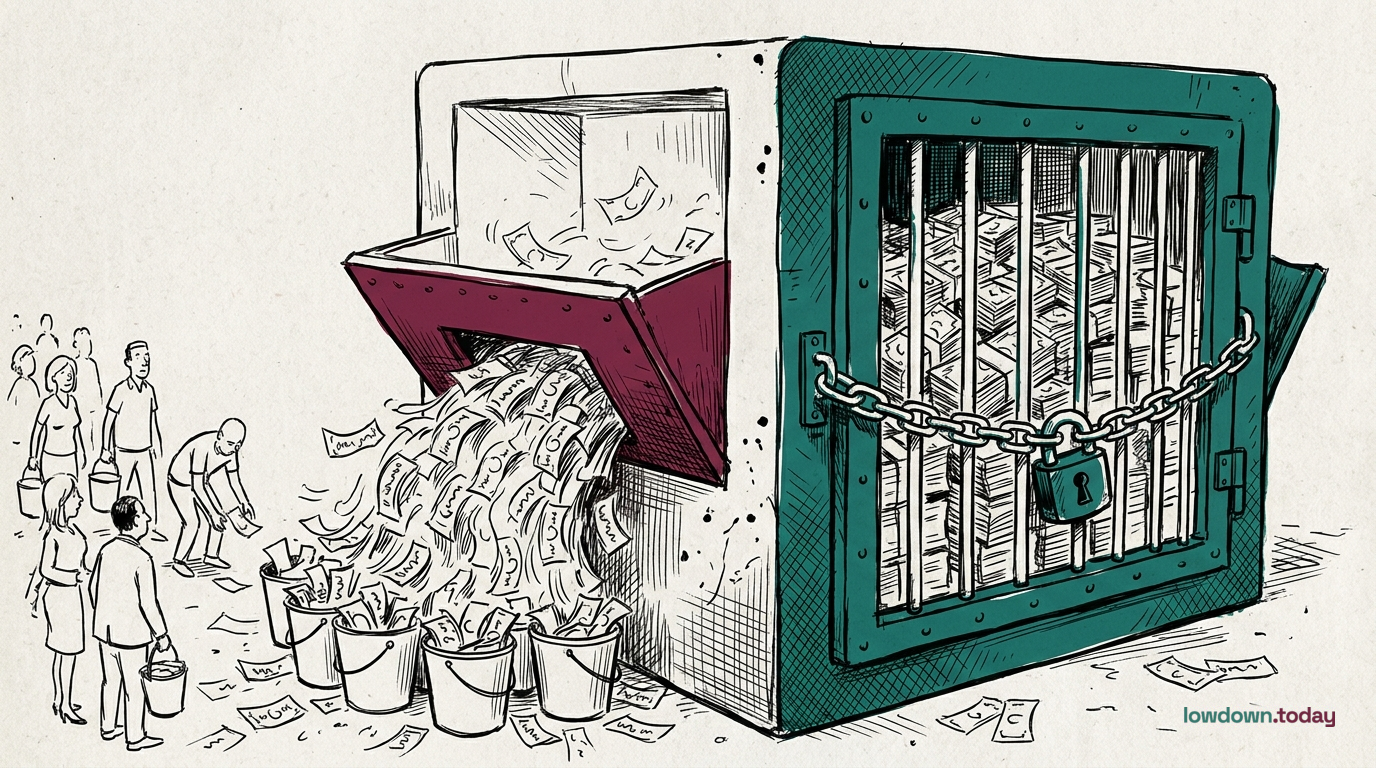
A 501(c)(4) is an IRS-classified social welfare organisation that can spend unlimited money on political campaigns without disclosing donors, provided political activity is not its "primary purpose". Cardinal News, the Virginia nonprofit news outlet that first reported the spending totals, identified vehicles on both sides running ads through these structures. That means Virginia voters are casting ballots with no public record of who has spent $79 million to influence the outcome, and the referendum question itself is structured around redistricting rules rather than donor transparency.

The political stakes extend beyond Virginia's own map. With Maryland's redistricting definitively dead and Florida's session delayed past the state's candidate filing deadline, Virginia is the last standing track for Democratic mid-decade redistricting in 2026. A No vote collapses the Democratic programme to federal litigation alone, which operates on appellate timetables incompatible with November. A 5-point polling lead on a ballot measure with this spending volume on both sides is within the margin of error and the margin of turnout.

Deep Analysis

In plain English

Virginia is holding a referendum, a direct public vote, on 21 April asking voters to approve changing the rules for how congressional district maps are drawn. Currently, the Republican-controlled legislature draws the maps. If voters say Yes, they would authorise the Democratic-majority legislature to redraw the maps mid-decade, potentially creating more Democratic-friendly districts. A poll by The Washington Post shows Yes is currently winning 52% to 47%. That is a thin margin. Both sides have spent enormous sums, $79 million combined, to influence the result. Much of this money flows through organisations called 501(c)(4)s, which are allowed under US law to spend on political campaigns without disclosing where their money comes from. The result will matter nationally: a Yes vote could add several Democratic congressional seats; a No vote would close off mid-decade redistricting as a Democratic strategy for 2026.

Deep Analysis
Root Causes

Virginia's redistricting referendum attracted $79 million because the stakes are structural: a Yes vote authorises the legislature to redraw congressional districts mid-decade, potentially producing up to four additional Democratic seats. The 501(c)(4) mechanism is the primary funding route because state campaign finance law treats referendums differently from candidate races in several states, and Virginia's disclosure thresholds were set before the current spending environment.

The asymmetry in the spending, $79 million combined on a state-level ballot measure, reflects the national stakes for both parties. Congressional majorities are decided at the margins; four additional safe Democratic seats in Virginia would offset Republican gains in Florida and Texas. Both parties treat the Virginia result as a national-map bet, which is why out-of-state money dominates.

What could happen next?
  • Risk

    A No vote eliminates Democratic mid-decade redistricting for 2026 outside federal litigation, reducing the potential Democratic House seat gain by up to four seats.

    Short term · 0.88
  • Consequence

    The $79 million spending total on a single state redistricting referendum signals that both parties are treating map control as a higher-return investment than candidate advertising, accelerating dark-money flows into future redistricting contests.

    Medium term · 0.74
  • Risk

    If Yes passes, the legislature still needs to draw an acceptable map and survive legal challenge before November; the vote authorises the process but does not guarantee a seat-producing outcome.

    Short term · 0.71
First Reported In

Update #3 · Tariff shock reads in GDP. Senate map moves.

Cardinal News· 16 Apr 2026
Read original →
Different Perspectives
Missouri and Secretary of State Denny Hoskins
Missouri and Hoskins, held in contempt by the state's own supreme court on 10 September for prematurely reverting to HB 1, filed against a pause of the 8th Circuit's order restoring the same 2025 map.
Richard von Glahn and People Not Politicians
Von Glahn and People Not Politicians filed emergency application 26A388 on 22 September asking Justice Kavanaugh to pause the 8th Circuit's order restoring the 2025 map, days after Missouri mailed overseas ballots under the 2022 lines. A refusal to pause it would leave those ballots carrying the wrong districts.
Harmeet Dhillon, Justice Department
Dhillon said the department will send about 1,000 election monitors to Nevada, Pennsylvania and Rhode Island in November, calling it "the biggest DOJ election observer effort in history" and citing "67 election-related indictments and convictions" against 13 under the Biden administration.
National Association for the Advancement of Colored People and co-plaintiffs
The NAACP and eight other groups sued DHS in Washington on 18 September to keep ICE away from polling places, citing federal statutes barring armed officers and troops at elections. The suit follows a released 2025 DHS email listing non-English-language voting jurisdictions beside a Justice Department prosecution checklist.
Cook Political Report
Cook wrote that "the amount of money national Republicans have dedicated to this race is a flashing red light for Democrats" when it moved New Hampshire from Lean Democrat to Toss Up on 15 September, citing the NRSC's $5.18m for Sununu. It is the one state where Republican spending and the rating move the same direction.
Democratic Senate strategists
Strategists note the DSCC held a $37.6m cash lead over the NRSC's $18.7m at the end of August, after coordinating just $1.00m of spending itself. One reading holds the committee is banking that cash for the campaign's final weeks rather than matching Republican spending dollar-for-dollar in August.