501(C)(4)
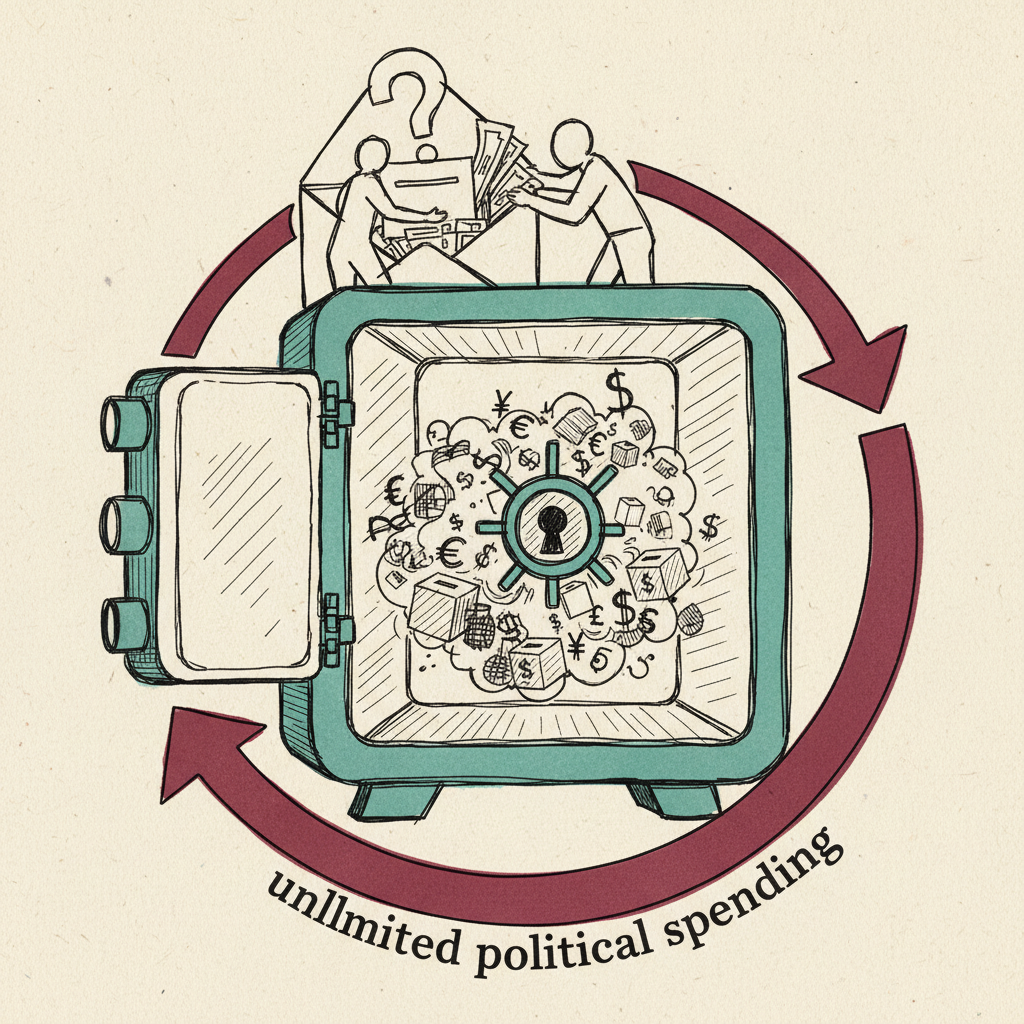
IRS tax classification for social welfare nonprofits; permits unlimited political spending without donor disclosure.
Last refreshed: 16 April 2026
How much 501(c)(4) dark money is shaping the Virginia redistricting referendum?
Timeline for 501(c)(4)
Fellowship PAC: $11m filed, $89m missing
US Midterms 2026Virginia polls Yes as $79m floods in
US Midterms 2026Background
A 501(c)(4) is an Internal Revenue Service tax classification for social welfare nonprofits. Unlike 501(c)(3) charitable organisations, which are barred from substantial political activity, a 501(c)(4) is permitted to engage in political work so long as it is not the organisation's primary purpose, a threshold the IRS has never precisely defined. This ambiguity allows 501(c)(4) groups to spend heavily on elections while disclosing almost nothing about WHO funds them. Virginia's 21 April 2026 redistricting referendum saw approximately $79 million flow through 501(c)(4) dark-money shells, with neither side required to disclose individual donors before polling day.
The 501(c)(4) structure gained prominence in campaign finance after Citizens United v. Federal Election Commission (2010) removed limits on Independent expenditure by corporations and nonprofits. The ruling, combined with a later FEC advisory opinion, enabled 501(c)(4) groups to raise and spend without the donor disclosure requirements that apply to super PACs. In practice, major donors route money through a 501(c)(4) into a Super PAC, creating a layered Shell that obscures the original source. Fellowship PAC's opaque funding structure, where $89 million of a claimed $100 million war chest had no federal filing support as of April 2026, illustrates how 501(c)(4) intermediaries can delay or prevent disclosure entirely.
The 501(c)(4) classification has become a structural feature of both major parties' spending architectures. Democratic and Republican groups alike use the vehicle in virtually every competitive federal race, making donor anonymity a bipartisan norm rather than a partisan advantage. Disclosure Reform proposals surface after each election cycle and have repeatedly failed in the Senate on party-line procedural votes.