Skip to content
Welcome, thoughtbot's Giant Robots listeners!Start here
Russia-Ukraine War 2026
27MAR

Japan ships PAC-3s to US, not Kyiv

3 min read
20:48UTC

Tokyo authorised direct PAC-3 Patriot interceptor exports to the United States to replenish Iran-war stocks, breaking its post-1945 arms-export tradition; Ukraine remains blocked from direct supply under the White House Patriot freeze.

ConflictDeveloping
Key takeaway

Japan is filling Washington's interceptor warehouse while Ukraine waits behind Israel and the Indo-Pacific in the same queue.

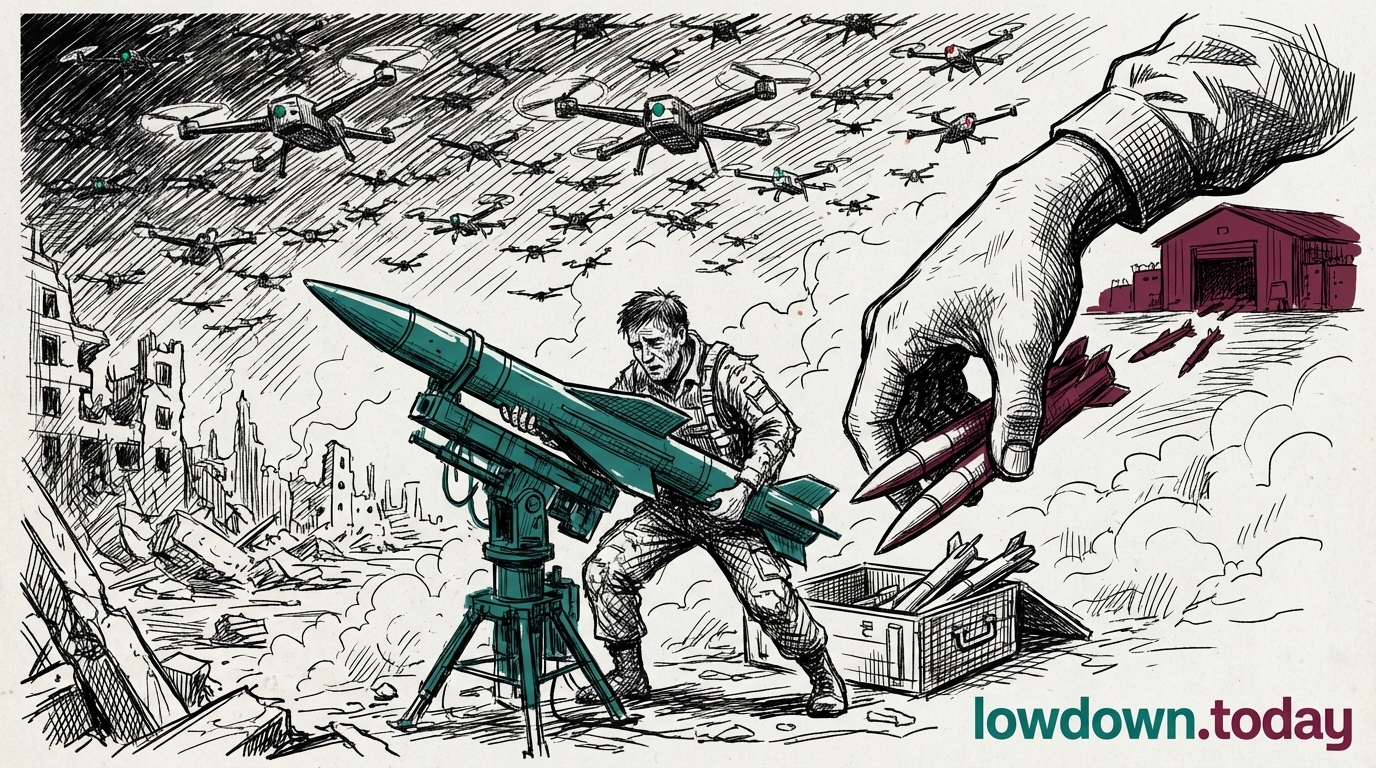
Japan authorised direct exports of PAC-3 Patriot Advanced Capability 3 interceptor missiles to the United States on 30 April, breaking the country's post-1945 arms-export restrictions to replenish American stockpiles depleted by the Iran war. The PAC-3 is the upper-tier Patriot interceptor used against ballistic missiles; Lockheed Martin produces it under licence with Mitsubishi Heavy Industries the sole non-US producer.

Japan's 1967 'Three Principles on Arms Exports', updated under cabinet revisions in 2014 and 2023, restrict transfers to weapons that do not contribute to international conflict. Tokyo's reading routes the PAC-3 export through the licensing exception for weapons returned to the originating country, which keeps the legal frame technical even as the operational reality transfers Japanese-produced interceptors into a US stockpile then drawn on for active wars. The exception had been used previously for parts and patrol-boat returns; missiles are a first.

Ukraine remains blocked from direct PAC-3 supply under the White House global Patriot export freeze, which has held since the Iran war opened in late 2025 and the United States redirected Patriot batteries toward Israel and Saudi Arabia. Kyiv has been requesting Patriot reinforcement consistently since November, with Volodymyr Zelenskyy raising it at every recent multilateral. The freeze applies to direct US-to-Ukraine transfer; European holders of Patriot batteries can still pass them on, though the same upstream warehouse constraint limits replenishment.

Tokyo is supplying Washington's stockpile while Kyiv waits on the same warehouse. With a finite Lockheed-Mitsubishi production line, the United States is using Japanese capacity to defend Israel and Saudi Arabia and the Indo-Pacific basing posture ahead of Ukraine. The freeze on Ukraine therefore reflects allocation priority rather than inventory shortage, with the European theatre running below the Indo-Pacific and the Iran-aftermath in the current administration's queue.

Deep Analysis

In plain English

Japan, which has very strict rules limiting arms exports as a result of its post-World War Two constitution, has agreed to send Patriot air-defence missiles directly to the United States. The US asked for them after its own stocks were used up during a recent conflict with Iran. This matters for Ukraine because Ukraine also urgently needs Patriot missiles but is blocked from receiving them by a White House export freeze. The Japanese missiles are going to the US, not Ukraine; whether the US then redirects any to Ukraine is a separate political decision that has not been made. Ukraine's President Zelenskyy has described Ukraine's Patriot situation as about as bad as it could be.

Deep Analysis
Root Causes

Japan's PAC-3 export decision has two structural causes.

First, the Iran war depleted US Pacific theatre Patriot stocks faster than The White House's own resupply planning anticipated: HIMARS resupply ran twelve months behind need in Ukraine before Japan stepped in as a supplementary source for Ukraine-adjacent US requirements, and the Iran campaign created a parallel inventory hole in the Pacific that Japan was uniquely positioned to fill given its existing PAC-3 licensed production arrangement with Raytheon.

Second, Japan's government under Prime Minister Ishiba has been seeking a credible demonstration of alliance contribution capacity since the US withdrew from AUKUS working group participation in late 2025. The PAC-3 transfer is Japan's clearest public signal that it can function as a high-end defence industrial partner rather than a protected ally, which strengthens Ishiba's domestic argument for continued Article 9 interpretation flexibility.

What could happen next?
  • Precedent

    Japan's PAC-3 transfer to the US under the Mutual Defence Treaty creates a legal template that other US treaty allies with licensed Patriot production (South Korea, Netherlands) could use to supply the US as an intermediary without violating their own export laws.

    Medium term · 0.68
  • Consequence

    PAC-3 stocks flowing from Japan to the US replenish Pacific-theatre inventory, but do not automatically release US European Command stocks for Ukraine while the White House global freeze remains in place.

    Immediate · 0.9
  • Risk

    If the White House uses Japanese resupply to justify maintaining the Ukraine export freeze beyond the current diplomatic rationale, the freeze effectively becomes a Japanese subsidy of US inventory at no cost to Washington.

    Short term · 0.6
First Reported In

Update #15 · Hardware-free parade; crude waiver lives on

White House· 3 May 2026
Read original →
Causes and effects
This Event
Japan ships PAC-3s to US, not Kyiv
Tokyo replenishes Washington while Kyiv waits on the same warehouse; current US allocation prices the Indo-Pacific theatre above the European one.
Different Perspectives
Government of Latvia
Latvia abstained on 22 September when the EU renewed its individual sanctions for 36 months at the price of delisting Alisher Usmanov and Mikhail Fridman, and promised national sanctions of its own. Riga's abstention marks how far a frontline member state will go to keep listed names listed.
India's Ministry of External Affairs
After the House passed the Graham bill on 16 September, India's foreign ministry said it would keep buying energy on market terms and protect its trade. Russia supplied 30.3% of India's crude imports in fiscal 2026, so the tariff decision due around 18 October falls directly on New Delhi.
Kaja Kallas, EU foreign policy chief
Kallas answered the US licence on 10 October by saying Europe would not ease pressure, and EU ministers adopted a 22nd package of nearly 1,600 listings two days later. Brussels is tightening as Washington loosens, though TASS reported the package adds no significant new trade restrictions.
Donald Trump and the US Treasury
The Treasury licensed Russian diesel imports until 7 April 2027 on the day of Trump's call with Putin, and Trump then told reporters Ukraine should find a new leader. Washington is trading sanctions relief for fuel supply while pressing Kyiv to halt the refinery strikes behind the shortage.
Kremlin and Deputy Prime Minister Alexander Novak
After the 9 October call the Kremlin said Russia was ready to supply oil and petroleum products to American and global markets, and Novak brought forward the end of diesel export curbs. Moscow is selling the shortage back as goodwill, with volumes that Decree No. 686 now hides from outside checks.
Volodymyr Zelenskyy, President of Ukraine
Zelenskyy called GL 135 an investment in prolonging the war and offered to stop striking Russian refineries if Russia stops destroying Ukraine's energy system. Answering Trump's call for a new leader, he set a total 60-day ceasefire as the condition for elections, which puts the next move on Moscow.
