Skip to content
Russia-Ukraine War 2026
15MAR

Russia gives Iran satellite targeting

3 min read
06:46UTC

Russia is feeding Iran satellite targeting data precise enough to guide strikes on US installations — the same installations Ukrainian counter-drone crews are now defending.

ConflictDeveloping
Key takeaway

Russia has moved from arms supply to direct operational targeting support for strikes on US assets.

The Foundation for Defense of Democracies, a Washington think tank, reported on 12 March that Russia is providing Iran with satellite targeting data from Moscow's orbital constellation 1. The FDD described the imagery as detailed enough to guide strikes on US command posts, radar installations, and what it characterised as a CIA station in Riyadh 2.

The FDD has long advocated for a harder US line on both Russia and Iran; its specific claims — particularly regarding a CIA facility — should be read as advocacy. The underlying intelligence transfer has been reported independently by Al Jazeera 3 and Kyiv Independent. The distinction matters: Russian satellite support to Iranian targeting is multiply sourced; the FDD's characterisation of specific targets is not independently verified.

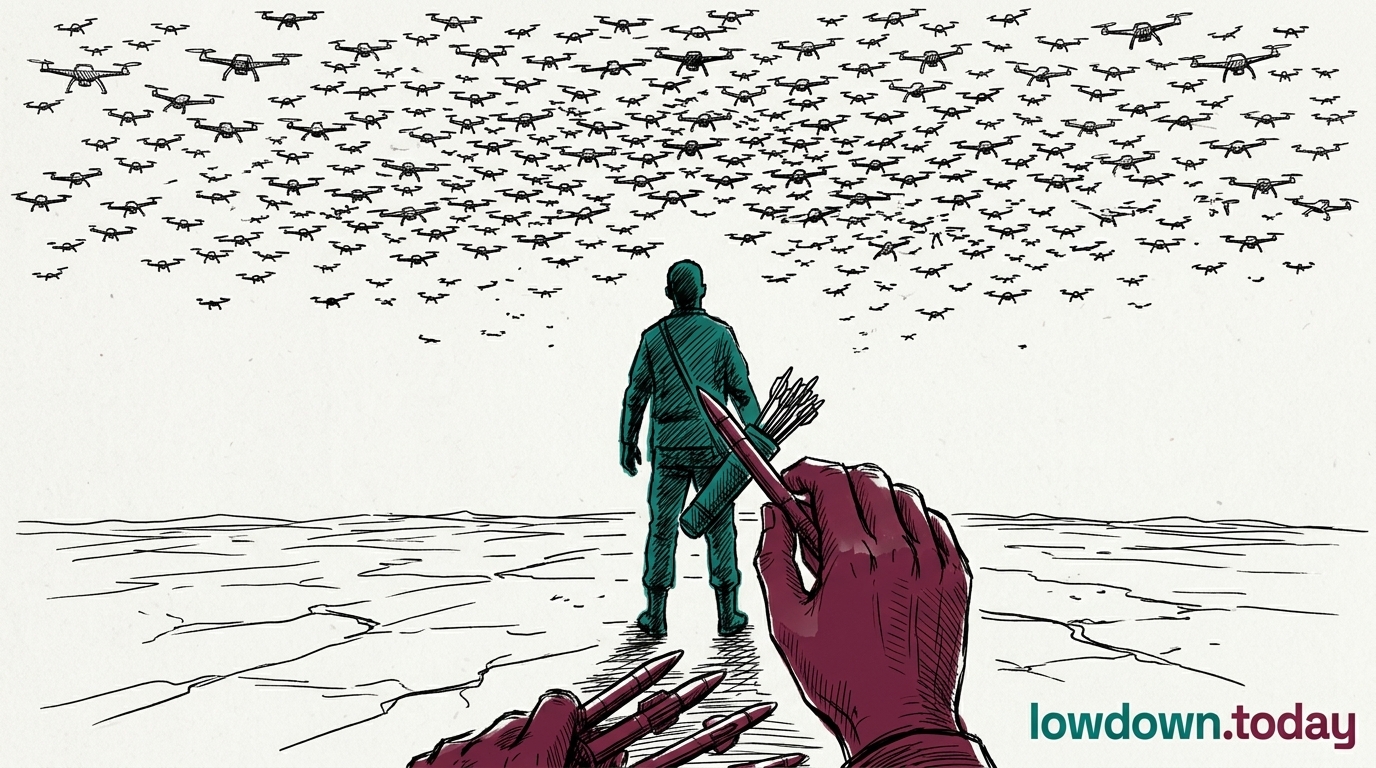
The proxy geometry has no modern precedent. Russia manufactures Shahed-pattern drones at its Alabuga plant in Tatarstan. Iran fires the original design at Gulf targets, guided in part by Russian satellite imagery. Ukrainian counter-drone crews — deployed across four Gulf States and a US base in Jordan since Zelenskyy's offer of assistance on 2 March — intercept them. The weapon, the intelligence, and the defence all trace back to the same war.

For Moscow, the calculus is direct: Iran's conflict with the United States diverts Western attention and air defence stocks from Ukraine, a dynamic already visible in reported delays to Patriot supplies . For Washington, the report poses a question the administration has not publicly addressed — Russian satellites are helping target installations where American personnel serve.


Deep Analysis

In plain English

The Foundation for Defense of Democracies — a hawkish US think tank — reported that Russia is providing Iran with detailed satellite imagery to help aim drone and missile attacks. The reported targets include US military command centres, radar sites, and what FDD describes as a CIA facility in Saudi Arabia. This is qualitatively different from Russia selling weapons to Iran. It means Russia is actively helping Iran aim those weapons at American facilities. Ukraine is simultaneously defending those same facilities. The Ukraine war and the Gulf conflict are now operationally linked on the ground — not just diplomatically.

Deep Analysis
Synthesis

Ukrainian crews defending Gulf targets against Iranian drones guided by Russian satellites means Ukraine and Russia are in direct operational confrontation on third-party soil. This is not a peripheral side conflict — it is the Ukraine war's Gulf theatre. Kyiv's commercial arms-export proposition and its strategic counter-targeting role are inseparable in that context: Ukraine is simultaneously selling air defence to the Gulf and degrading the Russian intelligence support enabling the attacks those systems must intercept.

Root Causes

Russia's structural motivation operates on three levels simultaneously. Iranian drone success against Gulf targets diverts US attention and resources from Ukraine. Degrading Gulf-based US infrastructure reduces Washington's capacity for multi-theatre power projection. Demonstrating to Iran that the partnership has operational depth also reinforces Russian influence in Tehran against Chinese competition for that strategic relationship.

Escalation

Moscow has crossed from arms transfer — deniable, widely precedented — to active targeting support for strikes on US facilities, which is harder to deny and less precedented. The public FDD disclosure gives the US administration a hook for response. Washington's reaction within the next 30 days will establish whether Russia faces consequences, setting a precedent in either direction.

What could happen next?
  • Precedent

    Russia has established a pattern of active targeting support for strikes on US assets that, if unanswered, will be repeated and expanded in scope.

    Short term · Assessed
  • Risk

    US casualties caused by Russian-intelligence-guided Iranian munitions could trigger domestic political demand for direct retaliation against Russian assets or personnel.

    Short term · Suggested
  • Consequence

    Ukraine's Gulf deployments now serve a dual function — commercial arms export and operational counter-intelligence against Russian targeting — making withdrawal politically costly for Kyiv.

    Immediate · Suggested
  • Meaning

    The Gulf conflict and the Ukraine war are operationally unified through the shared Russia-Iran drone ecosystem, not merely diplomatically or rhetorically linked.

    Immediate · Assessed
First Reported In

Update #4 · Ukraine pivots to drone exporter

FDD· 15 Mar 2026
Read original
Different Perspectives
Volodymyr Zelenskyy, President of Ukraine
Framed the Washington meeting as Ukraine ending an externally imposed diplomatic pause while pressing military advantage through the air defence campaign and Zaporizhzhia counteroffensive. Ukraine is approaching negotiations from the strongest battlefield position since 2023.
Abu Dhabi mediators
Abu Dhabi mediators
Invested diplomatic credibility in sustaining the peace process through two rounds and a planned March trilateral. Russia's suspension threat tests whether the UAE can exert enough influence on Moscow to keep the talks on track.
Kremlin (Dmitry Peskov)
Russia has not acknowledged the spring offensive designation or the 206,200 confirmed death toll. State media frames the 948-drone barrage as a legitimate response to Ukrainian strikes on Russian territory and dismisses Mediazona casualty figures as fabricated.
Former US sanctions enforcement officials
Former KleptoCapture leader Andrew Adams and former Secretary of State Mike Pompeo both warned the dismantling of enforcement infrastructure is structural, not temporary, and difficult to reverse.
Viktor Orbán
Viktor Orbán
Hungary is the only EU member frozen out of the SAFE rearmament fund, now also halting reverse gas exports to Ukraine. Budapest frames both moves as legitimate pressure over the Druzhba pipeline shutdown ahead of Hungary's 12 April elections.
Keir Starmer, UK Prime Minister
Positioned the UK-Ukraine drone partnership as a national security imperative extending beyond Ukraine, rebuking the Iran conflict's pull on Western attention. The defence industrial declaration commits British manufacturing to Ukrainian drone designs.



