Skip to content
You can now search across every topic, entity and event.What's new
Russia-Ukraine War 2026
13JUL

Drone kills chief engineer at Enerhodar

2 min read
10:28UTC

A drone struck a vehicle on 15 July at the edge of the Zaporizhzhia plant site, killing chief engineer Alexander Yakovlev and his driver. Three days later the city lost power and water.

ConflictDeveloping
Key takeaway

The plant is stable while the town that staffs and protects it is losing the means to do either.

A drone struck a vehicle on 15 July at the boundary between the Zaporizhzhia Nuclear Power Plant industrial site and the city of Enerhodar, killing the plant's chief engineer, Alexander Yakovlev, and his driver 1. Two people died, not one. Rosatom, the Russian state nuclear operator that has run the occupied plant since 2022, called it a terrorist attack and demanded a response from the International Atomic Energy Agency.

IAEA Director General Rafael Grossi condemned the attack without assigning blame. World Nuclear News reported him describing it as "an unacceptable attack on the plant and its management, seriously threatening nuclear safety", and repeating his call for an end to attacks on or near nuclear sites and their staff 2. Ukraine's military did not comment. Nothing published this week establishes who fired, and the account here rests on reporting rather than on any agency document Lowdown has read.

The surrounding week hollowed out the town that keeps the plant staffed. Enerhodar's fire station was hit again on 13 and 14 July, damaging the facade and an autocistern, after the earlier strike the IAEA recorded there on 1 July 3. On 18 July the city lost power and water entirely in further strikes, with the plant itself unaffected and radiation readings normal 4.

A reactor in shutdown still requires cooling, and cooling requires power, water and staff who can reach the site. Enerhodar now has a damaged fire station, no mains water to fight a fire with, and a senior engineer killed on the road between the town and the plant. Radiation readings being normal describes the last few days rather than the next few.

Deep Analysis

In plain English

A drone strike killed the chief engineer of the Zaporizhzhia Nuclear Power Plant, Europe's largest, along with his driver, on 15 July. The strike hit their vehicle at the boundary between the plant's site and the nearby city of Enerhodar. Inspectors recorded no damage to the plant and normal radiation readings afterwards. The International Atomic Energy Agency (IAEA), the UN body that monitors nuclear safety worldwide, condemned the killing but did not say who was responsible; nothing published establishes whether Ukrainian or Russian forces fired the drone. Rosatom, the Russian state company that runs the plant, called it a terrorist attack. Separately, the city of Enerhodar lost all power and water in further strikes on 18 July, and the local fire station that would normally respond to any plant emergency has itself been hit twice in the same period.

Deep Analysis
Root Causes

This is the plant's 22nd complete loss of off-site power since the war began, with 10 of those losses in the past three months alone, and only one of its original ten off-site power lines, the 330kV Ferosplavna-1, still available. Enerhodar's civilian power grid and the plant's backup safety supply now run through largely the same infrastructure, so strikes that cut the town's power also erode the plant's own safety margin.

The fire station supporting the plant's emergency response has been degraded repeatedly rather than in a single incident: hit on 30 June, then again on 13 and 14 July, meaning the plant's on-site emergency-response capacity has been worn down in stages even before the wider city lost power and water on 18 July.

First Reported In

Update #24 · Fedorov sacked as the front stands still

Vzglyad· 19 Jul 2026
Read original
Different Perspectives
Belarus
Belarus
Minsk announced completion of its own 37th Separate Airborne Assault Brigade near Gomel, under plans dating to August 2025 rather than a response to any single frontline event this window, keeping its hedge of hosting the war without formally joining Russia's mobilisation drive.
European Union / Operation IRINI states
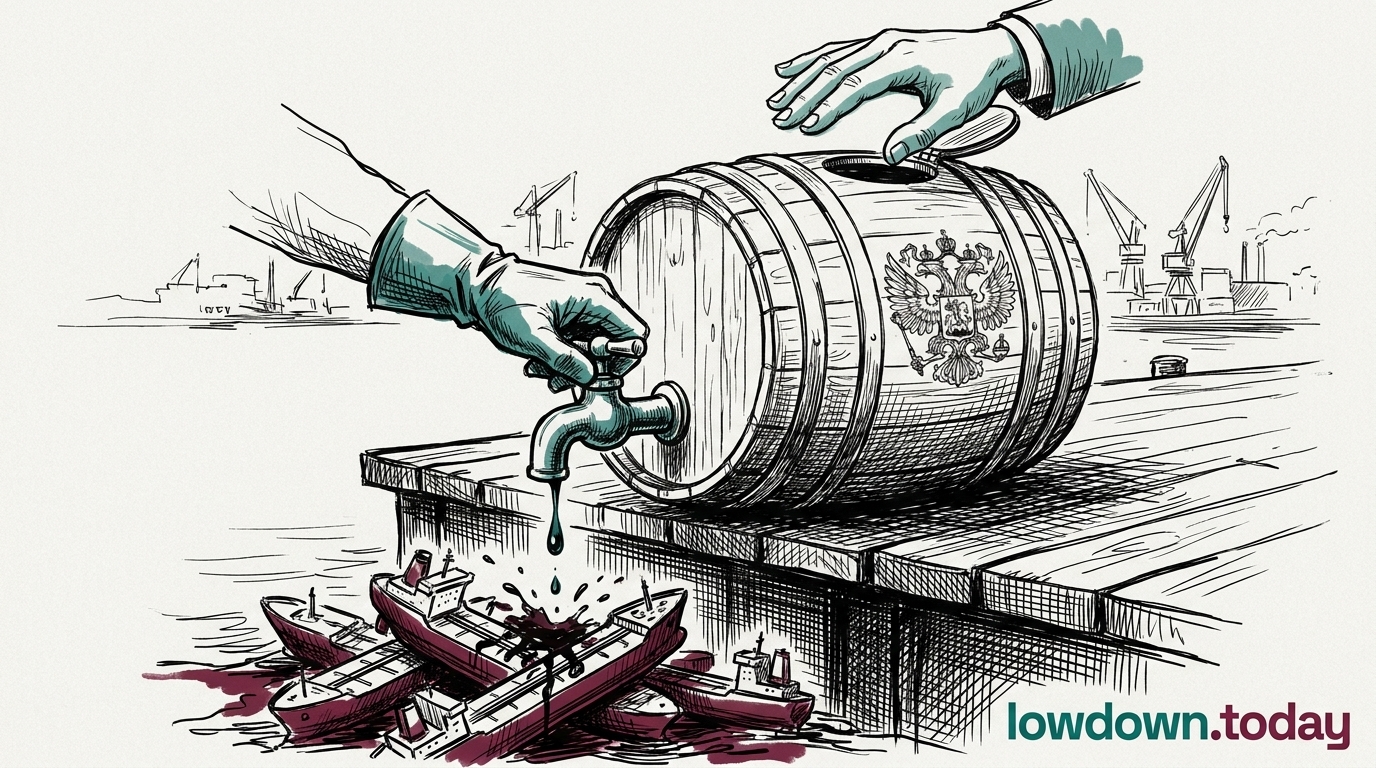
Italy, Greece and Poland boarded the sanctioned tanker Toa Payoh off Pantelleria under a standing EU mandate rather than a national decision, extending enforcement from the Channel and Baltic and the Black Sea and Azov into the Mediterranean. Italian Defence Minister Guido Crosetto praised the crew; the captain's refusal to produce documentation left detention unconfirmed.
Poland and the NATO eastern flank
Warsaw's Coordination Team said explicitly its forces tracked the 30 July missile incursion and were ready to shoot it down, then flew air cover for an EU tanker interdiction three days later. Poland is simultaneously the war's nearest spillover victim and a contributor to enforcing sanctions against the state causing that spillover.
Ukraine (government, defence establishment and civilians)
Kyiv runs its manpower crisis through acting Defence Minister Yevhen Khmara, whose formal appointment waits for parliament's 18 August return, and a fortnight-old Commander-in-Chief, Mykhailo Drapatyi. Reported attacks on enlistment officers rose from 5 cases in 2022 to 341 in 2025, reaching Odesa's Territorial Recruitment Centre staff directly on 2 August.
Kremlin and Russian domestic economic voices
Moscow has not addressed July's advance-rate collapse or Sberbank's OFZ warning; Novak's diary ran to OPEC+ quota diplomacy with no diesel item logged since 15 July. Economist Nikolai Korzhenevsky calls the Central Bank's RUB 2.3tn in bank lending effectively deficit monetisation, a framing Sberbank's Skvortsov, with his own institutional interest, has not disputed.
IAEA (Rafael Grossi)
IAEA inspectors logged Zaporizhzhia's 22nd loss of off-site power, ten of them in the last three months, after a thunderstorm knocked out the plant's sole surviving backup line. Grossi reads the accelerating frequency, not any single outage, as the safety signal now that the plant's redundancy is exhausted.
