Skip to content
You can now search across every topic, entity and event.What's new
Russia-Ukraine War 2026
16JUN

Ukraine cuts into Crimea's supply spine

2 min read
10:25UTC

Ukraine's Code 9.2 drone unit struck the Chonhar Bridge on 7 June as occupied Crimea cut petrol rationing to 20 litres per vehicle a week.

ConflictDeveloping
Key takeaway

Ukraine struck the Chonhar Bridge as Crimea cut petrol rationing to 20 litres a vehicle per week.

Occupied Crimea is now rationing petrol at 20 litres per vehicle a week, down from 20 litres a day, and the QR codes needed to buy it sold out within two hours on 7 June 1. ISW reports shortages of buckwheat, sugar, rice and flour spreading across the peninsula alongside the rationing. For ordinary drivers that means queuing for a code that buys barely a week's commuting.

On 7 June, Ukraine's Code 9.2 drone unit struck the Chonhar Bridge, one of the road links from mainland Russia into Crimea, forcing traffic to reroute via Armyansk and adding roughly 130km to supply runs 2. A day earlier, ISW assessed Ukraine had achieved drone fire control over the T-22-09 land corridor, the route Russia opened in 2022 to bypass the Kerch bridge.

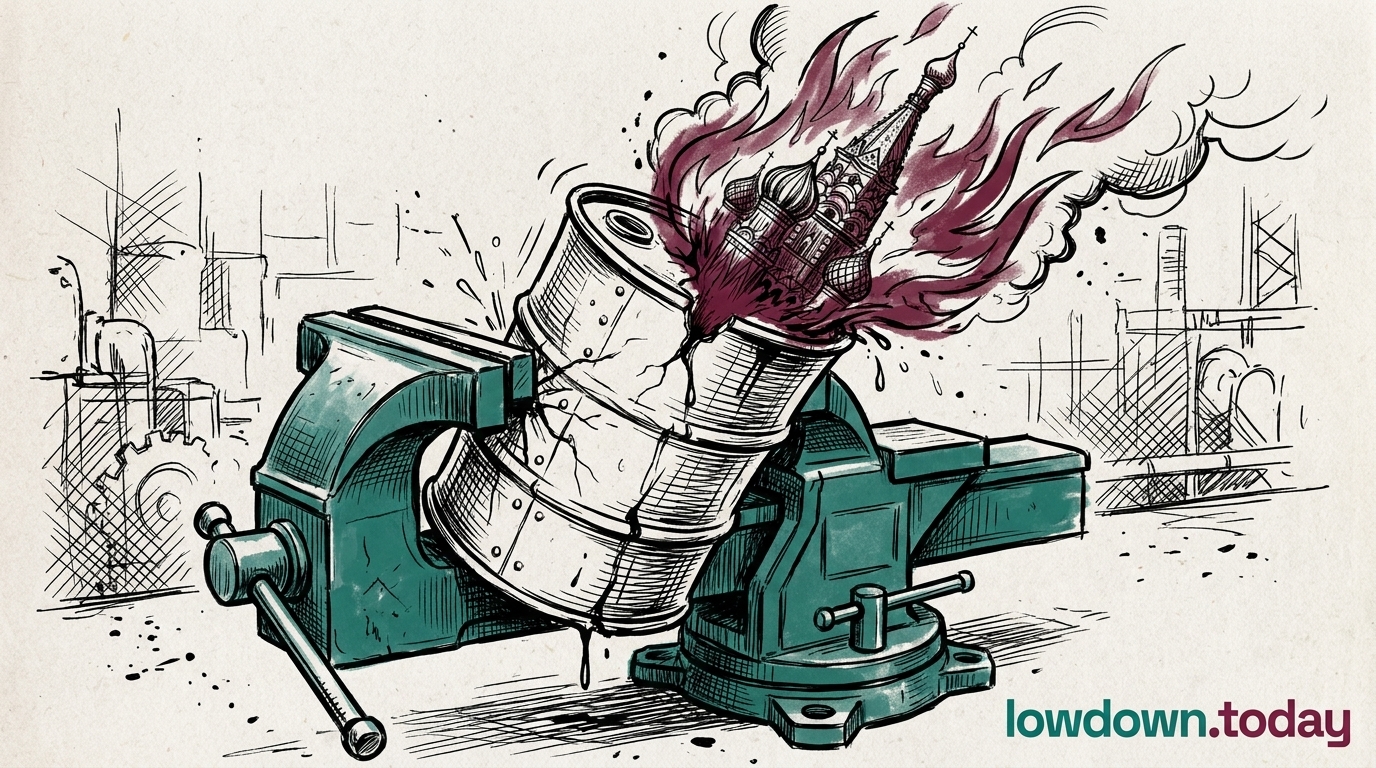
Russia can still resupply Crimea, yet the Kerch bridge, the T-22-09 corridor and now the Chonhar Bridge are each contested or lengthened. The squeeze is the same logic as Ukraine's strike on the Baltic Fleet and its run of net territorial gains since the spring : interdict the rear rather than batter a static front, and let the cost surface as queues and rationing far from the line of contact.


Deep Analysis

In plain English

Crimea is the Ukrainian peninsula Russia seized in 2014. Russia supplies it primarily by road across two bridges: the famous Kerch Bridge (which connects Crimea to mainland Russia across the Black Sea) and the smaller Chonhar Bridge (which connects Crimea to the Ukrainian mainland Russia now controls further north). Ukraine has repeatedly struck the Kerch Bridge in prior years. Striking the Chonhar Bridge now forces Russian supply convoys to take a much longer route via Armyansk in northern Crimea, adding roughly 130 kilometres of extra driving. Combined with the petrol ration being cut to 20 litres a week per vehicle (a seventh of what it was), civilian and military life on the peninsula is under severe supply pressure. The QR codes needed to buy fuel were selling out within two hours of release on 7 June.

Deep Analysis
Root Causes

Russia's Crimea logistics are structurally vulnerable because the peninsula has only two road corridors to the mainland controlled territory: Chonhar and Armyansk. The T-22-09 corridor was Russia's post-2022 bypass route after earlier Kerch Bridge damage.

Ukraine's drone reach now covers both routes simultaneously, a capability Ukraine did not have in 2022-23 when it relied on naval drones and cruise missiles. The 20-litres-per-week petrol ration is the downstream consequence of months of cumulative strike pressure on Crimea's supply chain.

What could happen next?
  • Consequence

    Russian military logistics to Crimea are degraded for as long as drone fire control over the T-22-09 corridor is maintained, raising the cost of every resupply run.

  • Risk

    Sustained Crimea supply pressure could force Russia to prioritise military over civilian fuel allocation, accelerating civilian discontent on the peninsula.

First Reported In

Update #19 · Ukraine burns the Baltic Fleet at Kronstadt

Institute for the Study of War· 9 Jun 2026
Read original
Causes and effects
This Event
Ukraine cuts into Crimea's supply spine
Every road link into Crimea is now contested or lengthened, and the petrol rationing is what that interdiction costs the peninsula in daily life.
Different Perspectives
Turkey
Turkey
Ankara hosts the NATO summit on 7-8 July, the next Western diplomatic convergence that Russia may target with a mass barrage based on the documented pattern of timing strikes to allied events; Turkey's role as the indispensable logistical intermediary between Kyiv and Moscow gives it standing to broker any ceasefire repair at Zaporizhzhia.
IAEA
IAEA
The IAEA's sixth brokered repair ceasefire at ZNPP collapsed within days of enabling initial work on the 750 kV Dniprovska line, leaving Europe's largest nuclear plant on a single 330 kV backup with 19 total blackouts recorded since the Russian occupation began.
European Union
European Union
The EU delayed the €9.1bn first tranche of its €90bn Ukraine loan on unmet technical conditions, while disbursing a separate €2.8bn Facility payment on 8 June; the G7 sanctions-to-talks linkage now runs parallel to EU enforcement.
United Kingdom
United Kingdom
Britain conducted its first maritime interdiction of the Russian shadow fleet, with Royal Marines seizing the Smyrtos in the English Channel on 14 June, and simultaneously announced a £210m Urenco uranium deal to break Ukraine's dependence on Russian nuclear fuel.
United States
United States
Trump called both Putin and Zelenskyy separately on 14 June, pledged to re-engage on Ukraine now the Iran deal is done, and the G7 tied future Russia sanctions to peace-talk progress, giving Washington leverage over both parties' negotiating posture.
Ukraine
Ukraine
Zelenskyy attended the G7 at Evian and proposed a direct Putin summit while 140,000 households in Kyiv lost power and the Lavra's Dormition Cathedral burned; Metropolitan Epiphanius called it an attack "against history, against Christianity." Kyiv's immediate priority is closing the PAC-3 export gap that left 19 of 34 Iskander-M ballistic missiles unintercepted.


