Skip to content
Welcome, thoughtbot's Giant Robots listeners!Start here
Russia-Ukraine War 2026
5MAR

Hungary CJEU challenge; Slovakia preparing to join

3 min read
04:57UTC

Hungary filed a CJEU challenge against the EU Russian gas ban on 2 February 2026 arguing the regulation required unanimous Council approval as a sanction rather than trade policy, with Slovakia preparing to join, while the European Commission's TurkStream derogation deadline is 5 August 2026.

ConflictDeveloping
Key takeaway

Hungary's CJEU challenge runs in parallel with the Commission's 5 August TurkStream derogation deadline.

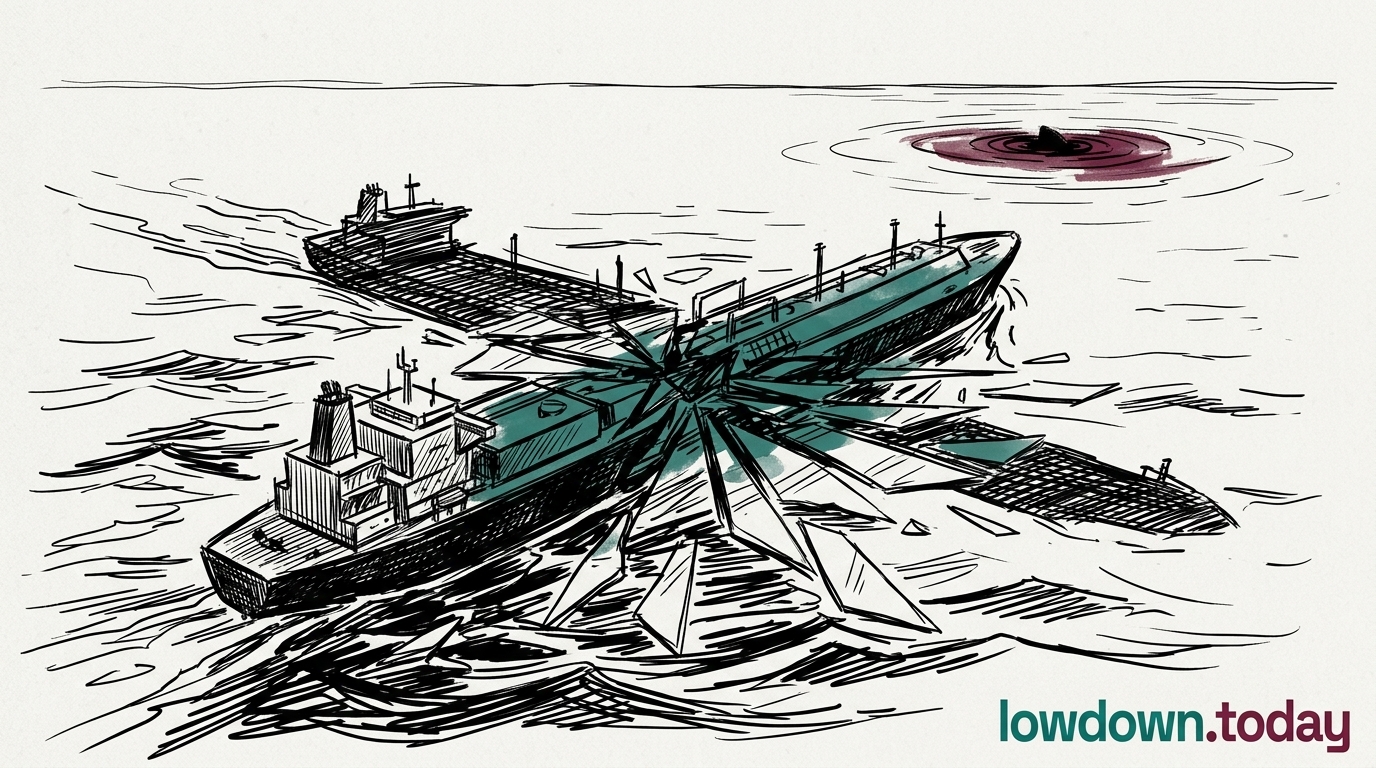
Hungary filed a CJEU challenge against the EU Russian gas ban on 2 February 2026, arguing the regulation required unanimous Council approval as a sanction rather than trade policy⁠1. Slovakia is preparing a parallel filing to join the Hungarian challenge. No CJEU ruling or preliminary injunction has been issued. The case sits in Luxembourg before the Court of Justice of the European Union, which adjudicates EU institutional and legal questions.

The filing runs in parallel with the TurkStream derogation process. ACER named Hungary and Slovakia among seven national regulatory authorities in its 6 May advisory opinions on TurkStream-entry derogation requests. The European Commission's deadline to rule on those seven requests, including Hungary and Slovakia, is 5 August 2026. The two legal tracks operate on different timelines: the CJEU challenge has no set ruling date; the Commission's TurkStream decision is due by 5 August.

Hungary's €123.23/MWh day-ahead clearing on 12 May, €54 above Spain, is the largest single-market premium in the briefing series. The clearing price compounds the political case for the derogation while the legal challenge runs in parallel. Hungary's reliance on TurkStream-routed Russian gas through the Balkans is the supply-side fact underneath the legal argument; the CJEU filing tests the procedural question, while the Commission's August deadline determines the operational outcome.

For procurement desks the calendar matters more than the legal theory. A Commission ruling against the derogations before 5 August closes the operational route; a ruling in favour preserves the supply line into Q3 and Q4. The CJEU has signalled no intervention date ahead of the Commission deadline. Slovakia's decision to join lifts the political weight of the challenge without changing the timetable.

Deep Analysis

In plain English

Russia sends natural gas to Hungary and Slovakia through a pipeline called TurkStream, which runs under the Black Sea through Turkey and into Central Europe. The European Union passed a law to phase out Russian gas as part of its response to the Ukraine war. Hungary challenged this law in the EU's highest court, the Court of Justice of the European Union (CJEU) in Luxembourg, arguing the law was passed incorrectly. At the same time, Hungary and several other countries asked for an exemption from another related EU gas rule, called the TurkStream derogation. The EU energy regulator ACER published opinions on these requests on 6 May, and the European Commission must make a final decision by 5 August 2026. Slovakia is preparing to join Hungary's court challenge. There is also an important political change in Hungary: a new, more pro-EU government took power in May 2026 after elections in April. It is not yet clear whether the new government will continue the legal challenge that the old government started.

Deep Analysis
Root Causes

Hungary's CJEU challenge rests on a structural dependency, not a legal abstraction. Hungary imported approximately 80% of its gas via TurkStream-routed Russian supply as of 2025, with no LNG regasification terminal and limited interconnection capacity for Norwegian pipeline gas. The ban removes Hungary's dominant supply source without a Commission-approved replacement pathway.

The political context complicates the challenge's future. Hungary's 12 April 2026 election gave Péter Magyar's Tisza party 137 of 199 parliamentary seats; the new government formed around 5 May. Magyar is significantly more pro-EU than Orbán and has expressed support for aligning Hungary with EU energy policy. The CJEU challenge was filed under the Orbán government on 2 February; whether the Magyar government maintains or withdraws it is an open question not yet publicly resolved.

What could happen next?
  • Risk

    If the Commission rules against the TurkStream derogation by 5 August, Hungary faces forced spot procurement at Continental clearing prices from Q3 2026, widening its energy cost disadvantage relative to western EU members.

    Short term · 0.74
  • Consequence

    Hungary's new Tisza government may withdraw or fail to prosecute the CJEU challenge, removing the co-applicant anchor for Slovakia's parallel filing and collapsing the legal challenge without a ruling.

    Short term · 0.6
  • Precedent

    If the CJEU upholds the trade-measure basis for the gas ban (consistent with the 2022 Poland coal ruling), it forecloses the legal avenue for any future member state challenging energy-sector sanctions on unanimous-approval grounds.

    Long term · 0.72
First Reported In

Update #9 · Storage 35% met, 80% trajectory still missed

Xinhua· 12 May 2026
Read original →
Different Perspectives
South Korean foreign ministry
Seoul said on 20 October it will withdraw some Kyiv embassy staff, citing no constructive steps from Kyiv since it recalled its ambassador over the disclosure of two North Korean prisoners. A chargé d'affaires and consular staff stay, and Seoul says its aid continues.
Alexander Lukashenko
Lukashenko said on 22 October that talks with the US show progress despite problems, which he said were highlighted with the exchange of political prisoners for the lifting of sanctions. He said Minsk keeps its promises and wants the US to deliver its side in full.
Moldovan government (Daniella Misail-Nichitin)
Moldova has pulled its border guards and customs officers from four crossings on Ukrainian soil after Russian strikes near the border. Interior Minister Daniella Misail-Nichitin said Chisinau is weighing moving Ukrainian checkpoints onto Moldovan territory.
Péter Magyar
Péter Magyar
Magyar told RTL that Ukrainian maize may cross Hungary in sealed trains bound for Western Europe. He set one condition: the cargo must only transit the country.
Donald Tusk
Donald Tusk
Tusk said Warsaw would seek an explanation from Kyiv for the drone's route across Poland. He said Poland allows no operations over its territory without its explicit consent.
Mindaugas Sinkevičius
Lithuania's prime minister said the Ukrainian drone that exploded in Pasvalys district on 18 October carried explosives and entered from Poland through the Schengen zone. Earlier drones over Lithuania had come from Belarus, not through allied airspace.

Written with AI from Lowdown's published reporting. Not individually reviewed by an editor. Editorial standards.