Skip to content
Welcome, thoughtbot's Giant Robots listeners!Start here
Russia-Ukraine War 2026
5MAR

Four LNG terminals at lowest utilisation since 2023

2 min read
04:57UTC

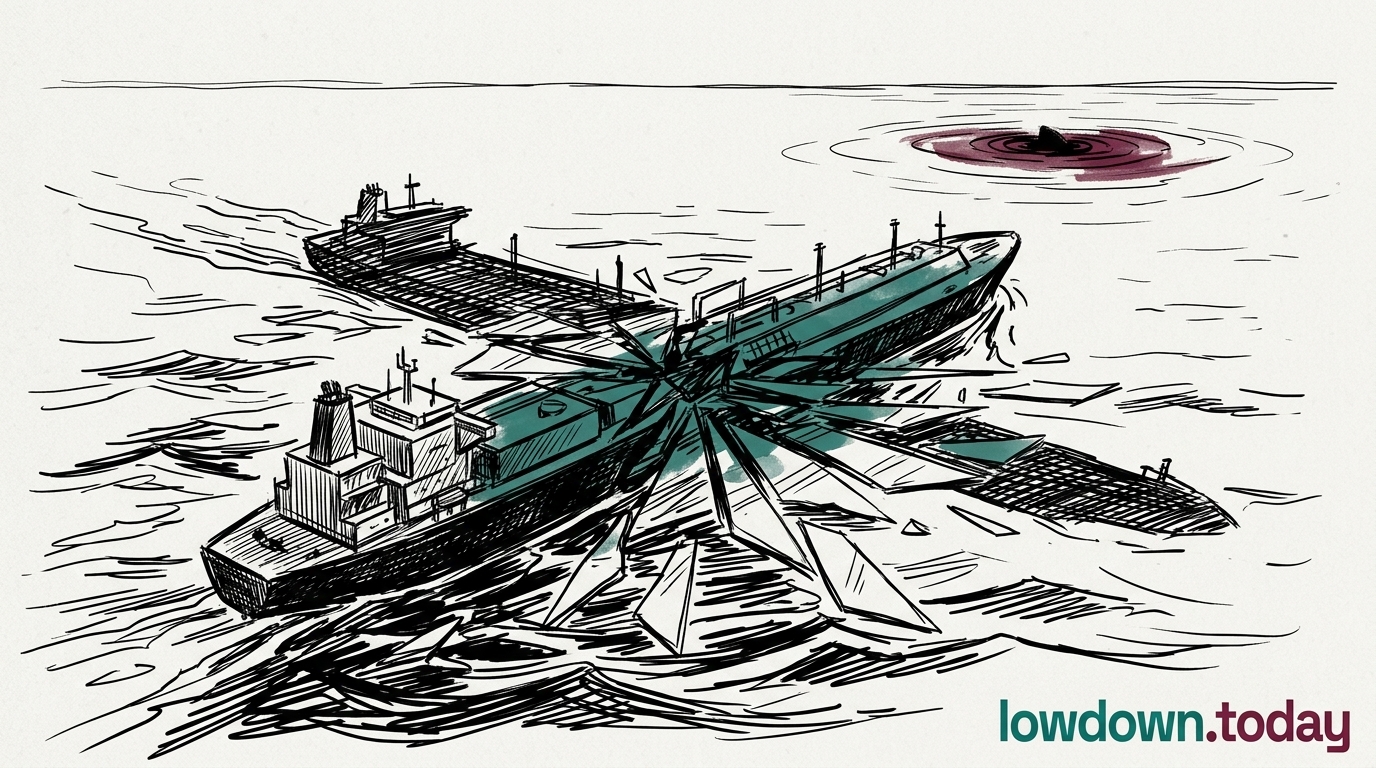
IEEFA identified four EU LNG terminals recording their lowest utilisation since 2023 in Q1 2026: Panigaglia (Italy), EemsEnergy (Netherlands), Fos Cavaou (France) and Sines (Portugal).

ConflictDeveloping
Key takeaway

LNG cargo concentration at fewer hubs leaves four terminals underutilised and deepens the locational supply imbalance across the EU.

IEEFA data for Q1 2026 found four LNG terminals at their lowest utilisation since 2023: Panigaglia near La Spezia, EemsEnergy at Eemshaven in the Netherlands, Fos Cavaou in southern France, and the Sines terminal on Portugal's Atlantic coast. The finding sits alongside the Russian LNG quarterly record reported in the same dataset, which means overall import volumes rose while terminal throughput concentrated at fewer facilities.

The concentration pattern has a geographic logic. Post-Hormuz, LNG cargoes are overwhelmingly Atlantic-sourced (US at 63% of EU imports in Q1). Atlantic cargoes route preferentially to large-capacity terminals on the Atlantic and North Sea coasts: Zeebrugge, Gate Rotterdam, Montoir. Smaller or Mediterranean-facing terminals that historically received Qatari or spot Middle Eastern cargoes are losing throughput because those cargoes no longer exist in sufficient volume. The terminals recording low utilisation are precisely the ones most exposed to the loss of eastern and southern supply routes.

For infrastructure operators, low utilisation feeds directly into the revenue assumptions underpinning terminal investment cases. For gas consumers served by those terminals, lower throughput means less local supply, which reinforces the hub premium that ACER identified in Central European markets. The EU built LNG import capacity to diversify away from pipeline dependency; in practice, the new dependency concentrates at a handful of hubs.

Deep Analysis

In plain English

Europe has built many specialised ports and facilities to receive tankers carrying supercooled liquid natural gas, which is then warmed up and pumped into pipelines. Four of these facilities in Italy, the Netherlands, France, and Portugal are currently running at their lowest levels since 2023, even as Russia has been shipping more gas to Europe than ever. This suggests that the gas arrivals are going to a small number of favoured ports rather than being spread across all available infrastructure, which creates a vulnerability if those preferred ports become unavailable.

What could happen next?
  • Consequence

    The four underutilised terminals represent latent regasification capacity that becomes immediately available for replacement LNG procurement after the 1 January 2027 Russian cargo ban, but commercial reactivation costs (maintenance, reactivation fees) have not been publicly modelled.

First Reported In

Update #13 · Storage on track by 45 GWh; one outage away

Euronews· 29 May 2026
Read original →
Causes and effects
This Event
Four LNG terminals at lowest utilisation since 2023
Low utilisation alongside a Russian LNG quarterly record implies cargoes are concentrating at fewer hubs rather than distributing across the terminal estate, deepening the locational basis problem for Central European consumers.
Different Perspectives
South Korean foreign ministry
Seoul said on 20 October it will withdraw some Kyiv embassy staff, citing no constructive steps from Kyiv since it recalled its ambassador over the disclosure of two North Korean prisoners. A chargé d'affaires and consular staff stay, and Seoul says its aid continues.
Alexander Lukashenko
Lukashenko said on 22 October that talks with the US show progress despite problems, which he said were highlighted with the exchange of political prisoners for the lifting of sanctions. He said Minsk keeps its promises and wants the US to deliver its side in full.
Moldovan government (Daniella Misail-Nichitin)
Moldova has pulled its border guards and customs officers from four crossings on Ukrainian soil after Russian strikes near the border. Interior Minister Daniella Misail-Nichitin said Chisinau is weighing moving Ukrainian checkpoints onto Moldovan territory.
Péter Magyar
Péter Magyar
Magyar told RTL that Ukrainian maize may cross Hungary in sealed trains bound for Western Europe. He set one condition: the cargo must only transit the country.
Donald Tusk
Donald Tusk
Tusk said Warsaw would seek an explanation from Kyiv for the drone's route across Poland. He said Poland allows no operations over its territory without its explicit consent.
Mindaugas Sinkevičius
Lithuania's prime minister said the Ukrainian drone that exploded in Pasvalys district on 18 October carried explosives and entered from Poland through the Schengen zone. Earlier drones over Lithuania had come from Belarus, not through allied airspace.

Written with AI from Lowdown's published reporting. Not individually reviewed by an editor. Editorial standards.