Skip to content
You can now search across every topic, entity and event.What's new
Russia-Ukraine War 2026
9JUN

Putin admits the petrol queues himself

2 min read
11:54UTC

At a 28 June Kremlin meeting, Putin acknowledged queues at petrol stations, the first time he rather than Deputy PM Alexander Novak has owned the shortage.

ConflictAssessed
Key takeaway

Putin said on camera what Novak's messaging was built to avoid.

Vladimir Putin acknowledged "queues at gas stations" and that "the right grade of gasoline isn't always available" at a Kremlin meeting on domestic fuel supply on 28 June 1. It was the first time he, rather than Deputy Prime Minister Alexander Novak, had publicly owned the shortage. Five days earlier Novak had assured him fuel was "challenging but under control" as fifteen Russian regions rationed petrol .

Russia has extended its gasoline export ban to 31 July and is weighing a diesel export ban it keeps declining to impose, the Energy Ministry pointing to a failed 2023 attempt 2. Putin taking the file off Novak signals the reassurances had stopped landing, and his next appearance on fuel will show whether he hands it back.

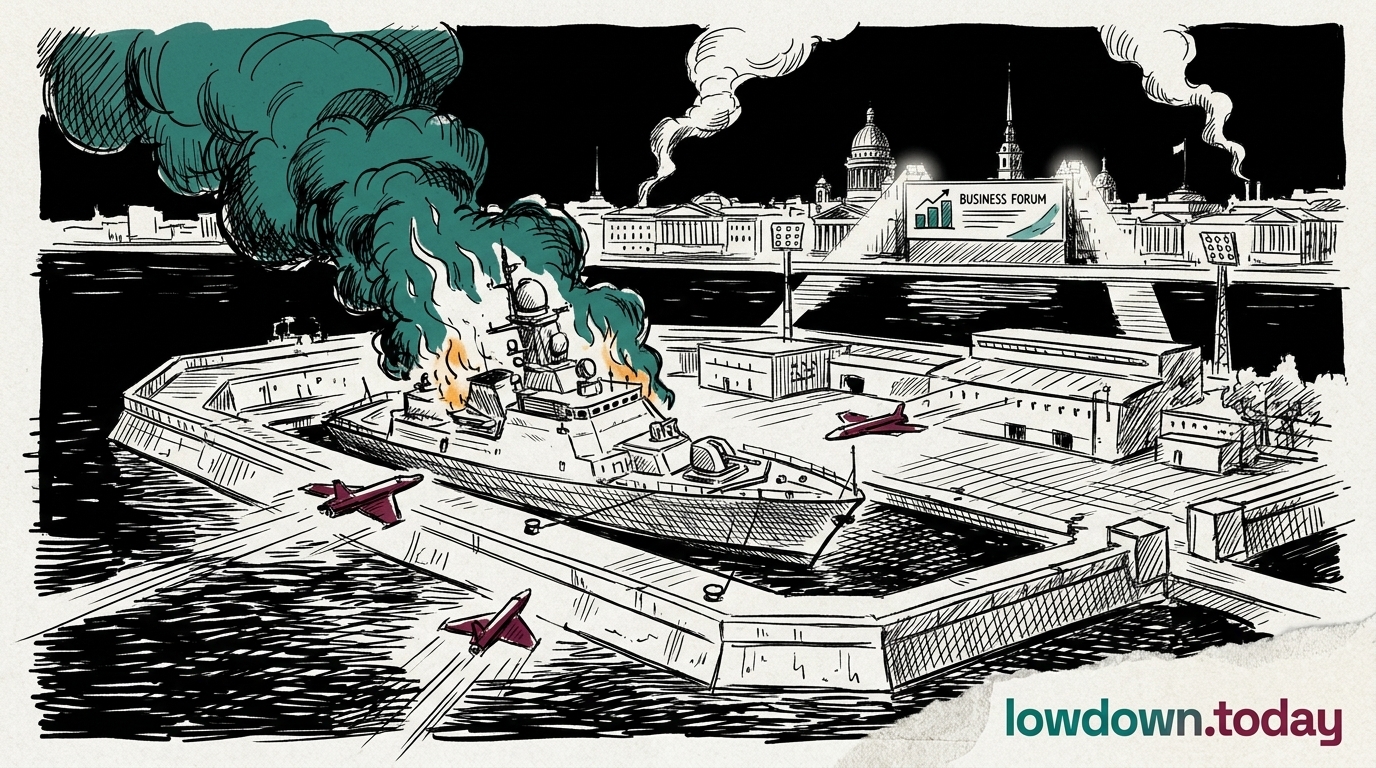
Russia supplies roughly 11% of the world's diesel exports, so a sustained refining shutdown reaches a global fuel market well beyond its own petrol queues. A diesel export ban, still under consideration after the 28 June admission, would lift pump and freight prices outside the war zone. The shortage behind Putin's admission is a product of Ukraine's long-range drone campaign against Russian refineries.

Deep Analysis

In plain English

Russia has been rationing petrol for weeks after Ukrainian drone strikes knocked out major refineries. Until now, officials like deputy prime minister Alexander Novak had downplayed the shortage as manageable. On 28 June, President Vladimir Putin himself admitted that petrol stations have queues and that the right fuel grade isn't always on the shelf, a rare personal acknowledgment from a leader who usually leaves bad news to subordinates. Russia has also extended its ban on exporting petrol, to keep more of it at home, until the end of July.

Deep Analysis
Root Causes

Russian refining is concentrated in a handful of large plants; Kapotnya alone supplies around 40% of Moscow region fuel, so a single strike removes capacity no other refinery can absorb quickly.

Redistributing fuel from unaffected regions depends on rail tank-car availability that has not scaled with the sudden shift in demand, meaning the shortage persists even where refining itself is untouched.

What could happen next?
  • Meaning

    Putin's personal ownership of the shortage marks a shift from delegated messaging to direct accountability, unusual for a leader who typically distances himself from unwelcome domestic news.

  • Consequence

    Extending the export ban to 31 July keeps more fuel inside Russia but does nothing to fix the rail-logistics bottleneck moving it to deficit regions.

First Reported In

Update #22 · Belarus relays go dark on Kyiv's deadline

Rigzone· 2 Jul 2026
Read original
Different Perspectives
IAEA (Rafael Grossi)
IAEA inspectors logged Zaporizhzhia's 22nd loss of off-site power, ten of them in the last three months, after a thunderstorm knocked out the plant's sole surviving backup line. Grossi reads the accelerating frequency, not any single outage, as the safety signal now that the plant's redundancy is exhausted.
United States (Treasury/OFAC)
Washington has let general licence 134C, its Russian crude waiver, lapse for 36 days with no successor, the longest gap of the war. Treasury has not said whether the non-renewal reflects deliberate policy or administrative delay, leaving buyers to price in compliance risk rather than wait for clarity.
Slovakia
Slovakia
Slovakia dropped its hold-out on the EU's 21st sanctions package only after winning a 2028 guarantee phasing out Russian gas, the exact pipeline dependency, roughly 80% of its crude supply, that gave it leverage. Bratislava's climbdown clears the package but leaves the same single-veto mechanism intact for the next round.
Russia (Kremlin and general staff)
General staff chief Gerasimov claimed Donetsk captures on 18 July that ISW says it cannot corroborate, extending a pattern ISW clocked at a 5:1 exaggeration ratio earlier this year. Moscow is conditioning its public for a possible autumn mobilisation after September's Duma elections rather than acknowledging the front has stalled.
Ukraine (Zelenskyy government)
Zelenskyy dismissed his commander-in-chief, defence minister and chief of general staff within eight days, replacing Syrskyi with Drapatyi and Hnatov with Skybiuk as protesters demanded Syrskyi go and Fedorov return. Kyiv frames the sweep as a bet on manoeuvre capacity ahead of a feared Russian autumn surge, not the disarray critics read into three changes in a week.
The United Kingdom
The United Kingdom
Starmer pledged £300 million in Kyiv on 16 July toward Ukraine's Gripen E squadron, adding to the PURL expansion Trump and Rutte had announced two days earlier. London is paying into a scheme built around a shortfall NATO's own published $4bn-plus pledge does not close against Zelenskyy's roughly $15bn stated need.