Skip to content
You can now search across every topic, entity and event.What's new
Russia-Ukraine War 2026
9JUN

Four officials, one text, four answers

3 min read
11:54UTC

Pakistan's PM called the Iran deal text final on 12 June; Vance called it TBD the same day; the White House register stayed blank.

ConflictDeveloping
Key takeaway

The mediator and the diplomats called the deal done; the men who must sign it stayed silent.

Pakistan's Prime Minister Shehbaz Sharif declared on 12 June that "a final, agreed upon text" of the US-Iran deal had been reached. 1 Within the same hours US Vice President JD Vance told CBS the deal was "still TBD", a senior US official put it at "75 per cent complete", and Iran's Foreign Minister Abbas Araghchi said the Islamabad memorandum of understanding (MoU) had "never been closer" and would be signed digitally "within the next few days". 2 Four principals, one text, four incompatible accounts on a single day.

The White House Presidential Actions register, the public log of every executive instrument, carried no Iran document dated 12 or 13 June. 3 The only 12 June entry, a National Security Presidential Memorandum (NSPM-12), governs cybersecurity. What President Donald Trump did this weekend, stand down a third strike day and tout the unsigned MoU as Iran dismissed it as speculation , contradicts what he said.

The spread sorts the actors by leverage. Pakistan carried the dual civilian-military message to Tehran on 6-7 June , and Islamabad's incentive to claim a diplomatic win outruns its standing to deliver either capital's signature. A mediator and a foreign ministry called the text done. The US vice president, speaking for the man who would actually sign, called it three-quarters there.

Trump's claim that Iran approved the deal at its very top rests on a Supreme Leader unreachable at deal speed, so it stays unverified. Across this war, every "close to over" statement has come from a verbal channel and never coincided with a signed instrument in the same week. The only hard 13 June facts are an empty register and a blockade that never paused.


Deep Analysis

In plain English

On 12 June, four officials described the same Iran deal to different journalists and gave four different answers. Pakistan's PM Shehbaz Sharif called it a finalised text. US Vice President JD Vance called it "still TBD". A US official put it at 75 per cent done. Iran FM Abbas Araghchi said it was "never been closer" but not yet signed. The one objective check sits on the White House website, where every presidential decision gets a public record. That register showed no Iran document on 12 or 13 June. Without a signed text on the register, all four accounts describe different stages of wishful thinking rather than different readings of the same finished deal.

Deep Analysis
Root Causes

Pakistan's mediation role depends on keeping both capitals engaged, so Islamabad faces a structural incentive to declare progress before either capital confirms it. Sharif's "final text" claim on 12 June reflects that pressure, not a factual read of the register.

The White House register blank is itself structural: Trump has not signed a single Iran instrument in 105 days of conflict. A verbal Oval Office commitment and a public tweet are the only instruments he has used, leaving no paper trail for Sharif to cite or Vance to contradict from the same document.

What could happen next?
  • Risk

    Sharif's premature announcement depletes Pakistan's mediating credibility if the deal slips again, reducing Islamabad's leverage in the next round.

    Short term · Suggested
  • Consequence

    A continued blank White House register after a 12 June "breakthrough" would sharply reprice both Brent crude and Gulf shipping insurance.

    Immediate · Assessed
  • Meaning

    Vance calling the deal "still TBD" on the same day Sharif declared it final reveals Washington has not unified its public position, which Iran's IRGC will read as permission to delay endorsement.

    Immediate · Assessed
First Reported In

Update #126 · The weekend signing that never reached paper

The White House· 13 Jun 2026
Read original
Different Perspectives
North Korea / DPRK
North Korea / DPRK
ISW confirmed the first mounting of DPRK Type-75 MLRS on Russian autonomous UGVs near Kharkiv on 7 June, the latest step in a supply axis that escalated from shells in 2023 to troops in 2024. Pyongyang gains live battlefield data on its ordnance and on Russia's uncrewed-systems programme.
IAEA / Rafael Grossi
Grossi confirmed Chornobyl structural damage with nuclear material metres away and could not attribute the ZNPP 15-hour blackout during the agreed repair window. Six ceasefires brokered and broken at ZNPP, compounded by Rosatom's May attack on IAEA neutrality, have eroded his ability to enforce the windows he negotiates.
Emmanuel Macron / France
Macron co-signed the E3 framework whose line-of-contact baseline marks Europe's first formal acceptance that 1991 borders are not the opening position. France's role carries weight because Macron had previously proposed a European force for Ukraine, and the framework's multinational force point is the vehicle for that.
Keir Starmer / E3
Keir Starmer / E3
Starmer, Macron and Merz met Zelenskyy on 7 June and backed a five-point framework taking the line of contact as the talks baseline, conceding roughly one fifth of Ukraine in exchange for a multinational force and frozen assets. With US mediation ended, the NATO Ankara summit on 7-8 July is the next test.
Vladimir Putin / Kremlin
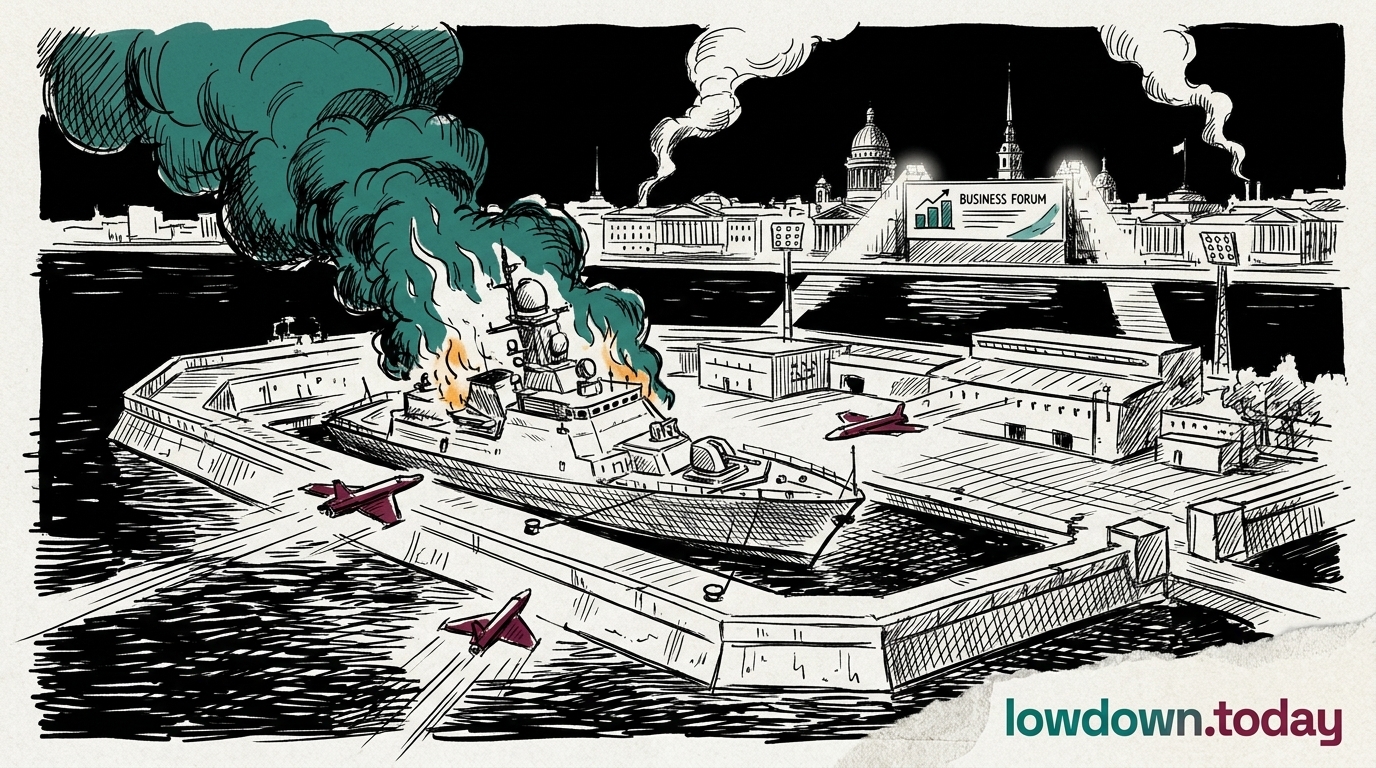
Putin used SPIEF to reject Zelenskyy's summit letter, citing 'elements of rudeness', and repeated the pre-agreed treaty precondition that has frozen every diplomatic round since May. The SPIEF platform's message of investor confidence was punctured by naval fires visible from St Petersburg, which Moscow declined to dispute in scale.
Ukraine / Unmanned Systems Forces
Commander Brovdi confirmed USF units tracked and set fire to Boikyi at Kronstadt, while Code 9.2 struck the Chonhar Bridge the following day. Ukraine is sequencing strikes for rear-area interdiction and political timing rather than ground gains, trading the Baltic Fleet's home base for the logistics squeeze Russia cannot absorb without rationing its own occupied territory.



