Skip to content
Welcome, thoughtbot's Giant Robots listeners!Start here
Russia-Ukraine War 2026
1JUN

Druzhba restart unblocks €90bn EU loan

3 min read
10:39UTC

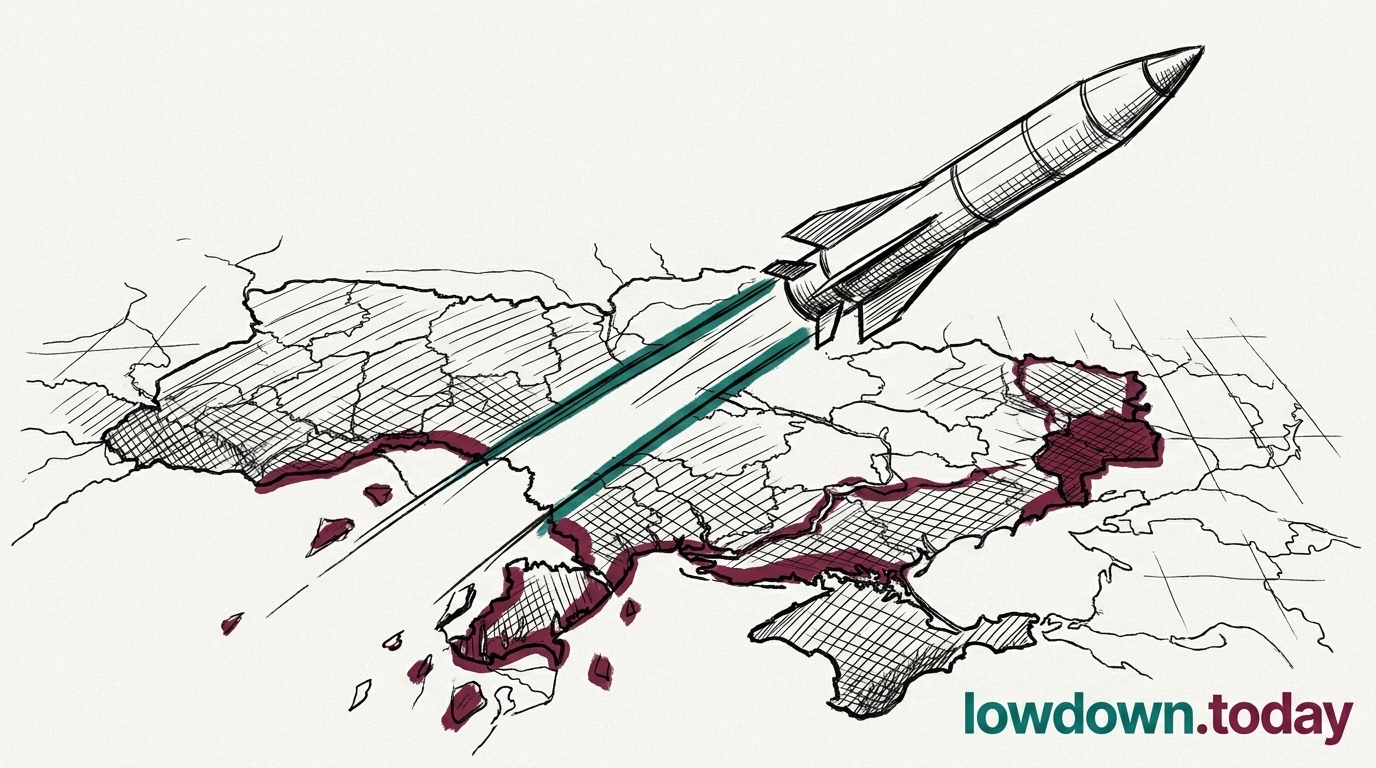
Ukraine restarted Russian crude flows via the Druzhba pipeline on 22 April after months halted; within hours Hungary lifted its veto on the €90 billion EU-Ukraine loan, with MOL taking first deliveries 23 April.

ConflictAssessed
Key takeaway

The pipeline carries crude, but the political consequence runs through every Hungary file in this week's briefing.

Ukraine restarted Russian crude flows via the Druzhba pipeline on Wednesday 22 April after months halted following late-January damage⁠1. Within hours Hungary lifted its veto on the €90 billion EU-Ukraine loan facility. MOL, the Hungarian oil major, took first deliveries on Thursday 23 April; Slovakia confirmed first deliveries in the early hours of the same day.

Druzhba is the Soviet-era pipeline network that has carried Russian crude west since 1964 and remains the primary crude artery for landlocked central European refiners. The northern leg runs through Belarus to Poland and Germany; the southern leg, which has restarted, runs through Ukraine to Hungary's Százhalombatta refinery and Slovakia's Slovnaft. The late-January halt followed damage to the Ukrainian transit infrastructure; the restart restores the southern flow that MOL has historically depended on for roughly a third of its crude.

The veto-lift followed the 12 April Hungarian parliamentary election, which brought Péter Magyar to power on a platform that had pledged to lift Hungary's veto on the EU-Ukraine loan. Magyar's pre-election positioning made the loan release contingent on his victory; the post-election delivery confirms the alignment. For the €90 billion facility, that means disbursement now runs on the agreed timetable rather than the Hungarian calendar that had blocked it through the prior coalition's tenure.

Druzhba carries crude rather than gas, so the European wholesale gas curve sees only indirect impact. TTF settled at €44.13/MWh on 29 April with no measurable Druzhba premium. Hungary's political pivot delivers the direct consequence. Budapest's negotiating posture inside the 20th sanctions package debate and on the MOL infringement opinion now sits on a baseline reset by Magyar's election win. Russia-Ukraine-war-2026 owns the primary geopolitical framing of the crude restart and the loan unblock; this topic owns the European market-exposure leg, where MOL's first-delivery confirmation sets the operational baseline against which Slovakia's CEZ-led contracting and Hungary's longer-run pipeline-redundancy planning will be measured.

Deep Analysis

In plain English

The Druzhba pipeline is one of the longest oil pipelines in the world, running from Russia through Ukraine into central Europe. It moves crude oil; the raw material refined into petrol, diesel and heating oil; to refineries in Hungary and Slovakia. It had been shut since late January following damage during the war. Ukraine switched it back on 22 April. The same week, Hungary's new government dropped its veto blocking the EU from disbursing a €90 billion financial package to Ukraine. The two events are connected: Hungary's previous government had used the loan as leverage, and its replacement by a pro-EU administration resolved both blocks in the same week.

Deep Analysis
Root Causes

Hungary's veto on the €90 billion EU-Ukraine loan rested on two linked conditions under Orbán: the continuation of Russian crude via Druzhba to MOL's Százhalombatta refinery (the only refinery in Hungary, calibrated for Russian crude), and Budapest's broader leverage over EU unanimity-required instruments.

Magyar's pre-election commitment to lift the veto was credible because his party platform explicitly addressed both conditions: normalising EU relations while negotiating a long-term crude supply alternative for MOL.

The Druzhba restart on 22 April preceded the formal vote on the loan veto by hours, suggesting that Ukraine and Hungary had coordinated the sequencing; Ukraine signalling commercial reliability to MOL before Budapest's parliamentary vote, and Hungary signalling political will to Brussels before the formal veto lift.

What could happen next?
  • Consequence

    Hungary's changed EU posture, if sustained after government formation on 5 May, opens the path to unanimity on the full maritime services ban blocked in the 20th package and potential revision of Hungary's MOL infringement response.

  • Risk

    Magyar's government formation faces Fidesz contestation that could delay formal executive positions on EU instruments past the 5 May target; the window of Hungarian blocking leverage may not have fully closed.

First Reported In

Update #6 · REMIT II live; storage instrument absent

Al Jazeera· 29 Apr 2026
Read original →
Causes and effects
This Event
Druzhba restart unblocks €90bn EU loan
The pipeline carries crude not gas, so the wholesale gas curve impact is indirect, but the political baseline has shifted under every other Hungary file in this week's briefing.
Different Perspectives
Bulgarian government
Bulgaria's Prime Minister, Rumen Radev, said the sinking of HS Dignity "benefits the Russian Federation" while saying Bulgaria lacked solid evidence to accuse anyone, and Defence Minister Dimitar Stoyanov asked NATO for air defence on 16 October. The request comes from a government that stopped state military aid to Ukraine in June.
Radoslaw Sikorski
Radoslaw Sikorski
Poland's foreign minister challenged Elon Musk on X after SpaceX capped Ukraine's Starshield terminals on 14 October. Poland pays about $50m a year for Ukraine's Starlink subscriptions, so Warsaw speaks as the paying customer as well as the ally.
Andy Burnham
Andy Burnham
Burnham fast-tracked £10m of a £45m air-defence missile delivery when Zelenskyy visited London on 14 October, and his ministers are lobbying allies to ban maritime services for Russian liquefied natural gas. The measure targets insurers and shipowners, many of them in London, rather than the gas itself.
Ministry of External Affairs (India)
India's foreign ministry said after the 16 September House vote that New Delhi would take all necessary measures to protect its trade.
European Council
European Council
EU leaders on 15-16 October rejected a US idea to hand Washington the roughly €200bn of frozen Russian assets held in Europe, and Kaja Kallas said the decision belongs to Europeans. The same summit put off a decision on financing Ukraine, saying leaders "will revert to the issue in a timely manner".
Donald Trump
Donald Trump
Trump signed the 16 October order that sets the Graham Act's duties and waives them under section 115(a), with a certification sent to Congress. He says the United States has not stopped sharing intelligence with Ukraine, and on 11 October he said both sides had agreed to halt attacks on energy infrastructure.

Written with AI from Lowdown's published reporting. Not individually reviewed by an editor. Editorial standards.
