Skip to content
You can now search across every topic, entity and event.What's new
Russia-Ukraine War 2026
13MAY

Latvia puts drone hunters on the road

2 min read
20:00UTC

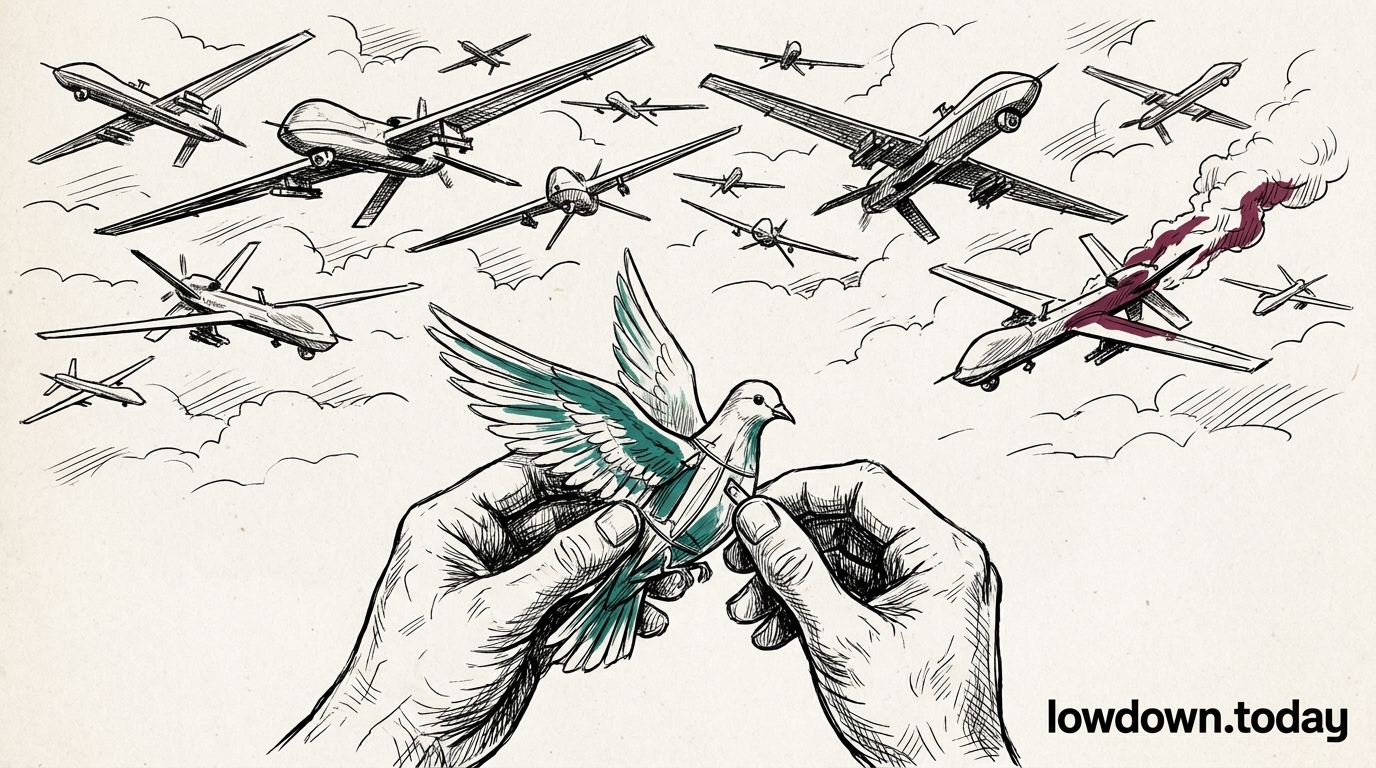
Latvia deployed mobile drone-intercept teams to its Russian border, four-soldier 4x4 units carrying domestic Origin Robotics and Eraser interceptors, after two UAVs crashed on its soil in May.

ConflictDeveloping

Latvia deployed mobile drone-intercept teams to its Russian border in late May and early June, four-soldier 4x4 units carrying Origin Robotics and Eraser interceptors, backed by a border sound-sensor network, Defense News reports 1. The trigger came on Thursday 7 May, when two UAVs (unmanned aerial vehicles) crashed on Latvian soil, one striking an empty fuel depot.

This is the first fielded Baltic counter-drone unit since a Romanian F-16 shot a drone down over Estonia , and the EU's subsequent call for unified Baltic air-defence alerts . Sweden's Saab GUTE II award bought a system; Latvia has put crews and interceptors on the border running one.

Latvia's sound-sensor network, paired with optics and tactical radar, targets the low-signature FPV (first-person-view) drones that radio-frequency detection misses, the gap that has defined cheap-drone incursions. Using its own Origin Robotics and Eraser systems keeps the supply loop domestic, which counts when the threat across the border is scaling. Other Baltic states can copy the fielded model quickly using their own manufacturers, the likely second-order effect.

Deep Analysis

In plain English

On 7 May 2026, two drones from across the Russian border crashed on Latvian soil. One hit an empty fuel depot. Latvia's response was to send small military teams, four soldiers in 4x4 vehicles, to patrol the border area with equipment that can intercept and destroy incoming drones. These teams use interceptor drones from Latvian companies Origin Robotics and Eraser to knock hostile drones out of the air. Latvia is a small country that shares a 214-kilometre land border with Russia and is a NATO member. The drone incursions, most likely caused by Russian jamming disrupting Ukrainian drones' navigation systems, have become a security concern for the Baltic states as the war in Ukraine continues.

First Reported In

Update #11 · Ukraine starts exporting the factory

Moscow Times· 7 Jun 2026
Read original
Different Perspectives
Turkey
Turkey
Turkey, a major buyer of Russian diesel cargoes, loses that access under Moscow's first producer-binding export ban, in force from 8 July to 31 July. Ankara hosted the same week's NATO summit pledging EUR 70bn to Ukraine, sitting on both sides of the fuel-and-alliance ledger.
NATO
NATO
NATO leaders meeting in Ankara on 7 and 8 July pledged EUR 70bn in equipment, assistance and training for Ukraine across 2026, with a 2027 sustainment commitment and a $40bn Drone Edge counter-drone initiative. European allies now fund the vast majority of that package, filling the gap left by Washington's idled crude waiver.
India
India
India's state refiners continued buying discounted Urals crude as June's price fell to $63.18 a barrel, insulating New Delhi from the OFAC waiver gap still constraining Western buyers. Indian refiners could pick up diesel-export share as Russia's producer-binding ban shuts out its former customers.
China
China
China's independent refiners kept importing discounted Urals crude through June as the price fell to $63.18 a barrel, down 26% month-on-month per CREA. Beijing has said nothing on Moscow's new diesel ban, leaving Chinese refiners a likely beneficiary if Turkish and Brazilian buyers seek replacement cargoes.
United States
United States
No successor licence has been issued since General License 134C lapsed on 17 June, leaving a 26-day gap, the longest of the war, in the Russian crude waiver. Washington's silence is tightening the channel without any stated decision, as Treasury weighs whether to let it die.
Ukraine
Ukraine
Ukraine's long-range strike campaign shifted from refineries to seaborne fuel tankers crossing the Sea of Azov, cutting tracked vessel traffic 55% between 30 June and 11 July, per Starboard Maritime Intelligence. The shift targets Russia's export revenue directly rather than just domestic supply, adding pressure alongside the collapsing Urals price.
