Skip to content
Briefings are running a touch slower this week while we rebuild the foundations.See roadmap
Drones: Industry & Defence
29MAY

NATO F-16 downs drone over Estonian soil

3 min read
14:54UTC

A Romanian F-16 destroyed a suspected Ukrainian drone over Estonia on 19 May, the first kinetic intercept of an unmanned system by a NATO fighter on allied soil.

TechnologyDeveloping
Key takeaway

NATO destroyed an allied-operated drone inside its own borders for the first time.

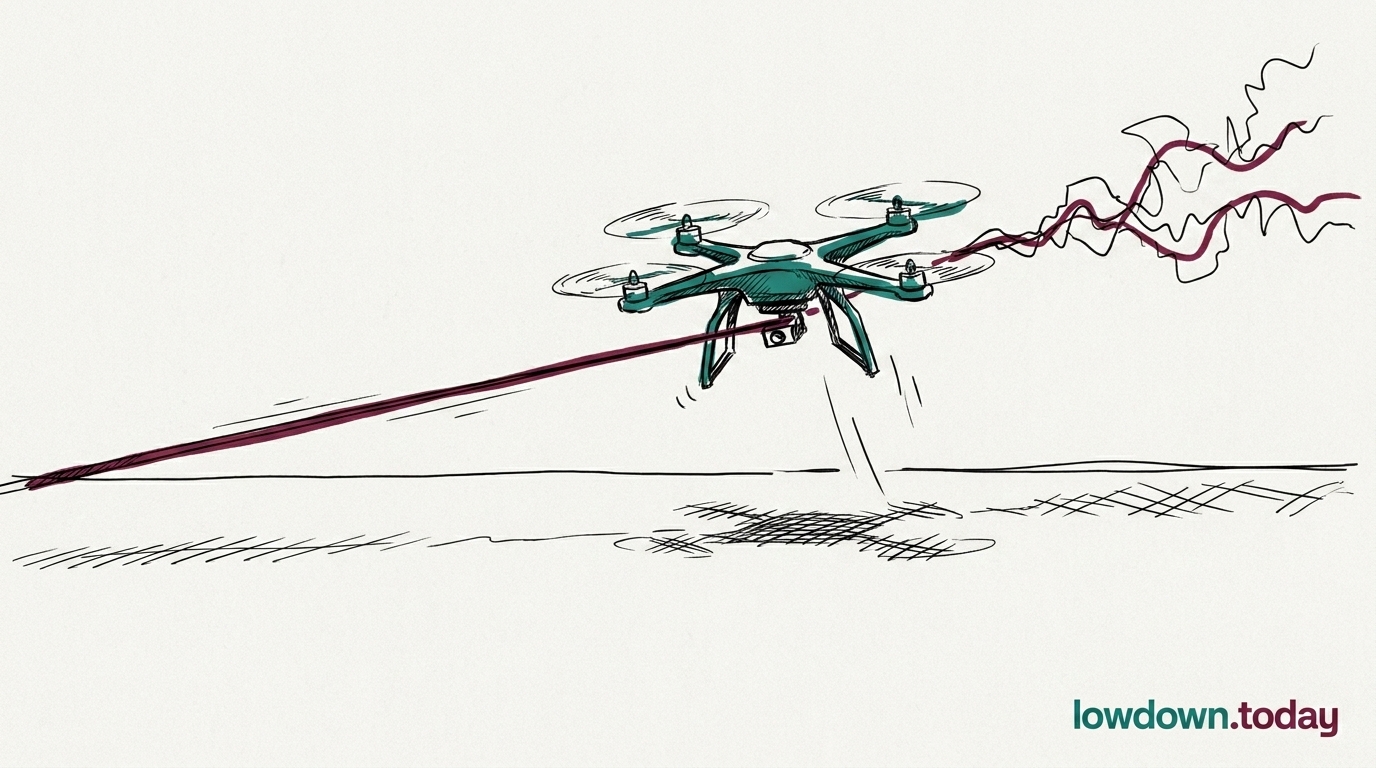
A Romanian Air Force F-16 shot down a suspected Ukrainian drone over Estonia on 19 May, the first time a NATO fighter has destroyed an unmanned aircraft inside allied territory. The target was almost certainly an attack drone diverted off course by Russian electronic warfare jamming along the eastern front, one of a series of incidents that have turned the Baltic into an accidental live-fire zone since March.

On 23 March a Ukrainian drone crossed into Lithuania. Two days later another entered Latvian and Estonian airspace, passing near the Auvere power station. On 29 March Finland recovered a Ukrainian AN-196 drone carrying an unexploded warhead. On 7 May a drone exploded at the Rezekne oil storage facility in Latvia, damaging four tanks. Further incidents between 17 and 23 May preceded the Estonian intercept.

Russian EW units have progressively extended GPS denial zones westward since autumn 2025, causing Ukrainian attack drones to lose navigation lock and default to last-heading flight paths into NATO territory. The UKDI fibre-optic counter-drone call identified this exact detection gap; the Baltic incidents confirm that jamming itself is a weapon. Armed munitions are now reaching civilian infrastructure, as the UK's GBP 4 billion autonomous-systems commitment and Ukraine's expanded offensive operations both increase drone traffic through contested EW corridors.

No Baltic state has a standing automated counter-drone screen. NATO cannot stop Ukraine using those attack corridors without undermining the war effort, cannot stop Russian jamming without escalating, and must either intercept allied weapons in flight or permit them to crash into civilian infrastructure.

Deep Analysis

In plain English

Ukraine has been flying armed drones deep into Russia, but Russia is jamming the GPS signals those drones use to navigate. When a drone loses GPS lock, it often defaults to flying in a straight line on its last heading. That heading sometimes points west, into NATO countries. Estonia, Latvia, and Finland have all had Ukrainian drones land or explode inside their borders. On 19 May, Romania scrambled a fighter jet and shot one down over Estonia, carrying out the first NATO kinetic intercept of an unmanned system on allied soil. NATO now needs a formal decision on what rules govern the next incident.

Deep Analysis
Root Causes

Ukraine's attack-drone campaign depends on GPS navigation that Russian EW systems have progressively compromised along the eastern front; the jamming is a deliberate weapon operating well beyond the immediate battlefield.

NATO's air-surveillance architecture was designed for manned aircraft with transponders and predictable flight envelopes; small UAS with compromised navigation are invisible to the procedural filters that prevent allied airspace incidents.

No standing NATO UAS rules of engagement exist for allied territory: the alliance has Article 5 but no equivalent for unmanned systems operating under lost-link or jammed conditions, forcing improvised national responses.

What could happen next?
  • Consequence

    The precedent will affect how Ukraine calibrates its long-range drone campaigns. If NATO members will shoot down diverted Ukrainian drones, Ukraine faces pressure to invest in GPS-denied navigation hardening (fibre-optic gyroscopes, terrain-matching) at scale and cost. For NATO, the intercept creates an awkward alliance management problem: Romania acted correctly under its national rules but without alliance-level authorisation, setting a precedent that less careful actors could exploit. The North Atlantic Council needs a formal UAS rules-of-engagement framework for allied airspace before the next incident.

First Reported In

Update #10 · NATO shoots down drone over Estonia

Wikipedia· 29 May 2026
Read original
Different Perspectives
Chinese drone manufacturers (DJI, Autel)
Autel's Ralls Corp Fifth Amendment filing and DJI's Ninth Circuit quantification of USD 1.56 billion in 2026 losses are parallel constitutional attacks on a classified-evidence exclusion mechanism; neither company can contest the intelligence allegations directly, so both are betting on due-process doctrine to reopen the FCC authorisation route.
Ukraine (SSEC export regulator)
Baltic states bought Lithuanian Merops and Swedish LVKV 90 stopgaps while Ukraine's cheapest combat-proven interceptors at USD 2,100 to USD 2,500 per unit remain legally blocked under EU conflict-aggravation rules; Perennial Autonomy, built on Ukrainian combat data, can now sell via Munich while direct Ukrainian sales to the same buyers remain prohibited.
Helsing
Helsing
HX-2 combat-proven status, a EUR 1.46 billion German framework, an $18 billion valuation, and the OHB space JV together constitute the first credible European counterweight to Anduril's US stack. The critical test is whether European procurement offices can maintain sovereign AI discipline under operational urgency, or default to the US integration speed that drove the Netherlands Lattice decision.
Anduril Industries
Anduril Industries
A USD 61 billion valuation on USD 2.2 billion revenue prices in the assumption that Lattice becomes the default Western counter-drone software layer. The Netherlands adoption and Project NYX inclusion suggest the architecture bet is converting; the S-1 filing window opens when quarterly growth sustains the 27x multiple.
European Union
European Union
The EUR 115 million AGILE programme was designed before Baltic states began emergency national purchases worth ten times the total EU budget; calling for coordination on 26 May after each country had signed contracts is not a procurement policy, it is a statement of concern with no enforcement teeth.
UK Ministry of Defence
Britain has committed GBP 752 million to Ukraine drones, GBP 115 million to Hormuz, APKWS to Gulf combat, and three concurrent procurement programmes, all driven by the same operational pressure. Project NYX and Corvus together set the British Army's drone architecture through 2036; the autumn down-select will reveal whether Washington or London holds the architectural preference.
