Skip to content
Briefings are running a touch slower this week while we rebuild the foundations.See roadmap
Russia-Ukraine War 2026
24APR

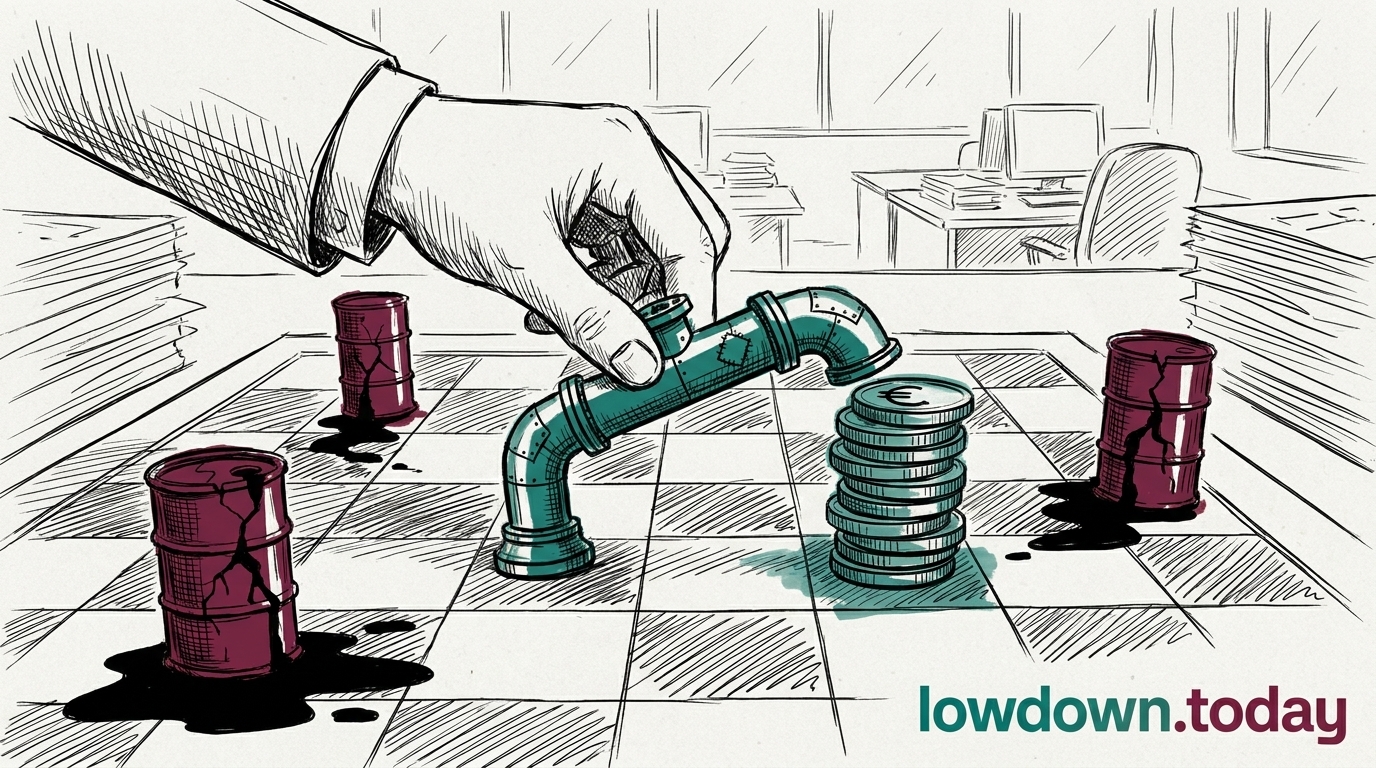
Trump's fifth Hormuz deadline expires tonight

2 min read
11:21UTC

The fifth reformulation of the same Hormuz ultimatum in six weeks is set to lapse at 8pm Eastern, with the most probable outcome a sixth extension framed around the Islamabad track.

ConflictDeveloping
Key takeaway

Five extensions in, the deadline mechanism has become the instrument rather than a precursor to action.

Donald Trump's fifth Hormuz ultimatum expires at 8pm ET (0000 UTC Wednesday). It follows the 6 April power-grid deadline and the second replacement that itself ran out , and reformulates the same threat for the fifth time in six weeks .

Each previous expiry produced an extension. The rhetoric escalated each cycle while the operational ceiling stayed flat: no civilian-infrastructure threshold ever crossed, no new target category announced, no military fact on the ground that the prior subsequents had not already established. The most probable outcome tonight, on the pattern, is a sixth extension framed around whatever the Islamabad track allows.

Tehran is now planning around the assumption that the deadline itself is the instrument, not a precursor to action. The risk is not that one of these expiries is theatre, it is that the day Trump genuinely intends to follow through, no actor in the system will read the signal differently from the four that preceded it.

Deep Analysis

In plain English

Trump has now issued five versions of the same ultimatum over six weeks: open Hormuz or face consequences. Each previous deadline has produced an extension rather than action , the 6 April power-grid deadline, the second replacement, and three further reformulations. Tonight's version expires at 8pm Eastern time. The most likely outcome, on pattern, is a sixth extension framed around whatever the Pakistan diplomatic track allows. The practical effect of five extensions is that Iran now plans on the assumption the deadline itself is the tool, not a warning of what follows. The danger is not that each expiry is theatre , it may well be , but that the day it is not, no one reads it differently.

Deep Analysis
Root Causes

The five-extension pattern reflects a structural mismatch between Trump's political need to signal toughness on Hormuz domestically and the operational reality that the US has not found a military solution within the constraints it has set for itself , no civilian infrastructure thresholds crossed, no new target categories announced, carriers moved out rather than in.

Each extension preserves the option while deferring the cost; the cumulative cost is the credibility of the next deadline.

Escalation

The fifth deadline expiry does not itself raise escalation risk; the pattern has lowered it by training both sides to treat expiry as routine. The risk is asymmetric: on the day the US genuinely intends to follow through, the signal will be indistinguishable from the four that preceded it, creating a window for catastrophic Iranian miscalculation.

What could happen next?
  • Risk

    Five consecutive extensions have habituated Iran to treating US deadlines as negotiating variables; if Trump does eventually order enforcement action, the prior pattern means the signal will not be read as materially different, raising the risk of a genuine miscalculation.

  • Precedent

    The five-extension cycle establishes that this administration will not cross civilian-infrastructure thresholds under deadline pressure alone, narrowing Iran's incentive to offer substantive concessions before a threshold is actually crossed.

First Reported In

Update #61 · Carriers retreat; Iran codifies Hormuz

Euronews· 7 Apr 2026
Read original
Different Perspectives
EU Council / European Commission
With Orban's veto lifted and Magyar's Tisza government not placing a replacement block, the European Commission is signalling the first 90 billion euro Ukraine loan tranche for late May or early June 2026. Disbursement depends on Magyar's 5 May government formation proceeding to schedule.
Germany
Germany
Russia's Druzhba northern branch transit halt from 1 May removes one of Germany's residual non-Russian crude supply options. The timing compounds Berlin's exposure in the same week Ukrainian strikes drive Russian refinery throughput to its lowest since December 2009.
IAEA / Rafael Grossi
Grossi confirmed the Zaporizhzhia Nuclear Power Plant lost external power for its 14th and 15th times within a single week in late April, with the Ferosplavna-1 backup feeder damaged 1.8 km from the switchyard. He was negotiating a further local ceasefire; the previous IAEA-brokered repair lasted less than a week.
Japan
Japan
Japan authorised direct PAC-3 exports to the United States on 30 April, breaking its post-1945 arms export restrictions to replenish Iran-war-depleted US stockpiles. The White House global Patriot export freeze remains in place; Japan's historic policy shift benefits US readiness without reaching Ukraine.
Kazakhstan
Kazakhstan
Russia's Druzhba northern branch transit halt from 1 May cuts Kazakhstan's access to the German crude market. Astana routes most of its export crude through Russian infrastructure, meaning Moscow's unilateral decision directly constrains Kazakh export diversification despite Kazakhstan's stated neutrality on the war.
Péter Magyar / Tisza Party / Hungary
Magyar targets 5 May for government formation ahead of the 12 May constitutional deadline. Orbán lifted the EU loan veto before leaving office; Magyar supports Hungary's opt-out but has not placed a new veto, leaving the first 90 billion euro tranche on track for late May disbursement.
