Skip to content
Briefings are running a touch slower this week while we rebuild the foundations.See roadmap
Russia-Ukraine War 2026
24APR

EU approves €90bn Ukraine loan

4 min read
11:21UTC

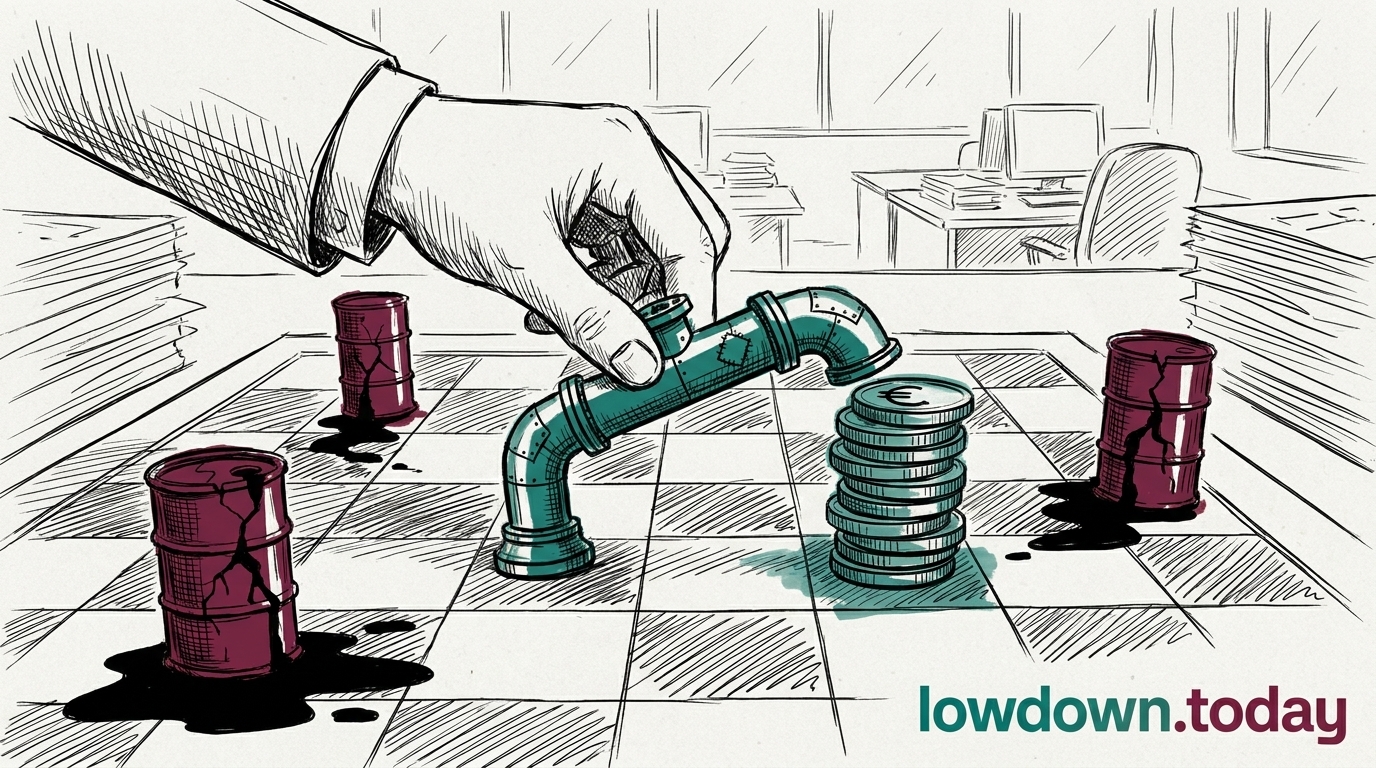
Zelenskyy promised to repair the Druzhba pipeline within weeks. In return, Budapest dropped a veto that had frozen the EU's largest wartime loan since February.

ConflictDeveloping
Key takeaway

Hungary extracted domestic election cover through a repair promise, not a substantive energy policy concession.

The EU approved a €90 billion loan for Ukraine on 17 March, ending a Hungarian blockade that had frozen the package since February. Hungary's Foreign Minister Péter Szijjártó had conditioned Budapest's consent on restoring the Druzhba oil pipeline, damaged by Russian strikes in January. The deadlock broke after Zelenskyy wrote directly to the European Commission, promising repairs within 1–1.5 months and accepting EU-funded inspections 1.

Both sides framed the deal for domestic consumption. Zelenskyy called Hungary's demands "blackmail" and drew a direct equivalence: restoring Druzhba was "no different to lifting sanctions on Russia" 2. Orbán countered that the pipeline was operational and that Zelenskyy had kept it shut "for political reasons to influence upcoming Hungarian elections on 12 April" 3.

Neither characterisation is straightforwardly correct. Hungary imports most of its crude oil via Druzhba — a genuine energy security concern that predates the current dispute. But Orbán has used EU unanimity rules to extract concessions repeatedly since 2023, including blocking €50 billion in EU aid that December before relenting under summit pressure. The mechanism — veto, extract, consent — is by now familiar to every European capital.

For most member states, the Druzhba question is becoming academic. The EU's phased ban on Russian gas imports begins 25 April with LNG , five weeks away, with all Russian gas banned by year-end. For Hungary, which holds an exemption from the 2022 crude oil embargo specifically because of its Druzhba dependency, the pipeline remains a live economic concern — and a political lever Budapest will retain as long as unanimity rules apply.

The loan release also lands against a fractured Western sanctions front. European leaders condemned Washington's 30-day waivers on Russian oil even as they negotiated their own accommodation with Budapest on Russian energy flows. European Commission President von der Leyen and European Council President António Costa issued a joint statement on the loan, but the broader signal is contradictory: Europe is simultaneously tightening its energy restrictions and watching its principal ally loosen them.

Deep Analysis

In plain English

The EU wanted to give Ukraine a massive €90 billion loan, but Hungary kept blocking it. The stated reason was a damaged oil pipeline — Hungary said it needed Russian oil through the Druzhba pipeline before it would agree. In the end, Ukraine promised to repair the pipeline within six weeks and agreed to EU-funded inspections. Hungary then lifted its objection. The timing is critical: Hungary holds elections on 12 April, and Viktor Orbán can now tell voters he stood firm for Hungarian energy interests and extracted a commitment — even though what he actually obtained was relatively modest and may be technically undeliverable in a war zone.

Deep Analysis
Synthesis

The €90 billion approval demonstrates that EU unanimity requirements have a functional soft expiry — when geopolitical urgency is sufficiently acute, the EU generates face-saving technical workarounds (repair timelines, inspection funding) that marginalise holdouts without formally overriding them. Each repetition of this pattern accelerates pressure within the EU to expand qualified majority voting on foreign policy and financial instruments, reducing the structural leverage of the next holdout.

Root Causes

Hungary's pipeline dependency is not purely political posturing. MOL's Százhalombatta and Bratislava refineries are technically configured for Urals-blend crude and cannot economically process Mediterranean or North Sea grades without costly retooling estimated in the hundreds of millions of euros. This genuine infrastructure constraint — created by decades of deliberate Soviet-era supply integration — gives Orbán deniable cover for energy alignment with Russia that goes beyond electoral politics and reflects real economic vulnerability.

Escalation

Hungary is likely to raise further procedural questions about loan disbursement conditions before the 12 April election, since sustained pressure sustains the domestic political narrative of Hungarian assertiveness. Post-election, Orbán's structural leverage diminishes unless new grounds for obstruction emerge — the Commission's frozen €22 billion in cohesion funds provides a standing counterpressure that becomes more salient once election cover is no longer needed.

What could happen next?
1 risk1 precedent1 consequence1 opportunity1 meaning
  • Risk

    Repairing a pipeline damaged by Russian strikes within 1–1.5 months in an active war zone is technically uncertain — failure could reignite Hungarian obstruction before elections resolve the political dynamic.

    Immediate · Assessed
  • Precedent

    The EU's face-saving workaround approach to Hungarian vetoes reinforces the incentive for future procedural blockades by smaller members seeking bilateral concessions under the cover of unanimity requirements.

    Long term · Assessed
  • Consequence

    Loan collateralisation against frozen Russian asset interest creates a structural conflict between Ukraine aid and any peace settlement requiring asset unfreezing as a condition.

    Long term · Suggested
  • Opportunity

    Post-election, Orbán loses the domestic political rationale for sustained obstruction — disbursement may proceed with fewer obstacles after 12 April regardless of pipeline repair progress.

    Short term · Assessed
  • Meaning

    The Druzhba compromise accelerates EU recognition that pipeline-dependent members require dedicated infrastructure transition financing, not just collective sanctions solidarity.

    Medium term · Suggested
First Reported In

Update #5 · Trump frees 124m barrels; Russia earns €6bn

EU Council· 18 Mar 2026
Read original
Different Perspectives
EU Council / European Commission
With Orban's veto lifted and Magyar's Tisza government not placing a replacement block, the European Commission is signalling the first 90 billion euro Ukraine loan tranche for late May or early June 2026. Disbursement depends on Magyar's 5 May government formation proceeding to schedule.
Germany
Germany
Russia's Druzhba northern branch transit halt from 1 May removes one of Germany's residual non-Russian crude supply options. The timing compounds Berlin's exposure in the same week Ukrainian strikes drive Russian refinery throughput to its lowest since December 2009.
IAEA / Rafael Grossi
Grossi confirmed the Zaporizhzhia Nuclear Power Plant lost external power for its 14th and 15th times within a single week in late April, with the Ferosplavna-1 backup feeder damaged 1.8 km from the switchyard. He was negotiating a further local ceasefire; the previous IAEA-brokered repair lasted less than a week.
Japan
Japan
Japan authorised direct PAC-3 exports to the United States on 30 April, breaking its post-1945 arms export restrictions to replenish Iran-war-depleted US stockpiles. The White House global Patriot export freeze remains in place; Japan's historic policy shift benefits US readiness without reaching Ukraine.
Kazakhstan
Kazakhstan
Russia's Druzhba northern branch transit halt from 1 May cuts Kazakhstan's access to the German crude market. Astana routes most of its export crude through Russian infrastructure, meaning Moscow's unilateral decision directly constrains Kazakh export diversification despite Kazakhstan's stated neutrality on the war.
Péter Magyar / Tisza Party / Hungary
Magyar targets 5 May for government formation ahead of the 12 May constitutional deadline. Orbán lifted the EU loan veto before leaving office; Magyar supports Hungary's opt-out but has not placed a new veto, leaving the first 90 billion euro tranche on track for late May disbursement.
