Skip to content
Briefings are running a touch slower this week while we rebuild the foundations.See roadmap
Russia-Ukraine War 2026
24APR

Brent above $116, set for record month

2 min read
11:21UTC

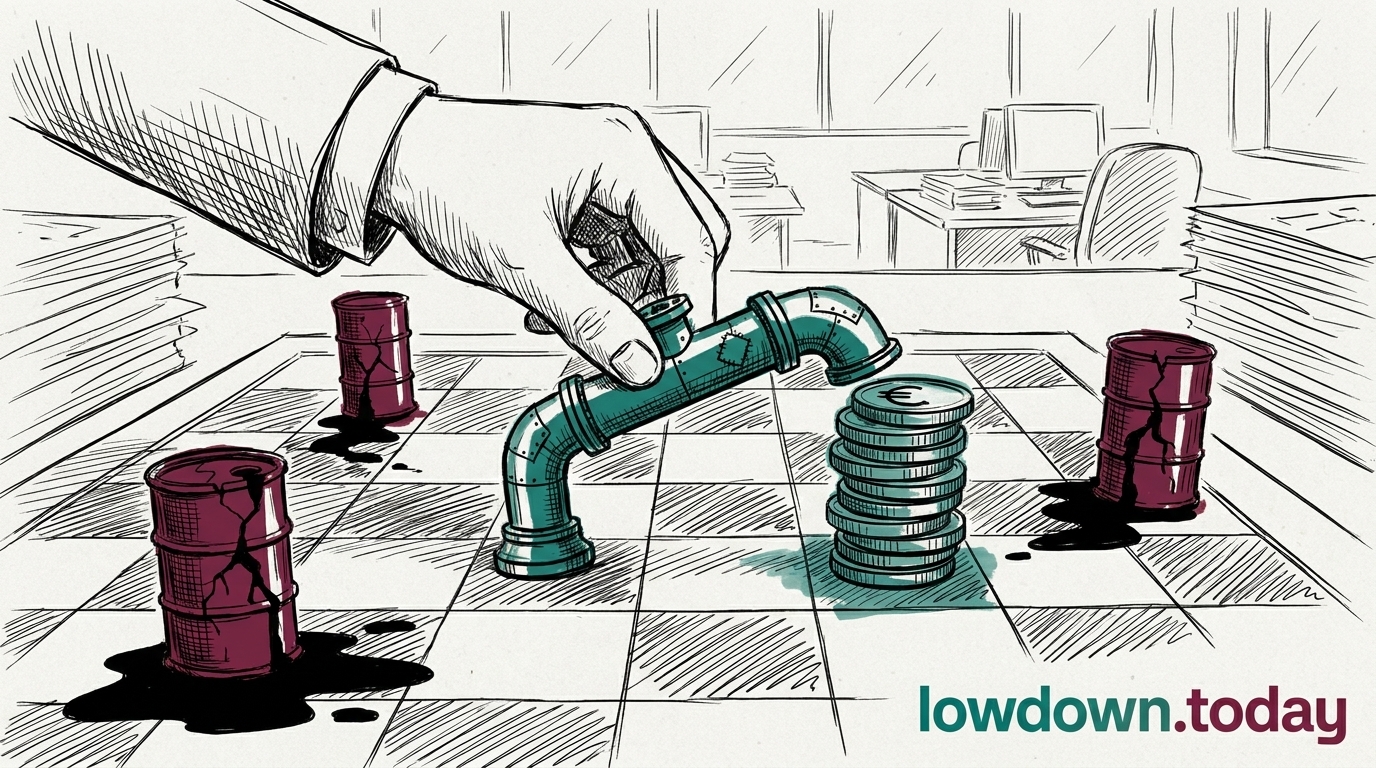
Brent crude advanced above $116, up 72% from pre-war levels and heading for its largest monthly increase on record. Markets are pricing prolonged conflict, not resolution.

ConflictAssessed
Key takeaway

Markets are pricing prolonged war, not imminent resolution.

Brent crude advanced above $116 per barrel on 30 March, approximately 72% above its pre-war level of $67.41. 1 The monthly gain is heading for a record. Goldman Sachs maintained a $14 to $18 per barrel geopolitical risk premium is baked into the price. Global stock markets extended their selloff as Houthi entry and the US military build-up stoked prolonged-conflict fears.

The price trajectory tells the story of a market that has abandoned hope of a quick resolution. Brent settled at $112.57 on 28 March , already elevated by Houthi entry. Trump's oil seizure statement, the third consecutive Houthi attack on Israel, and Pentagon confirmation of ground operations planning pushed it above $116 two days later.

AIS tracking data paints a bleaker picture than headline prices suggest. Shadow fleet vessels account for 80% of Hormuz transits in March, up from 15% in February . Legitimate commercial traffic has effectively stopped: approximately three transits per 24 hours against a pre-war baseline of 138. The Hormuz 'reopening' is a reorganisation of traffic to benefit non-US-aligned operators, denominated in yuan, under IRGC naval supervision.

The 6 April deadline for Trump's power plant strike threat is six days away. If the deadline passes without diplomatic movement and the 82nd Airborne stages forward from Kuwait, Goldman's risk premium estimate will need revision upward. Every dollar on Brent translates to approximately 2.5 pence per litre at UK petrol pumps within a week.

Deep Analysis

In plain English

Brent crude is the main international benchmark for oil prices. Before the war started, a barrel of oil cost $67. By 30 March it cost over $116. That is a 72% increase in one month. Higher oil prices feed through into everything: petrol and diesel costs, heating bills, the price of food and goods that are transported, and the cost of making plastic and chemicals. The monthly increase is on track to be the largest in recorded history. Goldman Sachs, the US bank that tracks commodity prices, says there is an extra $14 to $18 on every barrel just because of the war risk. The closer US ground forces get to Iran's oil export terminal at Kharg Island, the higher the risk premium is likely to rise.

What could happen next?
  • Risk

    The 6 April power plant strike deadline, with no diplomatic movement, risks a further price spike beyond Goldman's current risk-premium estimate if Trump follows through.

  • Consequence

    The IEA's 400 million barrel emergency release has not stabilised prices. Markets are treating this as a structural supply disruption, not a temporary spike amenable to reserve releases.

First Reported In

Update #52 · Trump wants Iran's oil; 3,500 Marines land

Bloomberg· 30 Mar 2026
Read original
Different Perspectives
EU Council / European Commission
With Orban's veto lifted and Magyar's Tisza government not placing a replacement block, the European Commission is signalling the first 90 billion euro Ukraine loan tranche for late May or early June 2026. Disbursement depends on Magyar's 5 May government formation proceeding to schedule.
Germany
Germany
Russia's Druzhba northern branch transit halt from 1 May removes one of Germany's residual non-Russian crude supply options. The timing compounds Berlin's exposure in the same week Ukrainian strikes drive Russian refinery throughput to its lowest since December 2009.
IAEA / Rafael Grossi
Grossi confirmed the Zaporizhzhia Nuclear Power Plant lost external power for its 14th and 15th times within a single week in late April, with the Ferosplavna-1 backup feeder damaged 1.8 km from the switchyard. He was negotiating a further local ceasefire; the previous IAEA-brokered repair lasted less than a week.
Japan
Japan
Japan authorised direct PAC-3 exports to the United States on 30 April, breaking its post-1945 arms export restrictions to replenish Iran-war-depleted US stockpiles. The White House global Patriot export freeze remains in place; Japan's historic policy shift benefits US readiness without reaching Ukraine.
Kazakhstan
Kazakhstan
Russia's Druzhba northern branch transit halt from 1 May cuts Kazakhstan's access to the German crude market. Astana routes most of its export crude through Russian infrastructure, meaning Moscow's unilateral decision directly constrains Kazakh export diversification despite Kazakhstan's stated neutrality on the war.
Péter Magyar / Tisza Party / Hungary
Magyar targets 5 May for government formation ahead of the 12 May constitutional deadline. Orbán lifted the EU loan veto before leaving office; Magyar supports Hungary's opt-out but has not placed a new veto, leaving the first 90 billion euro tranche on track for late May disbursement.
