Skip to content
Briefings are running a touch slower this week while we rebuild the foundations.See roadmap
Russia-Ukraine War 2026
5APR

Brussels fines Apple, Meta, and X €820m

3 min read
19:51UTC

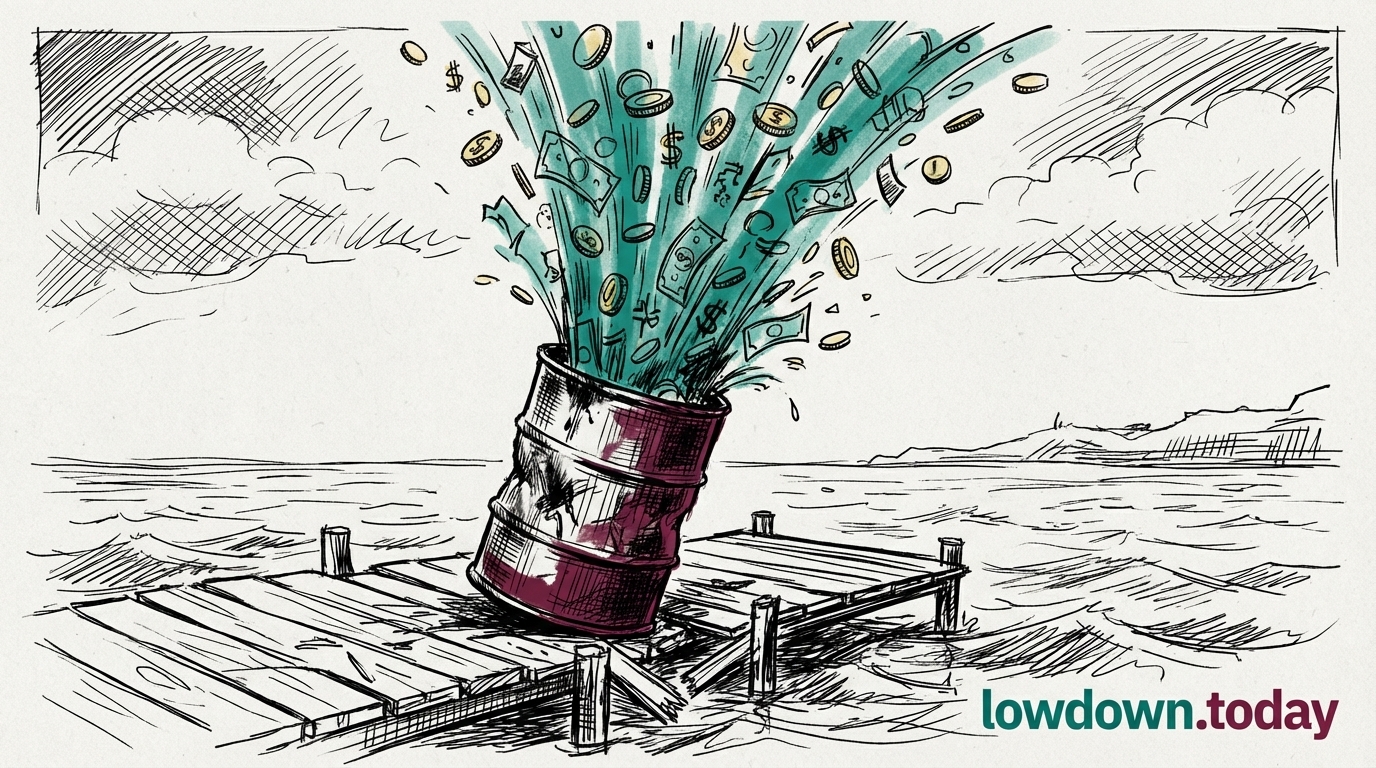
The European Commission imposed its largest batch of platform fines under the DMA and DSA, totalling €820m across three US tech companies.

ConflictDeveloping
Key takeaway

The EU's first major DMA and DSA fines total €820m and confirm Brussels will use financial enforcement.

The European Commission fined Apple €500m for preventing developers from communicating freely with consumers, and Meta €200m for its pay-or-consent advertising model, under the Digital Markets Act 1. Separately, X (formerly Twitter) received a €120m fine under the Digital Services Act for deceptive verification practices, opaque advertising, and blocking researcher data access 2. The cumulative total: €820m.

The Apple fine targeted the company's App Store anti-steering rules, which prevented app developers from telling users about cheaper purchasing options outside the App Store. Meta's fine addressed a consent mechanism that forced European users to either pay for an ad-free experience or accept personalised tracking. Both cases concerned practices the companies had argued were compliant with the DMA's requirements.

The fines are large but survivable for companies of this scale. Apple's annual revenue exceeds $380bn. The enforcement significance is procedural: these are the first substantial DMA penalties, and they confirm that the Commission will use financial sanctions rather than relying on compliance deadlines and dialogue. The potential fine exposure across all designated gatekeepers exceeds €100bn if the Commission calculates penalties at the maximum 10% of global turnover. That ceiling gives Brussels considerable leverage in ongoing and future investigations.

Deep Analysis

In plain English

The European Union has two major laws that regulate large technology companies: the Digital Markets Act (DMA) targets the biggest digital platforms; the tech 'gatekeepers'; and requires them to give users and businesses more choice and fairness. The Digital Services Act (DSA) targets harmful or deceptive content and practices on platforms. In early 2026, the European Commission fined Apple €500 million under the DMA for preventing app developers from telling their customers about better deals available outside Apple's own App Store. Apple controls the iPhone's entire app distribution system, and the EC found that Apple was using that control to charge developers up to 30% commission while blocking them from directing customers elsewhere. Meta received a €200 million fine for its 'pay or consent' advertising model; which forced users to either pay a subscription fee or agree to targeted advertising. X (formerly Twitter) was fined €120 million for its blue checkmark verification system, which critics said misled users about who was trustworthy, and for blocking researchers from accessing public data.

Deep Analysis
Root Causes

The DMA's gatekeeper designation framework creates a structural asymmetry: the six designated gatekeepers (Alphabet, Amazon, Apple, ByteDance, Meta, Microsoft) are all US or Chinese companies. No European company meets the thresholds ($75bn market capitalisation, 10,000 active business users, 45m active end users in the EU).

This is not a design flaw; it reflects the actual distribution of digital market power; but it means DMA enforcement will exclusively target non-European entities indefinitely, creating the trade friction the US Section 301 investigation is designed to address.

X's €120m DSA fine is structurally different: it targets deceptive practices (the blue checkmark verification system that previously distinguished public figures from ordinary accounts) and researcher data access. The DSA applies a broader set of platforms, including Twitter/X, YouTube, and other large online platforms with more than 45m EU users. The €120m figure reflects DSA's lower fine ceiling relative to DMA.

What could happen next?
  • Consequence

    The Apple fine scale signals DMA enforcement has crossed the threshold where gatekeeper compliance is more economically rational than continued litigation, likely accelerating Apple's implementation of DMA interoperability requirements.

    Short term · 0.75
  • Risk

    The US Section 301 investigation framing DMA enforcement as 'economic warfare' raises the risk of tariff or trade retaliation that pressures the Commission to moderate enforcement intensity.

    Medium term · 0.6
  • Opportunity

    DMA cloud interoperability mandates, if upheld after gatekeeper legal challenges, create structural switching cost reductions that benefit European cloud providers disproportionately.

    Long term · 0.65
First Reported In

Update #1 · Europe's chip ambitions meet reality

CNBC· 13 Apr 2026
Read original
Different Perspectives
NATO eastern flank (B9 + Nordics)
The B9+Nordic Bucharest joint statement on 13 May reaffirmed Ukraine's sovereignty within internationally recognised borders and backed NATO eastern flank reinforcement; the summit accepted Zelenskyy's bilateral drone deal proposal as a structural alternative to the stalled US export approval pathway, treating it as a European defence architecture question rather than aid delivery.
IAEA / Rafael Grossi
Grossi is still negotiating a sixth ZNPP repair ceasefire with no agreement after 50 days of 750 kV line disconnection; the 3 May ERCL drone strike that destroyed environmental monitoring equipment represents a qualitative escalation in infrastructure degradation that the IAEA has documented but cannot compel either party to halt.
Péter Magyar / Hungary
Magyar's incoming foreign minister pledged on 12 May that Hungary will stop abusing EU veto rights; the pledge is a statement of intent rather than a binding legal commitment, and Magyar's MEPs voted against the €90 billion loan as recently as April, while a planned referendum on Ukraine's EU accession preserves a downstream blocking lever.
EU Council and European Commission
The Magyar cabinet formation on 12 May removes the Hungary veto that had blocked the €9.1 billion first tranche since February; the Commission is now coordinating the three-document disbursement package for an early-June vote. The structural blocker is gone; the disbursement question is now scheduling, not politics.
Donald Trump / White House
Trump announced a 9-11 May three-day ceasefire with a 1,000-for-1,000 prisoner exchange attached, then called peace 'getting very close' on 11-13 May while Russia's 800-drone barrage was under way; his public framing adopted Russian diplomatic language without securing any Russian operational concession or verifying the exchange was agreed.
Vladimir Putin / Kremlin
Putin told reporters on 9 May the war is 'coming to an end' while Peskov confirmed on 13 May that territorial demands are unchanged and Russia requires full Ukrainian withdrawal from all four annexed regions; the verbal accommodation costs Moscow nothing and conditions any summit on a pre-finalised treaty Kyiv cannot accept.
