Skip to content
Briefings are running a touch slower this week while we rebuild the foundations.See roadmap
Pandemics and Biosecurity
9JUN

WHA79 adopts a 10-year AMR plan

3 min read
09:58UTC

On 23 May member states adopted a Global Action Plan on Antimicrobial Resistance to 2036, with a target to cut bacterial AMR deaths 10% by 2030, the first hard global benchmark in a decade.

ScienceDeveloping
Key takeaway

A binding 2030 target turns drug resistance from an invisible toll into a measurable government commitment.

On 23 May the 79th World Health Assembly adopted the Global Action Plan on antimicrobial resistance (GAP-AMR) 2026-2036, targeting a 10% reduction in deaths from bacterial AMR by 2030 under a One Health framework 1. antimicrobial resistance is the process by which bacteria evolve to survive the drugs meant to kill them, slowly emptying the antibiotic toolbox; One Health means an integrated approach spanning human, animal and environmental health, where most antibiotics are actually consumed.

Bacterial AMR was associated with 4.71 million deaths in 2021, and the trajectory points to a projected 39 million deaths a year by 2050 2. AMR kills more people annually than HIV or malaria, yet draws a fraction of the attention because the deaths are diffuse and recorded against the underlying infection rather than the resistance. A binding 2030 figure matters because it is the first concrete number a government can be measured against; previous AMR declarations set direction without a yardstick.

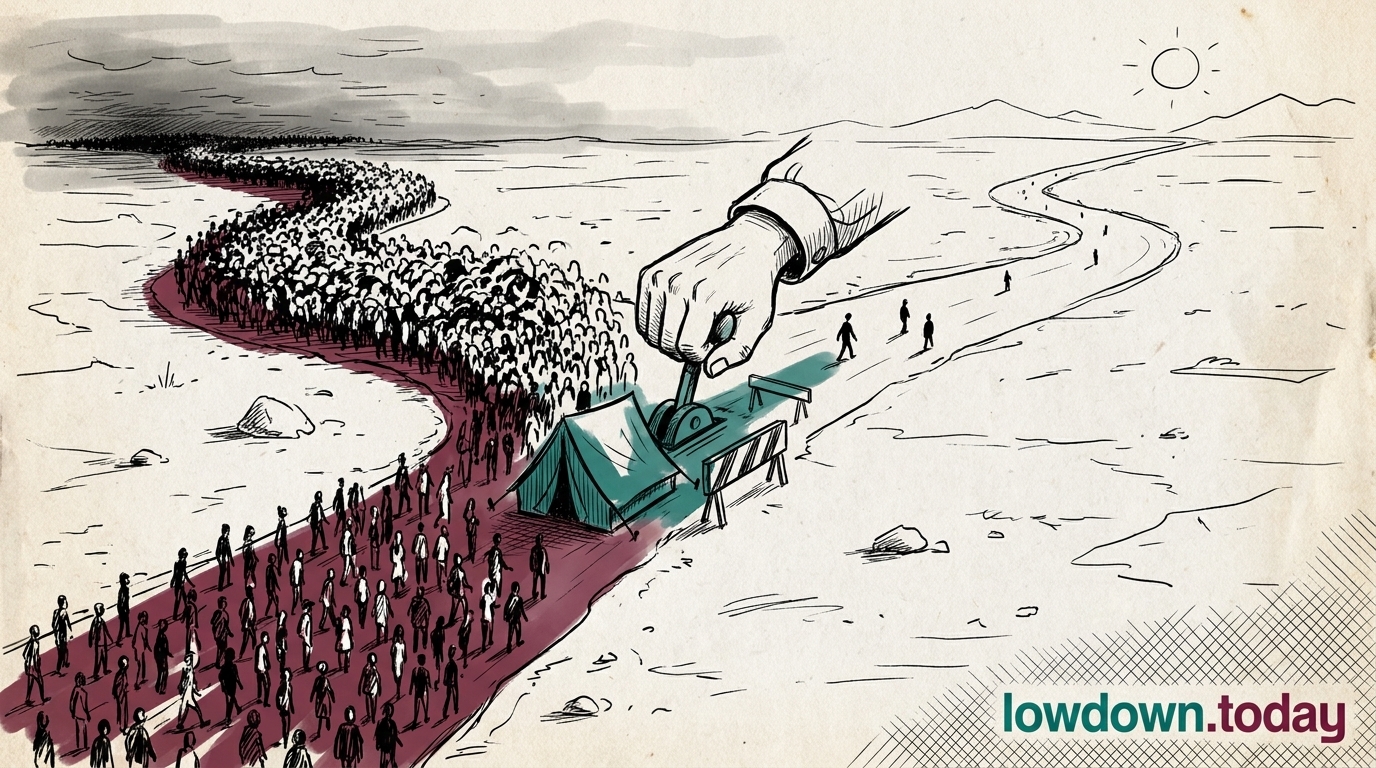
The target only works if the laboratories exist to read it. Most of the worst-affected regions cannot routinely test which infections are resistant, so a mortality goal floats free of the data needed to verify it. That gap is what ARILAC, the Africa CDC resistance-testing laboratory network launched on 6 May, is built to close . The plan and the lab network are the same project seen from two ends: a benchmark set in Geneva and the capacity to measure it being assembled in Addis Ababa. In a week dominated by a misfiring Ebola response, it is the one piece of multilateral machinery that finished its work.

Deep Analysis

In plain English

Antimicrobial resistance (AMR) happens when bacteria, fungi or parasites evolve to survive the drugs we use to kill them. Antibiotics that once cured infections stop working. The problem is getting worse worldwide, driven mainly by overuse of antibiotics in medicine and in livestock farming. In 2021, bacterial AMR was associated with 4.71 million deaths globally; by 2050, projections suggest it could cause 39 million deaths a year if current trends continue. The 79th World Health Assembly, meeting in Geneva in May 2026, adopted a plan to cut bacterial AMR deaths by 10% by 2030. This covers people, animals and the environment together, which is called a 'One Health' approach. The plan is not legally binding, which means countries commit to it but face no penalties if they miss targets.

What could happen next?
  • Risk

    Agricultural antibiotic overuse, the largest driver of AMR emergence, is not addressed by binding targets in the GAP-AMR text; without trade or regulatory enforcement mechanisms, the plan cannot reach the sectors generating the most selection pressure.

First Reported In

Update #4 · Ebola triples, response misfires

World Health Organization· 24 May 2026
Read original
Different Perspectives
World Health Organization
WHO's DON606 recalibration to confirmed-only reporting gives the clean baseline the CDC model rests on, but the apparent fall from 1,040 to 534 carries misinterpretation risk WHO communications have not pre-empted. The PABS deadlock ahead of IGWG7 and continuing MBP134/remdesivir assessment without authorisation make WHO the body most able to accelerate the two decisions that could change the outbreak's trajectory.
European Union (ECDC)
ECDC's Week 23 CDTR tracked four simultaneous non-Ebola signals: the Dermatophilus congolensis novel-transmission cluster across France, Germany and Spain; a 4.2-fold malaria surge in Mayotte; the Salmonella ST2045 multi-country cluster; and two new Saudi MERS cases. The continental early-warning layer is carrying a full multi-pathogen picture while Bundibugyo dominates headlines.
Uganda
Uganda
Uganda's 19 confirmed cases are concentrated in Kampala and Wakiso, an urban cluster that applied the 2022 Sudan-ebolavirus playbook; the Bwera border laboratory shortens cross-border confirmation to same-day. Uganda's regulatory authority must co-sign before MBP134 or remdesivir can dose any patient.
Democratic Republic of the Congo
Kinshasa shares Bundibugyo sequence data in real time with no treaty-guaranteed access to the vaccines that data informs, and its health minister called the US entry ban discriminatory while negotiating an early lift. DRC accounts for 515 of 534 confirmed cases and faces IS-controlled access blockades in Mambasa that health authorities cannot resolve.
United States (HHS/CDC)
HHS expanded the Ebola entry ban to green-card holders on 5 June, widening a restriction expiring around 17 June against WHO advice. The CDC simultaneously published the R0=2.51 modelling, the sharpest analytical contribution to the response, from a federal bench that holds the NIH and acting CDC director roles in one person.
Imperial College London / Cori and Ferguson
Anne Cori and Neil Ferguson place the case-fatality ratio at 30 to 40 per cent and read the 6.8-to-1 suspected-to-confirmed ratio as evidence that the laboratory figure understates true lethality. Many people die before a swab reaches them.
