Skip to content
Briefings are running a touch slower this week while we rebuild the foundations.See roadmap
Pandemics and Biosecurity
9JUN

Burned clinic rebuilt as access fails

3 min read
09:58UTC

A treatment centre in eastern DRC was torched by protesters and then rebuilt, the Africa CDC and WHO reported on 29 May. Tedros, who visited Ituri on 28 May, said stopping transmission depends entirely on humanitarian access.

ScienceDeveloping
Key takeaway

A second DRC treatment centre was torched and rebuilt, and Tedros tied the outbreak's fate entirely to humanitarian access.

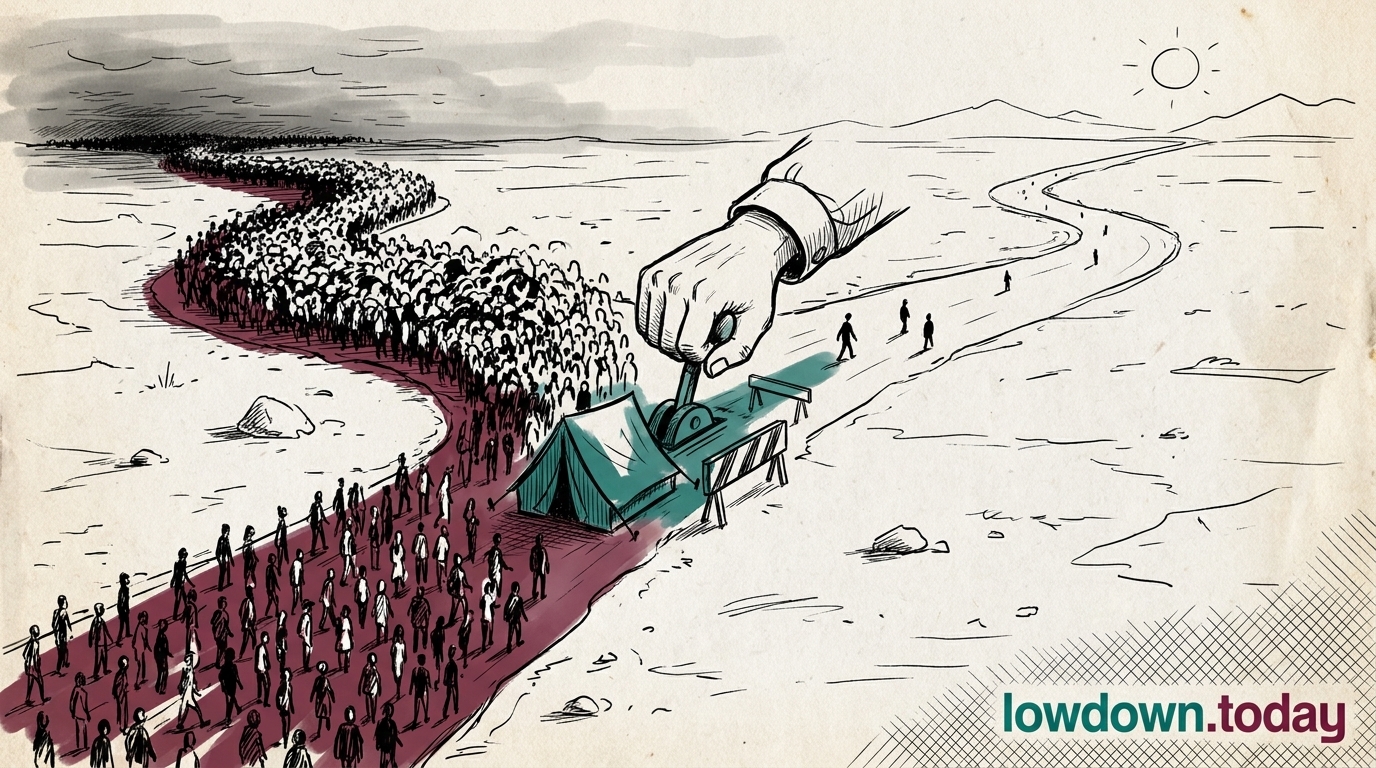
A treatment centre in eastern Democratic Republic of Congo was burned by protesters and then rebuilt, the Africa CDC and WHO response reported on Friday 29 May 1. This is a separate incident from the South Kivu facility torched earlier in May , and the repetition is the worrying part: two clinics attacked in two zones points to a pattern of community distrust rather than a single flashpoint.

WHO Director-General Tedros Adhanom Ghebreyesus visited Ituri Province on Thursday 28 May and put the constraint plainly on Wednesday 27 May: "Stopping this Ebola transmission depends entirely on humanitarian access" 2. Much of the outbreak zone sits in territory contested by the M23 armed group, a Rwandan-backed force that has held parts of eastern DRC since February 2025; DON605 records attacks on health facilities slowing the response 3.

With no vaccine and no licensed treatment, responders cannot vaccinate their way out of distrust as they could in the Zaire outbreaks. Tracing contacts and isolating cases depends on residents accepting responders into their communities, so each torched clinic removes the one tool the response has left. The WHO is leaning on a counter-narrative of recovery: five Bundibugyo patients were discharged on Sunday 31 May 4.

Deep Analysis

In plain English

In the DRC outbreak zone, a treatment centre was attacked and set on fire by local residents, then rebuilt. This is not an isolated incident; a separate facility in South Kivu province was also torched in May (a prior event in this briefing covers that case). Treatment centres are where people with Ebola symptoms are isolated and cared for; without them, sick people remain at home and can pass the virus to family members. The attacks happen because communities sometimes distrust or resent how outbreak responders behave: arriving from outside, taking patients away, and returning bodies for burial. WHO Director-General Tedros Adhanom Ghebreyesus visited Ituri Province on 28 May and stated that stopping transmission depends entirely on communities allowing health workers access. M23, an armed group that controls parts of eastern DRC, is also blocking or slowing the response in the areas it controls.

Deep Analysis
Escalation

Two confirmed treatment-centre arson incidents in eight days (South Kivu in May, Ituri in late May) represent a worsening pattern that follows the Kivu 2018-20 precedent closely. The current contact-tracing rate of 21% of named contacts is already below the 80% threshold associated with containment in modelling studies by the London School of Hygiene and Tropical Medicine. Further infrastructure destruction will drive contact-tracing coverage lower, not higher.

What could happen next?
  • Risk

    Treatment centre arson combined with M23 access restrictions reduces the DRC response's physical infrastructure faster than it can be rebuilt, creating a cyclical coverage gap in the most heavily affected Ituri health zones.

First Reported In

Update #5 · Ebola money arrives, the cure does not

World Health Organization· 2 Jun 2026
Read original
Causes and effects
This Event
Burned clinic rebuilt as access fails
Against a virus with no vaccine and no treatment, community engagement is the primary tool, and a burned clinic destroys exactly that.
Different Perspectives
World Health Organization
WHO's DON606 recalibration to confirmed-only reporting gives the clean baseline the CDC model rests on, but the apparent fall from 1,040 to 534 carries misinterpretation risk WHO communications have not pre-empted. The PABS deadlock ahead of IGWG7 and continuing MBP134/remdesivir assessment without authorisation make WHO the body most able to accelerate the two decisions that could change the outbreak's trajectory.
European Union (ECDC)
ECDC's Week 23 CDTR tracked four simultaneous non-Ebola signals: the Dermatophilus congolensis novel-transmission cluster across France, Germany and Spain; a 4.2-fold malaria surge in Mayotte; the Salmonella ST2045 multi-country cluster; and two new Saudi MERS cases. The continental early-warning layer is carrying a full multi-pathogen picture while Bundibugyo dominates headlines.
Uganda
Uganda
Uganda's 19 confirmed cases are concentrated in Kampala and Wakiso, an urban cluster that applied the 2022 Sudan-ebolavirus playbook; the Bwera border laboratory shortens cross-border confirmation to same-day. Uganda's regulatory authority must co-sign before MBP134 or remdesivir can dose any patient.
Democratic Republic of the Congo
Kinshasa shares Bundibugyo sequence data in real time with no treaty-guaranteed access to the vaccines that data informs, and its health minister called the US entry ban discriminatory while negotiating an early lift. DRC accounts for 515 of 534 confirmed cases and faces IS-controlled access blockades in Mambasa that health authorities cannot resolve.
United States (HHS/CDC)
HHS expanded the Ebola entry ban to green-card holders on 5 June, widening a restriction expiring around 17 June against WHO advice. The CDC simultaneously published the R0=2.51 modelling, the sharpest analytical contribution to the response, from a federal bench that holds the NIH and acting CDC director roles in one person.
Imperial College London / Cori and Ferguson
Anne Cori and Neil Ferguson place the case-fatality ratio at 30 to 40 per cent and read the 6.8-to-1 suspected-to-confirmed ratio as evidence that the laboratory figure understates true lethality. Many people die before a swab reaches them.

