Skip to content
You can now search across every topic, entity and event.What's new
Pandemics and Biosecurity
24MAY

$112m for vaccines, none for the wards

4 min read
16:06UTC

CEPI committed $62m across three Bundibugyo vaccine platforms on 1 June and GAVI added $50m, while no treatment was authorised to dose a patient and the outbreak reached an area responders cannot enter.

ScienceDeveloping
Key takeaway

Vaccine funding reached $112m the same week no treatment was authorised to dose a single patient.

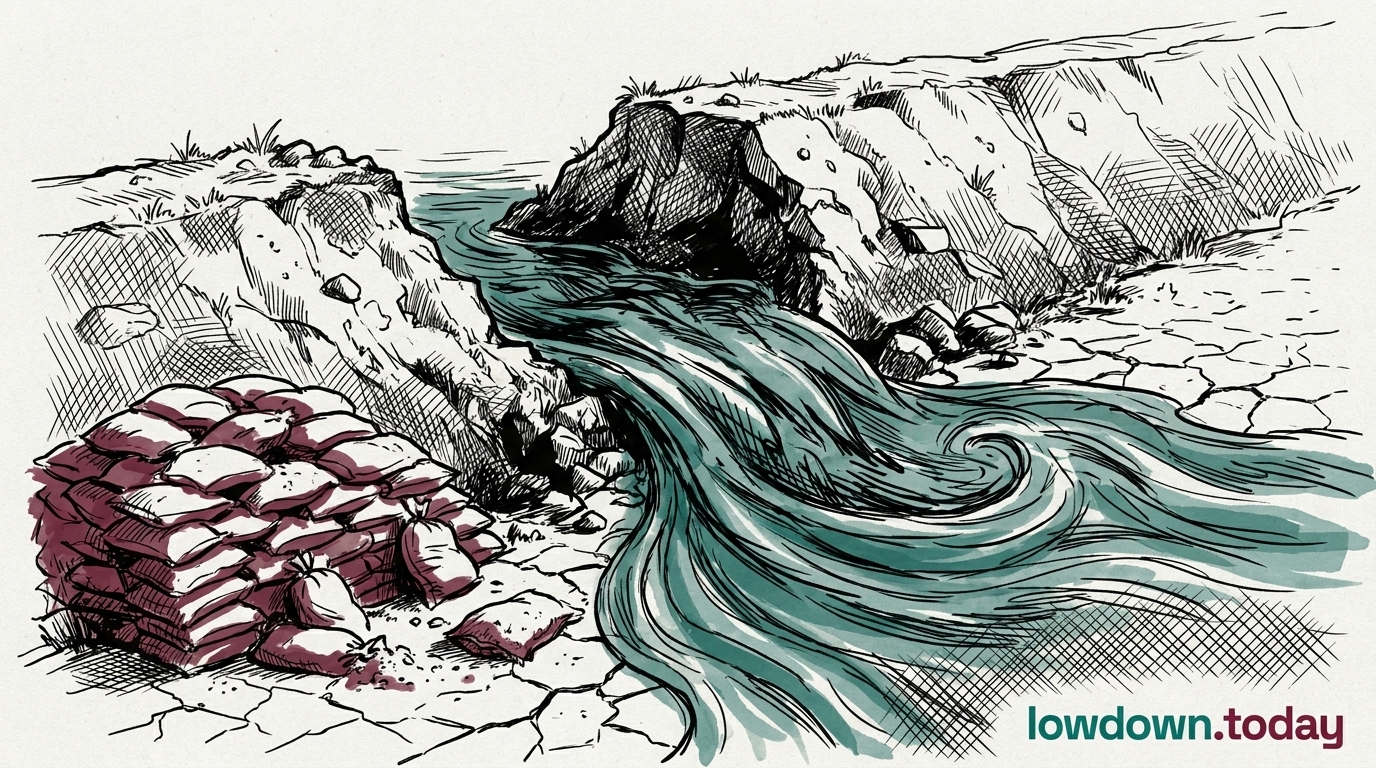
The Coalition for Epidemic Preparedness Innovations (CEPI), the Oslo-based partnership that finances vaccines for epidemic-threat pathogens, committed $62m on 1 June across three named Bundibugyo platforms: $3.2m for IAVI (the International AIDS Vaccine Initiative) and its rVSV (recombinant vesicular stomatitis virus, a live viral vector carrying an Ebola protein) master seed stock, $50m for a Moderna mRNA candidate through Phase 1, and $8.6m for an Oxford ChAdOx1 vaccine (a chimpanzee adenovirus vector, the platform behind the Oxford COVID jab) manufactured at the Serum Institute of India 1. GAVI, the Geneva-based Vaccine Alliance, added $50m in procurement contingent on trial success, taking the headline to $112m, atop the roughly $500m pledged at the 26 May Africa CDC summit .

None of that $112m doses a patient in the wards today. WHO advisory groups are still only assessing the MBP134 monoclonal antibody (a lab-made protein engineered to bind and neutralise the virus) and the antiviral remdesivir; neither is authorised to treat a single Bundibugyo case 2. No countermeasure has ever been licensed for this non-Zaire species, which is why the assessment continues while patients are treated with supportive care alone.

The outbreak has reached Mambasa, an area of Ituri Province under Islamic State control where health workers cannot safely travel, so contact tracing there is impossible 3. A vaccine months from delivery cannot reach a ward that responders cannot enter, which is why the access gap matters more this month than the funding gap. The money has found the laboratory; it has not found the patient.

Deep Analysis

In plain English

Three companies are now racing to develop a vaccine against this Bundibugyo Ebola strain: Moderna (the mRNA vaccine maker), a team from Oxford University manufacturing through an Indian company called the Serum Institute, and a group using a method called rVSV developed by IAVI. Together they received $112m in funding on 1 June. The catch: even the fastest of these will take 12-18 months to produce doses that have been through proper safety testing. That means no vaccine will be ready while this outbreak is happening now. There are also two experimental treatments , called MBP134 and remdesivir , that could potentially be used on current patients, but neither has yet received regulatory approval to be given to anyone. The money for the future is flowing; the tools for today are still stuck in paperwork.

Deep Analysis
Root Causes

The absence of any approved Bundibugyo countermeasure at PHEIC declaration reflects a market-failure logic in infectious disease R&D: Bundibugyo caused 131 cases in its only prior significant outbreak (2007, Uganda), offering an insufficient commercial return to justify a licensed product.

CEPI was created in 2017 specifically to address this failure by providing public-funding pull for non-commercial pathogens. The current $62m commitment is the system working as designed , but it arrived three weeks into a PHEIC, not three years before it.

Mambasa's IS-controlled access problem creates a second root cause independent of countermeasure availability. Even if MBP134 were authorised today, it could not reach the contact-tracing-inaccessible zones in IS-controlled Ituri: treating the countermeasure gap requires regulatory action, while treating the access gap requires a security intervention that health authorities cannot themselves deliver.

What could happen next?
  • Opportunity

    The Serum Institute of India manufacturing partnership for Oxford's ChAdOx1 candidate establishes an equity-by-design production pathway from Phase 1, avoiding the COVID 2021 scenario where LMIC access was negotiated retrospectively after commercial contracts were already in place.

    Medium term · Assessed
  • Risk

    With MBP134 and remdesivir still unauthorised and no approved treatment for Bundibugyo, clinical teams in Ituri face an outbreak measured in hundreds of confirmed cases with supportive care as their only intervention , the same position as 2014 West Africa at outbreak onset.

    Immediate · Reported
  • Precedent

    CEPI's framing of the $62m as a 100 Days Mission test case for a non-commercial pathogen establishes a model for public-funded platform investment in pathogens with no prior commercial vaccine development , a potential template for future WHO R&D Blueprint priority pathogens.

    Long term · Assessed
First Reported In

Update #6 · Ebola outbreak gets an R0, and a fork

World Health Organization· 9 Jun 2026
Read original
Different Perspectives
Germany (evacuation recipient)
Germany received the Bundibugyo outbreak's third international medical evacuation on 13 July, a US humanitarian worker infected in Bunia on 10 July. The evacuation, following a French doctor's 24 June departure and May's first US case, tests whether isolation and biocontainment protocols scale beyond DR Congo's own borders.
Pennsylvania Department of Public Health
PDPH retested and retracted a false-positive measles wastewater signal on 6 July, then confirmed and publicised a real airport exposure from 4 July, with commissioner Palak Raval-Nelson stressing there is no broad threat to the general public. The national count, 2,231 cases across 42 states by 9 July, is on pace to beat 2025's 2,289-case record before September.
World Health Organization
WHO published its first dedicated Blueprint on fungal disease and antifungal resistance on 1 July, estimating more than 300 million people suffer serious fungal disease annually. The Blueprint names the gap in WHO's own AMR strategy rather than waiting for an external audit to force the admission.
Africa CDC
Africa CDC
Africa CDC issued a formal 11 July appeal for responder protection, training and psychosocial support after health-worker infections tripled from 34 to 112 in a month. The appeal repeats June's unmet call for a rapid Bundibugyo diagnostic test, showing the ask has shifted from tools to basic safety and pay.
Front-line health workers, Ituri Province
Health workers in Ituri Province walked off the job or threatened to strike over unpaid hazard pay and delayed salaries, even as responder infections tripled to 112 with 35 dead. Their absence narrows the isolation workforce the CDC's model says must reach 70% coverage to avoid a 20,000-case worst case.
ECDC
ECDC
ECDC co-published the isolation and contact-tracing figures behind WHO's DON612, tracking Ituri's isolation rate rising from 35 to 44 percent while still rating EU/EEA import risk as very low. Brussels backs the WHO line against travel restrictions, the position France's own contact-tracing response, not the US entry ban, actually validated.
