Skip to content
You can now search across every topic, entity and event.What's new
Pandemics and Biosecurity
17MAY

Science links USAID cut to violence

2 min read
11:07UTC

A Science paper published on Thursday 14 May found USAID's abrupt funding withdrawal correlated with a sustained violence increase across Africa's most aid-dependent regions; authors caveat as evidence of disruption, not of aid's long-run effect.

ScienceDeveloping
Key takeaway

Conflict-zone overlap means Ituri shares the structural conditions the Science paper measures, even without DRC data.

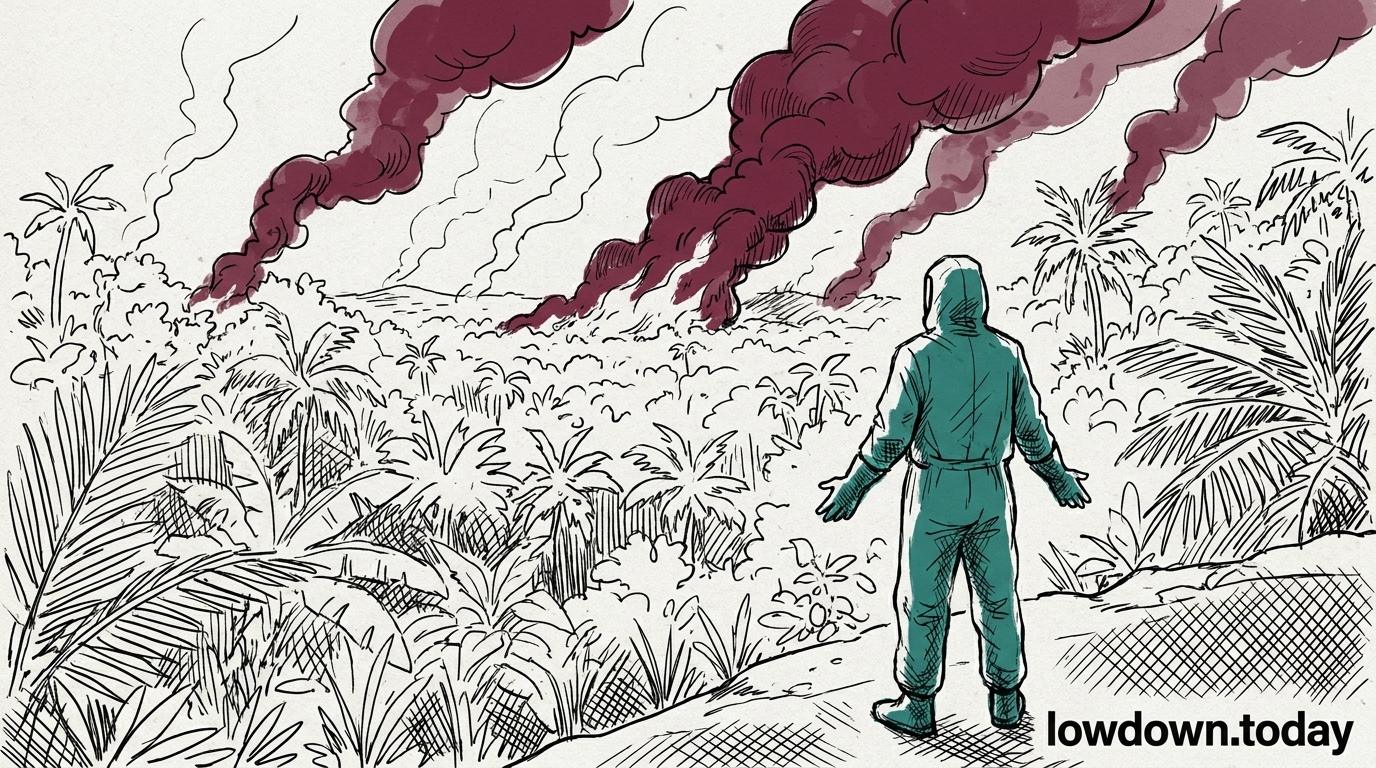
A paper in Science, published Thursday 14 May (DOI 10.1126/Science.aed6802), found that the abrupt withdrawal of USAID funding correlated with a significant and sustained increase in violence across Africa's most aid-dependent regions, including northern Nigeria, Tigray and northern Ivory Coast 1. The authors caveat the finding as evidence of sudden disruption rather than of foreign aid's long-run effect on conflict. Ituri is not named in the paper's geographic scope, but the Djugu and Irumu territories where the outbreak is concentrated sit inside the same conflict geography. Al Jazeera reports recent armed-group attacks in Ituri killed at least 69 people in the weeks preceding the outbreak's surface 2. The outbreak environment shares the structural conditions the paper measures even without DRC-specific data, while the parallel Idaho H5N1 picture compresses the same federal apparatus from the other side.
Deep Analysis

In plain English

A team of researchers published a study in Science on the same day INRB confirmed the Bundibugyo species. They found that when the US cut its foreign aid suddenly in 2025, violence went up significantly in the African regions that depended most heavily on that aid, including parts of Nigeria, Ethiopia, and Ivory Coast. Their study did not cover Ituri. But Djugu and Irumu territories, where the outbreak is concentrated, share the same conditions: armed groups, collapsed governance, heavy prior dependence on USAID-funded community health workers. Al Jazeera reported that armed-group attacks in Ituri killed at least 69 people in the weeks before the Ebola outbreak became visible. Violence and epidemic disease in fragile states tend to reinforce each other: the fighting drives people away from health facilities, and a disease outbreak drives health workers away from conflict areas.

What could happen next?
  • Risk

    If the Science paper's mechanism applies to Ituri, USAID withdrawal may have reduced the community monitoring infrastructure that normally provides early haemorrhagic fever signals, directly contributing to the weeks of undetected transmission that Imperial College assessed.

First Reported In

Update #3 · WHO calls Ebola PHEIC, no treatment exists

Science· 17 May 2026
Read original
Different Perspectives
Chinese health authorities
China reported three human H9N2 cases to WHO between 10 and 16 July: two four-year-olds recovered, a 44-year-old man remains in intensive care, the first severity signal in a cluster that has produced 173 cases and 2 deaths globally since 2015. The subtype is distinct from the H5N1 series this topic otherwise tracks.
US public health authorities
CIDRAP and Dr Andrew Racine, president of the American Academy of Pediatrics, call 2026's 2,318 confirmed measles cases by 24 July the worst year since 1991's 2,126. Zero deaths against three in 2025 and a 7% hospitalisation rate, down from 11%, show record case counts have not brought record severity.
CEPI
CEPI
CEPI put an rVSV-platform vaccine candidate specific to Bundibugyo ebolavirus into trial-production on 31 July, developed by Hilleman Laboratories with MSD manufacturing and IAVI's reference virus, funded up to $8.5m. Eleven weeks into the third-largest Ebola outbreak on record, this is the first species-matched candidate; the licensed vaccine covers only Zaire ebolavirus.
Médecins Sans Frontières
MSF reports sexual-violence care in Ituri is almost non-existent, with 7 of 14 health centres closed or relocated by fighting, as Panzi Hospital logs 646 new survivors in six months, an 85% rise. Withdrawn US funding for post-exposure prophylaxis has left clinics across three provinces without PEP kits for months, a crisis running alongside Ebola, not caused by it.
DRC health workers at Elikya Ebola Treatment Centre
Staff at DRC's Elikya Ebola Treatment Centre walked out on 25 July over unpaid wages, the second such action after Rwampara, while unconfirmed suspects occupy up to 64% of the country's isolation beds awaiting lab results. Workers are absorbing a response that has grown faster than its payroll and its labs.
Uganda's Ministry of Health
Uganda's ministry says it discharged its last confirmed patient on 16 June, completed every contact's 21-day follow-up, and declared the country Ebola-free on 28 July, exactly 42 days later. It names Hon. Dr Chris Baryomunsi, Minister of Health, as overseeing a 20-case, 2-death outbreak it now considers closed.