Skip to content
Welcome, thoughtbot's Giant Robots listeners!Start here
Pandemics and Biosecurity
3OCT

Ebola drug trial awaits DRC, Uganda nod

3 min read
13:42UTC

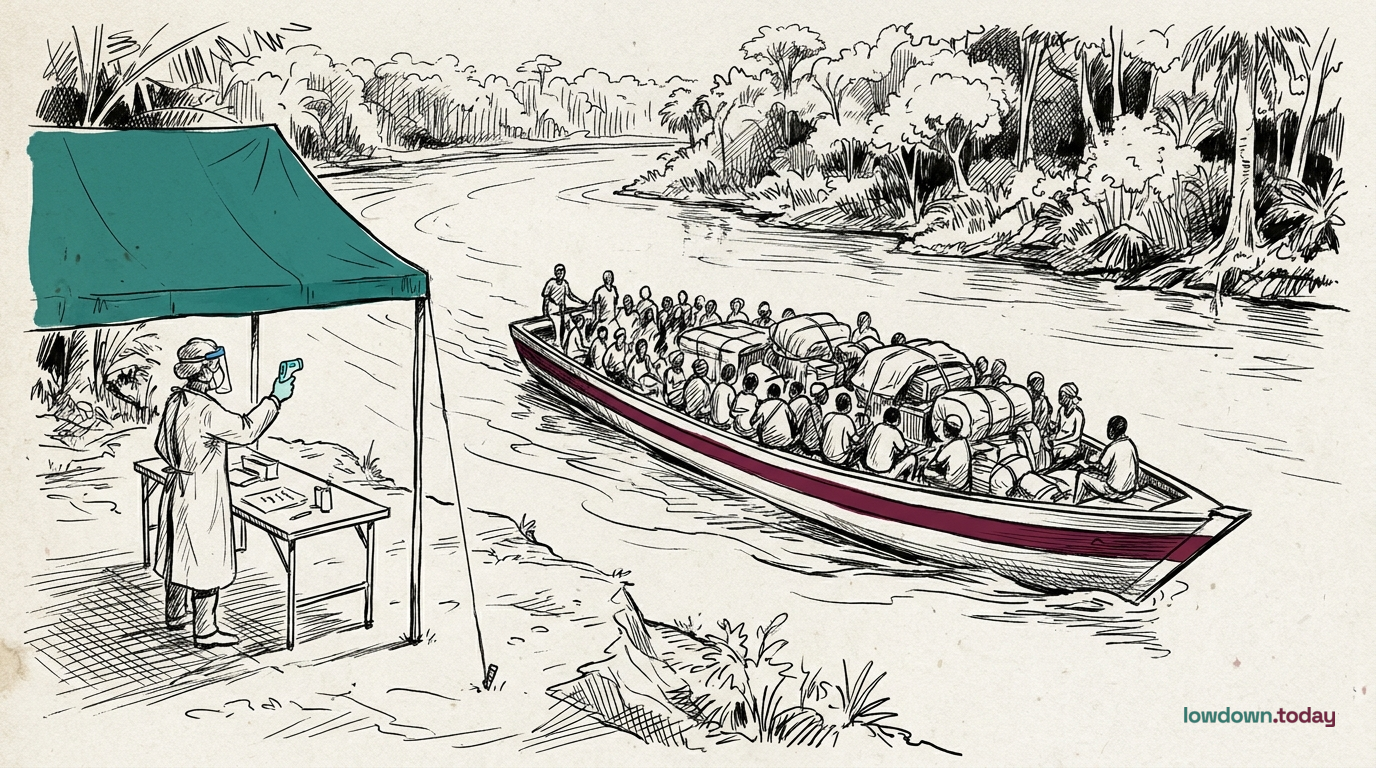
WHO is sponsoring a trial of remdesivir and the antibody cocktail MBP134 for Bundibugyo Ebola, but it cannot dose anyone until the DRC and Uganda grant regulatory approval.

ScienceDeveloping
Key takeaway

The most promising Ebola therapeutic is stalled by national approvals that conflict is making harder to secure.

WHO is sponsoring a trial of two existing therapeutics for Bundibugyo Ebola: remdesivir, an antiviral, and MBP134, a monoclonal antibody cocktail (engineered proteins that bind and neutralise the virus) from Mapp Biopharmaceutical that is active across Ebola species⁠1. In animal studies MBP134 gave 100% protection even when given up to eight days after infection⁠2. The trial has not begun dosing; it awaits regulatory approval from the DRC and Ugandan governments⁠3. This trial is the concrete answer to the gap flagged when the emergency was declared, when WHO confirmed no licensed countermeasure exists for this species and its R&D Blueprint had already named the Bundibugyo therapeutic gap.

National regulators in the DRC and Uganda must clear an investigational protocol, secure informed consent and stand up trial sites before any patient is dosed, and those are exactly the functions that conflict and a torched clinic erode. A trial needs a stable site, a traceable cohort and a chain of custody for samples; the South Kivu crossing and the 21% tracing ceiling in Ituri make all three harder to guarantee. The therapeutic that could cut the fatality rate is gated behind administrative steps that the outbreak's geography is actively dismantling.

No Bundibugyo-specific vaccine has reached even Phase 1. A ChAdOx-platform candidate is two to three months from producing trial doses but lacks safety data; an rVSV-platform candidate is six to nine months out⁠4⁠5. ChAdOx and rVSV are the two viral-vector designs behind the Oxford COVID and licensed Zaire-Ebola vaccines. Roughly 2,000 doses of Ervebo, licensed only for Zaire ebolavirus, already sit in the DRC, and GAVI says they could be used in a trial if WHO experts judge it worth testing against a different species⁠6. Every route to a vaccine here is measured in months, not days.

Deep Analysis

In plain English

The most promising treatment being tested against this type of Ebola is MBP134, a cocktail of laboratory-made antibodies developed by a company called Mapp Biopharmaceutical. In animal studies, it protected 100% of infected subjects even when given up to eight days after infection. It also works against multiple types of Ebola, including Bundibugyo. The problem: it cannot be given to human patients yet because the governments of DRC and Uganda have not yet approved the trial. Clinical trials in outbreak conditions require oversight to protect patients, WHO may be too sick to give fully informed consent. A second antiviral, remdesivir (also used in Covid-19 treatment), is being trialled alongside MBP134. An Ebola vaccine designed for a different species, Ervebo, has about 2,000 doses stockpiled in DRC; scientists are debating whether to test it here, even though it was not made for this type of virus.

Deep Analysis
Root Causes

No licensed vaccine or treatment exists for Bundibugyo ebolavirus because the two prior outbreaks produced only 169 combined cases across 2007 and 2012, insufficient patient numbers and market incentive for a full regulatory trial programme.

Mapp Biopharmaceutical developed MBP134 under the US Department of Defense's medical countermeasures programme for filovirus threats, not through a commercial development pathway, which means compassionate-use access depends on US regulatory frameworks that cannot bind DRC or Uganda authorities.

The ChAdOx-platform Bundibugyo vaccine candidate being two to three months from trial doses reflects the same market-size problem: Oxford developed the platform using prior MERS and COVID-19 investments; the Bundibugyo-specific insert requires immunogenicity data that cannot be obtained without an outbreak. The outbreak has now arrived, but the trial cannot start before safety data that takes months to generate.

First Reported In

Update #4 · Ebola triples, response misfires

NBC News· 24 May 2026
Read original →
Different Perspectives
IGWG co-chair Tovar da Silva Nunes
The Brazilian co-chair closed the eighth pathogen-sharing session on 18 September without an agreed annex text, the second session in a row to end that way. He presented the outcome as continued commitment, with adoption due at the World Health Assembly in May 2027.
Fraport
Fraport
The Frankfurt Airport operator has told staff to watch for fever, hessenschau reported, after six airport workers caught malaria. Germany does not require insecticide spraying of arriving aircraft cabins, and parasite genotyping to trace the source is due at the end of October.
European Centre for Disease Prevention and Control
ECDC reported the eight Frankfurt Airport malaria cases on 18 September and considers repeated arrivals of infected mosquitoes on aircraft likely. It has not ruled out local mosquitoes, and awaits genotyping due at the end of October.
Pan American Health Organization
PAHO counted 53,957 measles cases in the Americas by 19 September and is supporting Peru's response in Puno and Arequipa. It warns that October's Señor de los Milagros festivities and Pope Leo XIV's November visit could increase transmission.
Bangladesh Directorate General of Health Services
The DGHS recorded 1,030 measles-related deaths and 172,720 suspected cases by 14 September, after a campaign that reached 19.75 million children. Its disease-control director, Halimur Rashid, said further vaccination rounds were expected within two weeks.
Minapharm
Minapharm
The Egyptian drugmaker and its Berlin subsidiary ProBioGen were awarded up to US$16.5m by CEPI on 27 August to take a Bundibugyo vaccine into a Phase 1 trial in Africa. Final manufacture is planned for Cairo, making it CEPI's first Bundibugyo candidate with an African producer.
