Skip to content
Briefings are running a touch slower this week while we rebuild the foundations.See roadmap
Iran Conflict 2026
16MAY

Day 60 ends with zero Iran instruments

3 min read
12:41UTC

The White House signed only nominations on 28 April as Trump posted on Truth Social that 'Iran has just informed us they are in a State of Collapse', with no Iranian confirmation.

ConflictDeveloping
Key takeaway

The White House signed only nominations on Day 60, leaving 60 consecutive days with zero Iran executive paper.

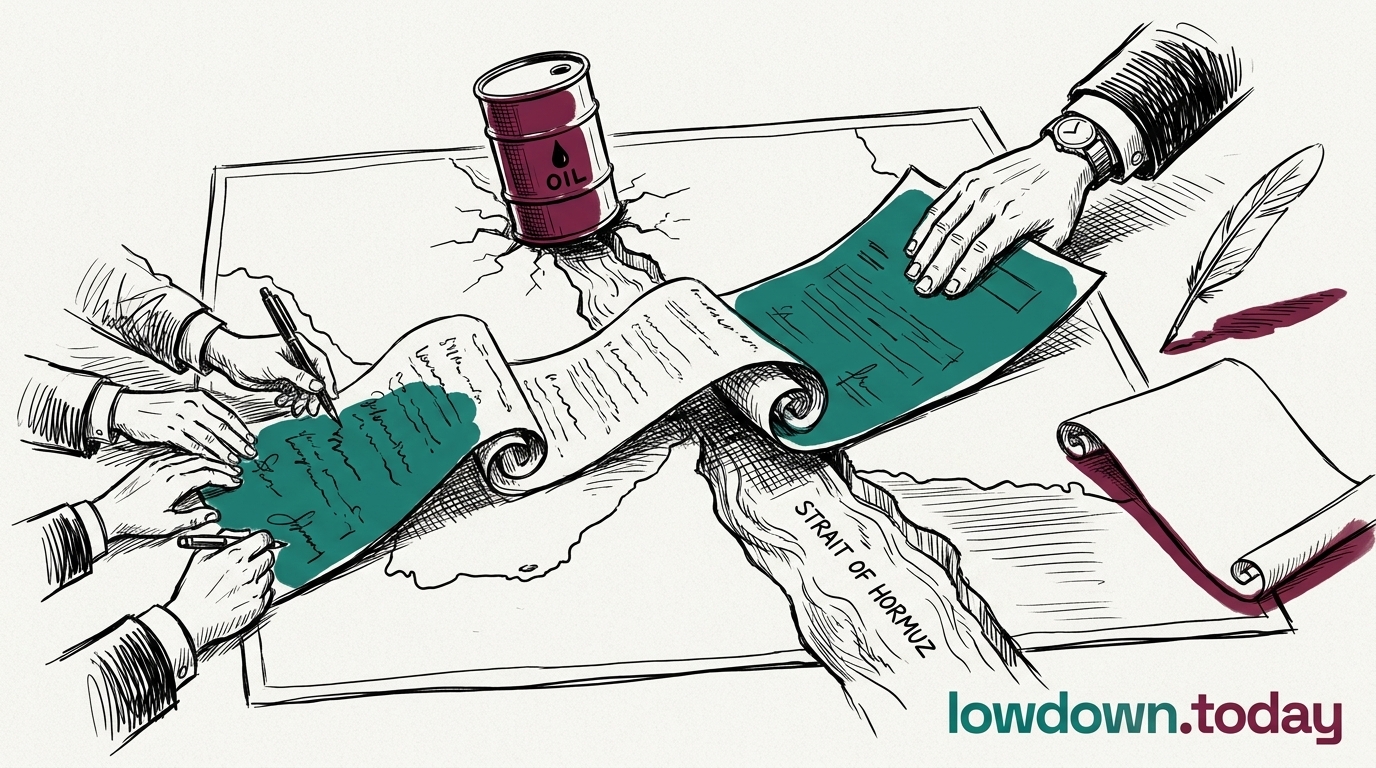
Donald Trump posted to Truth Social on 28 April 2026 that 'Iran has just informed us they are in a State of Collapse'. Axios reported the post and confirmed no Iranian official corroboration and no US government readout accompanying the claim. The presidential-actions index at whitehouse.gov recorded one signed paper on the same Tuesday: a slate of nominations, with no Iran-related executive order, proclamation, or presidential determination among them.

The presidential-actions index is the public register of signed executive orders, proclamations and presidential determinations maintained at whitehouse.gov/presidential-actions. Day 60 continues the unbroken streak the index recorded on Day 59 and across every prior day of the war. The most recent signed domestic order remains the 18 April mental-illness Executive Order, demonstrating signing capacity has been demonstrably available for non-Iran subjects through the entire war. The signing pen produced five energy presidential determinations on 20 April and the mental-illness EO two days earlier; the Iran column is empty by design, not by congestion.

The War Powers Resolution (WPR) deadline expires this Friday . Trump's 'state of collapse' post arrived alongside Brent Crude's post-war high in London and Iran's revised ceasefire text moving through Pakistan towards Marco Rubio. The communication channel for the alleged Iranian message is unspecified; Foreign Minister Abbas Araghchi spent 26-27 April with Vladimir Putin in St Petersburg , not in any channel that would produce a 28 April Iranian readout to Washington. The verbal claim and the empty signing column move on different clocks: the 'state of collapse' post is rhetoric without textual instrument; the index records what carries legal force, and on Day 60 it carried nominations only.

The Friday deadline runs against an index that has produced Hengli Petrochemical OFAC General License V on 24 April as the only signed Iran instrument of the entire war, a 30-day wind-down notice rather than an authorisation of force. Senator Lisa Murkowski's draft AUMF remains unintroduced on Congress.gov 24 hours before the clock runs out, leaving the war on Friday with no signed executive paper and no introduced legislative paper.

Deep Analysis

In plain English

In the United States, the president cannot keep the military at war indefinitely without permission from Congress. A 1973 law called the War Powers Resolution says the president must get that permission, called an Authorisation for Use of Military Force, within 60 days of starting a military operation, or else bring the troops home. Day 60 of this war passed on 28 April. No authorisation has been filed. No formal written order has been produced. The only public statements from the White House about the Iran conflict have been social media posts on Truth Social. This is historically unusual and legally contested.

Deep Analysis
Root Causes

The zero-instrument pattern reflects a deliberate White House strategy to preserve maximum flexibility by avoiding any written instrument that creates a legal record defining the war's scope, duration, or authorised force.

A signed executive order defining the Iran operation would constrain CENTCOM's operational discretion by creating a textual floor that lawyers on all sides could interpret. The verbal approach denies Iran's legal team, European allied planners, and congressional oversight committees any fixed text against which to measure compliance or escalation.

Senator Murkowski's failure to introduce the AUMF by her own 28 April target reflects a parallel institutional problem: Republican senators who want the war legalised face pressure from the White House not to create a voted constraint on executive authority. An AUMF filed before the WPR deadline would force a Senate floor vote that could attach conditions, geographic limits, or expiry clauses the executive branch is unwilling to accept.

What could happen next?
  • Risk

    The WPR clock expiring at 12:01 EDT on 1 May without a filed AUMF creates a legally ambiguous window in which any member of Congress can argue US military operations in the Strait of Hormuz are legally unauthorised, potentially exposing CENTCOM personnel to challenges from allied legal frameworks under the Law of Armed Conflict.

  • Precedent

    A sustained 60-day military operation with zero signed executive instruments establishes that presidential social media posts can substitute for written executive authority in national security law, setting a precedent that any future administration can invoke.

First Reported In

Update #83 · UAE quits OPEC, war signs nothing

Axios· 29 Apr 2026
Read original
Causes and effects
This Event
Day 60 ends with zero Iran instruments
The White House presidential-actions index has now logged 60 consecutive days with zero signed Iran executive paper across the entire war, demonstrating signing capacity is intact for non-Iran subjects. The War Powers Resolution clock expires at 12:01 EDT on Friday 1 May against an unbroken streak; the most recent signed domestic order is the 18 April mental-illness EO.
Different Perspectives
India (BRICS meeting host, grey-market beneficiary)
New Delhi hosted the BRICS foreign ministers' meeting on 14 May that Araghchi attended under the Minab168 designation, giving India a front-row seat to Iran's diplomatic positioning. India's state refiners have been absorbing discounted Iranian crude through grey-market routing since April; Brent at $109.30 means every barrel sourced outside the formal market generates a structural saving.
Hengaw / Kurdish human rights monitors
Hengaw's daily reports from Iran's Kurdish provinces remain the sole independent cross-check on Iran's judicial activity during the conflict. Two executions across Qom and Karaj Central prisons on 15 May and five Kurdish detentions on 15-16 May indicate the wartime judicial pipeline is operating independently of military tempo.
Pakistan (mediator and bilateral partner)
Islamabad spent its diplomatic capital as the US-Iran MOU carrier to secure LNG passage for two Qatari vessels through a bilateral Pakistan-Iran agreement, spending its mediation credit for direct economic gain. China's public endorsement of Pakistan's mediatory role on 13 May is the structural reward.
China and BRICS bloc
Beijing endorsed Pakistan's mediatory role on 13 May, one day after the BRICS foreign ministers' meeting in New Delhi. Chinese state banks are processing PGSA yuan toll payments; China has not commented on its vessels' continued Hormuz passage, but benefits structurally from a non-dollar toll system it did not design.
Iraq (bilateral passage partner)
Baghdad negotiated a 2-million-barrel VLCC transit without paying PGSA yuan tolls, offering political alignment in lieu of cash. Iraq's position inside Iran's adjacent bloc makes it the natural first bilateral partner and a template for how Tehran structures passage deals with states that cannot afford Western coalition membership.
Bahrain and Qatar (Gulf signatories)
Both signed the Western coalition paper while hosting US Fifth Fleet and CENTCOM's Al Udeid base, respectively. Qatar occupies the sharpest contradiction: it is on coalition paper while simultaneously receiving LNG passage through the bilateral Iran-Pakistan track, a position Doha has tacitly accepted from both sides.