Skip to content
Briefings are running a touch slower this week while we rebuild the foundations.See roadmap
Iran Conflict 2026
15MAY

Khademi killed and the IRGC's gatekeeper falls

2 min read
13:51UTC

The IRGC intelligence chief who kept Iran's elected president away from the Supreme Leader was reported killed in the same 6 April Israeli strike that hit South Pars.

ConflictDeveloping
Key takeaway

If confirmed, Khademi's death briefly removes the man whose job was to keep Pezeshkian away from Khamenei.

Maj. Gen. Majid Khademi, head of IRGC intelligence since 2024 and described by regional reporting as "effectively the No. 2 within the IRGC", was reported killed in the 6 April Israeli strike wave on Asaluyeh, alongside Asghar Bakeri, named as the commander of Quds Force Unit 840 1. Wire-service confirmation on both kills is still pending; the sourcing is regional reporting and the casualties should be read with that caveat.

If they hold up, they are the most senior IRGC losses since the conflict began. Khademi was one of several senior IRGC losses across the past two days, yet Iran's outbound missile rate fell to its lowest of the war rather than spiking in retaliation, an asymmetry that itself suggests command disruption rather than restraint.

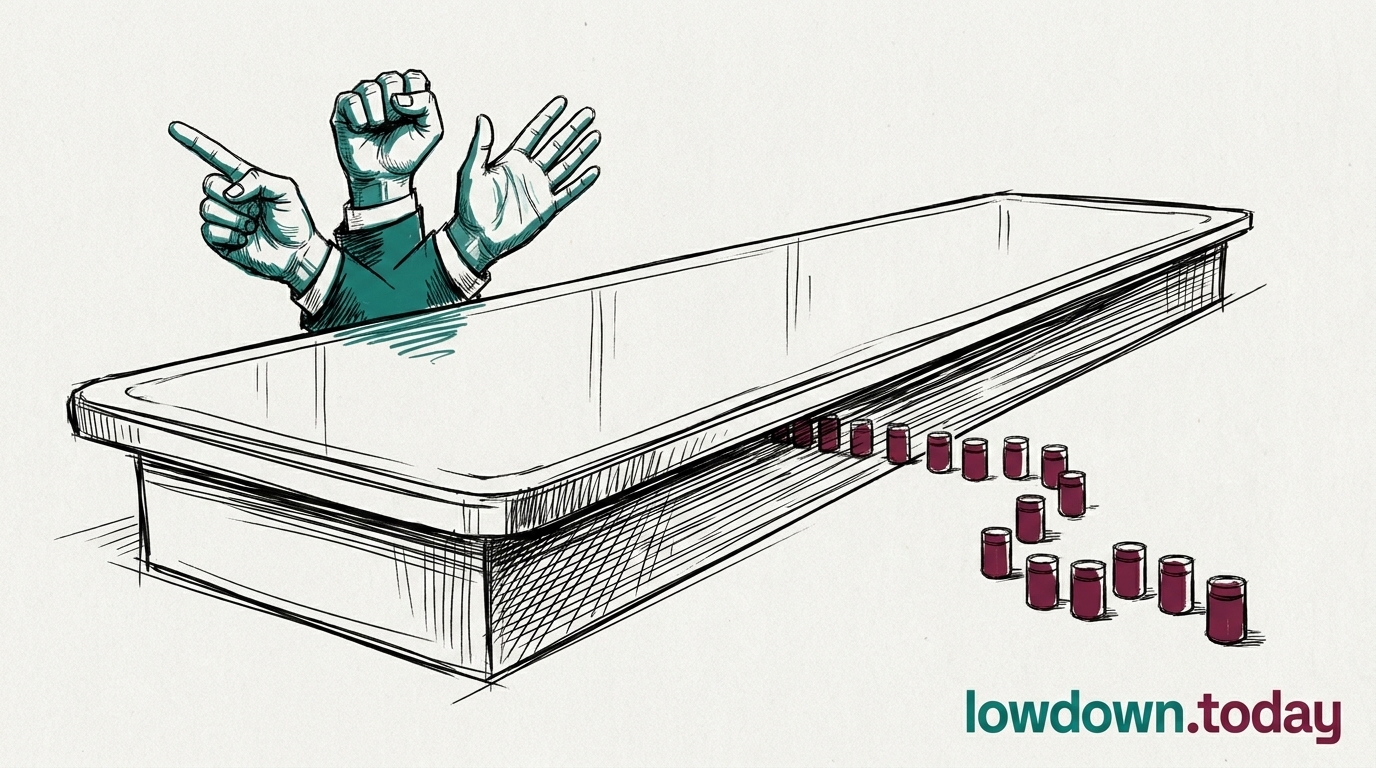
Khademi's portfolio is what makes his death matter beyond the casualty list. His apparatus runs the internal surveillance apparatus that has, through six weeks of war, kept President Masoud Pezeshkian physically and procedurally away from Supreme Leader Mojtaba Khamenei and again on 5 April . Replacing the head of IRGC counterintelligence is not a desk reshuffle; it is a consolidation that takes weeks under peacetime conditions. For a brief and uncertain window, the architecture blocking Iran's civilian government from its own decision-maker has lost its principal architect. Whether Pezeshkian can use that gap, or whether the military council closes around him faster, will be visible within days.

Deep Analysis

In plain English

Iran's elected president, Masoud Pezeshkian, has not been running Iran's war strategy. The IRGC's intelligence chief , Maj. Gen. Majid Khademi , ran a surveillance apparatus that kept Pezeshkian physically and procedurally away from the Supreme Leader throughout the conflict, ensuring that any ceasefire signal had to be approved by the IRGC military council, not just the civilian government. Reports say Khademi was killed in the same Israeli strike that hit South Pars. If confirmed, Iran's civilian government may have a brief window to reach Khamenei directly before the IRGC installs a replacement and closes the gap. Whether Pezeshkian can act in that window, or whether the military council moves faster, is the most consequential unknown of the coming days.

Deep Analysis
Root Causes

Khademi's role was architecturally significant because the IRGC's hold over Iran's civilian government is enforced procedurally, not merely politically.

The surveillance apparatus he ran determined which communications Pezeshkian could receive, which officials he could meet, and which negotiating signals he could authorise.

That apparatus does not automatically transfer to a successor; it must be rebuilt around a new commander's authority, creating a genuine but time-limited gap in the enforcement mechanism.

What could happen next?
  • Risk

    If confirmed, Khademi's death opens a brief and uncertain window in which Iran's civilian government might alter the IRGC-controlled negotiating mandate , a window likely measured in days before institutional replacement closes it.

  • Consequence

    Iran's outbound missile rate fell to its war low in the same period as the reported senior command losses, suggesting command disruption rather than deliberate restraint , a pattern that could reverse sharply once a successor structure consolidates.

First Reported In

Update #61 · Carriers retreat; Iran codifies Hormuz

CBS News· 7 Apr 2026
Read original
Different Perspectives
Markets
Markets
Brent crude rose 2.2 per cent to $96.34 on 10 June, reversing a 7 per cent weekly decline built on deal optimism, as the overnight exchange repriced the Strait of Hormuz risk premium in a single session. The move reflects transit-risk repricing rather than supply shock: Iran's exports had already collapsed to below 300,000 barrels per day.
Pakistan
Pakistan
Pakistan's Naqvi channel, the only mediation track carrying both civilian and military buy-in, was stress-tested by live ordnance within 48 hours of the 6-7 June Tehran visit. Whether Washington informed Islamabad of the imminent strike plan while Naqvi was in Tehran remains undisclosed, putting the channel's neutrality under scrutiny.
Kuwait
Kuwait
Kuwait hosted the third Iranian strike on its soil since the 3 June airport drone attack, with Ali Al Salem airbase targeted in the three-country salvo. Its recent $1.98 billion Anduril Anvil counter-drone purchase signals it is rearming rather than reconsidering its hosting posture.
Bahrain
Bahrain
Bahrain absorbed the IRGC barrage via PAC-3 intercepts with its magazine already at 87 per cent depletion and no resupply before 2027. Sounding air-raid sirens over Manama, it faced the intercept burden with the thinnest defensive stack in the Gulf coalition.
Jordan
Jordan
Jordan reported all five incoming missiles intercepted with no injuries and no damage, a clean defensive performance that strengthens Amman's case for staying in the Western coalition without escalating its own posture. It now sits on Iran's target list for the first time despite not being a party to the Abraham Accords confrontation.
Iran / IRGC
Iran / IRGC
Foreign Minister Araghchi posted on X that US forces should 'leave our region if you want to be safe' and framed the exchange as a US defeat, while the IRGC claimed 21 targets hit and an F-35 hangar destroyed. The claims serve a domestic and Arab-audience framing rather than a verified battle-damage assessment.