Skip to content
Briefings are running a touch slower this week while we rebuild the foundations.See roadmap
Iran Conflict 2026
12MAY

Tehran rolls out 'white internet' for the loyal

2 min read
09:32UTC

Iran's Supreme National Security Council operationalised tiered internet access for government loyalists while roughly 99% of the population remained offline. Cumulative blackout losses passed $5.2bn.

ConflictDeveloping
Key takeaway

Iran's SNSC built a parallel internet while 99% of the population paid the bill in $5.2bn lost activity.

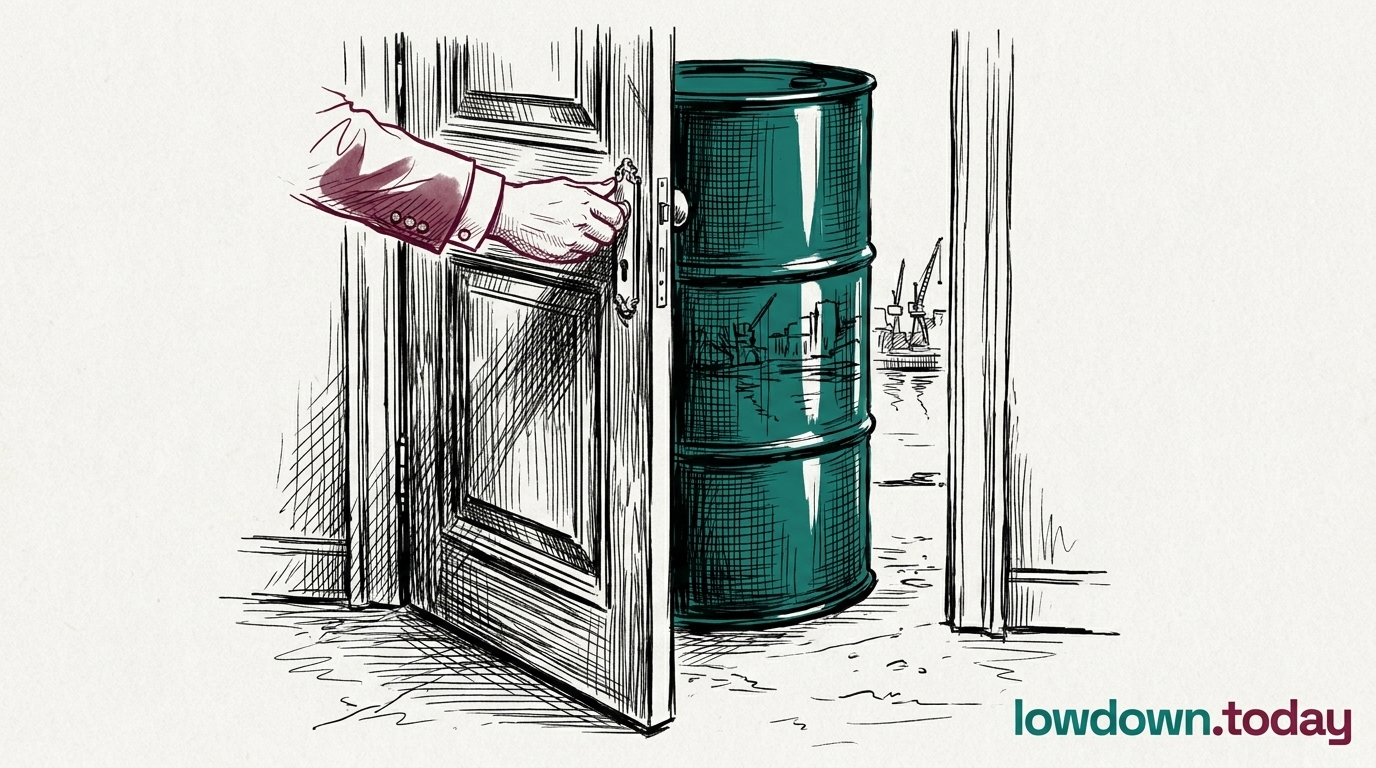
Iran's Supreme National Security Council (SNSC) has operationalised a tiered internet access system in which government loyalists receive what state media call "white internet", free and uncensored, while paying subscribers can buy a restricted "Internet Pro" package, NPR reported on 8 May and Bloomberg confirmed on 9 May 1. Roughly 99% of the Iranian population have neither and remain offline. The blackout itself dates to mid-March 2026; the SNSC's tiered access design was operationalised this week.

The Iranian business daily Donya-ye Eghtesad has compiled cumulative economic losses from the blackout at $5.2 billion, with daily losses running into the tens of millions of dollars. Iranians have spent roughly 70% of 2026 without normal connectivity. The SNSC's design preserves state command-and-control while pushing the cost of the disconnection onto the citizens it governs. Iran's Foreign Ministry diplomats argued positions in Vienna and Doha through April that their own population could not read on the day of release.

The rollout lands against the backdrop of the 7-8 May Bandar Abbas naval exchange and Speaker Ghalibaf's parliamentary mockery of the US MOU on the same day. The same government that publicly rejected the deal as "Operation Trust Me Bro" is, the same week, building a parallel internet for officials and clerics. Domestic legitimacy has narrowed to the audience that gets the white internet for free.

Deep Analysis

In plain English

Iran's government has been cutting its own people off from the internet since the war started in late February. Around 99% of ordinary Iranians cannot access a normal internet connection. This week, Iran announced a formal two-tier system: government officials and loyalists get unrestricted 'white internet' for free, wealthier Iranians can buy a limited 'Internet Pro' package, and everyone else stays offline. Government officials can now communicate freely and see the outside world, while the people they govern cannot coordinate with each other or watch what their government is doing. The Iranian business newspaper Donya-ye Eghtesad calculated the total economic damage from the blackout at $5.2 billion, roughly equivalent to wiping out the entire annual output of a mid-sized Iranian city. This kind of tiered system (officials online, public offline) has been seen in other authoritarian contexts, but Iran has now formalised it in official policy rather than keeping it as a covert technical measure.

Deep Analysis
Root Causes

Iran's tiered internet architecture has three structural predecessors that illuminate its current form.

The **2009 Green Movement** produced Iran's first recorded national throttling event, when the SNSC ordered ISPs to reduce bandwidth to 56 kbps (dial-up speeds) to prevent protesters from uploading video of the Neda Agha-Soltan killing.

That event taught the SNSC that complete shutdown was operationally costly (the banking system and government ministries ran on the same infrastructure) while selective throttling was insufficient because VPN penetration was high. The lesson was that differentiated access tiers, rather than uniform restriction, were the more durable architecture.

The **2019 November protests** and the subsequent five-day complete internet shutdown demonstrated the SNSC could sustain full shutdown for a limited period, but that the economic cost (Netblocks estimated $1.5 billion in five days) was unsustainable beyond a week.

The 2026 design solves this by building the cost-absorption mechanism into the population rather than the state: 99% of Iranians bear the economic loss (the $5.2 billion cumulative figure) while the state-tier white internet preserves the state's own economic operations.

The **2022 Mahsa Amini protests** exposed a third structural problem: secure VPN traffic from ordinary citizens was still able to support a six-month protest coordination network despite the throttling. The 2026 white-internet design addresses this by making the tiered distinction explicit in law (SNSC resolution) rather than covert (technical throttling), which enables prosecution of anyone using non-authorised access as a regulatory violation rather than requiring evidence of protest activity.

What could happen next?
  • Risk

    The white-internet tier creates an information bubble for SNSC and IRGC decision-makers: they have full external information access while remaining insulated from accurate domestic sentiment, which increases the risk of strategic miscalculation at a critical diplomatic juncture.

  • Consequence

    The explicit legal formalisation of tiered access enables prosecution of non-authorised internet use as a regulatory crime, removing the burden of proving protest activity and expanding the state's repressive toolkit at the same moment the MOU negotiation is asking Iran to demonstrate good faith.

First Reported In

Update #92 · An MOU asking Iran to surrender what nobody can count

CBS News· 9 May 2026
Read original
Causes and effects
This Event
Tehran rolls out 'white internet' for the loyal
A two-tier connectivity system that reroutes the cost of the blackout onto the population while preserving SNSC communications is a discriminatory infrastructure design with no peacetime precedent in Iran.
Different Perspectives
International human rights monitors (NetBlocks, IHR, Hengaw)
NetBlocks recorded 1,704 cumulative hours of near-total internet blackout for roughly 90 million Iranians on Day 74, while IHR documented ongoing executions under emergency provisions. These organisations are the only active monitoring windows into a civilian population cut off from the global internet for 71 consecutive days.
UK / France coalition
The Royal Navy confirmed HMS Dragon's Hormuz deployment on its own website on 11 May, converting a press-reported presence into declared force posture; UK and French defence ministers hosted a coalition meeting the same day. Britain and France are now the only named contributors to a Hormuz escort mission all five allies Trump originally asked had declined.
Saudi Aramco / Gulf producers
Saudi Aramco CEO Amin Nasser warned on 11 May that a Hormuz closure could remove 100 million barrels of weekly supply from global markets (roughly 15 million barrels per day for a week), a figure that dwarfs any OPEC+ swing capacity. The warning functions as both a price-floor signal and a public pressure on Washington to protect transit.
Beijing / Chinese Government
China has not publicly acknowledged the four Hong Kong-registered entities designated on 11 May or extended MOFCOM's Blocking Rules cover to HK-domiciled firms. Xi Jinping hosts Trump on 14–15 May having already de-risked state-bank balance sheets via NFRA's quiet loan halt, entering the summit partially compliant before any negotiation.
Tehran / Iranian Government
Foreign Minister Araghchi described Iran's 10-point counter-proposal as 'reasonable and responsible' via spokesman Baqaei on 11 May, and widened the mediator pool by meeting Turkish, Egyptian, and Dutch counterparts in a single day. Tehran is buying procedural runway while Trump's verbal rejection went unmatched by any written US counter.
Trump White House
Trump White House
Trump called the ceasefire 'on massive life support' and dismissed Iran's 10-point counter-proposal as 'a piece of garbage' on 11 May, while departing for Beijing two days later with no signed Iran instrument to show Congress. The verbal maximum and the paper void coexist: the administration is running a legal pressure campaign through Treasury while the president free-lances the rhetoric.