Skip to content
Briefings are running a touch slower this week while we rebuild the foundations.See roadmap
Iran Conflict 2026
11MAY

Trump's 'Too Late!' kills Iran's channel

3 min read
14:01UTC

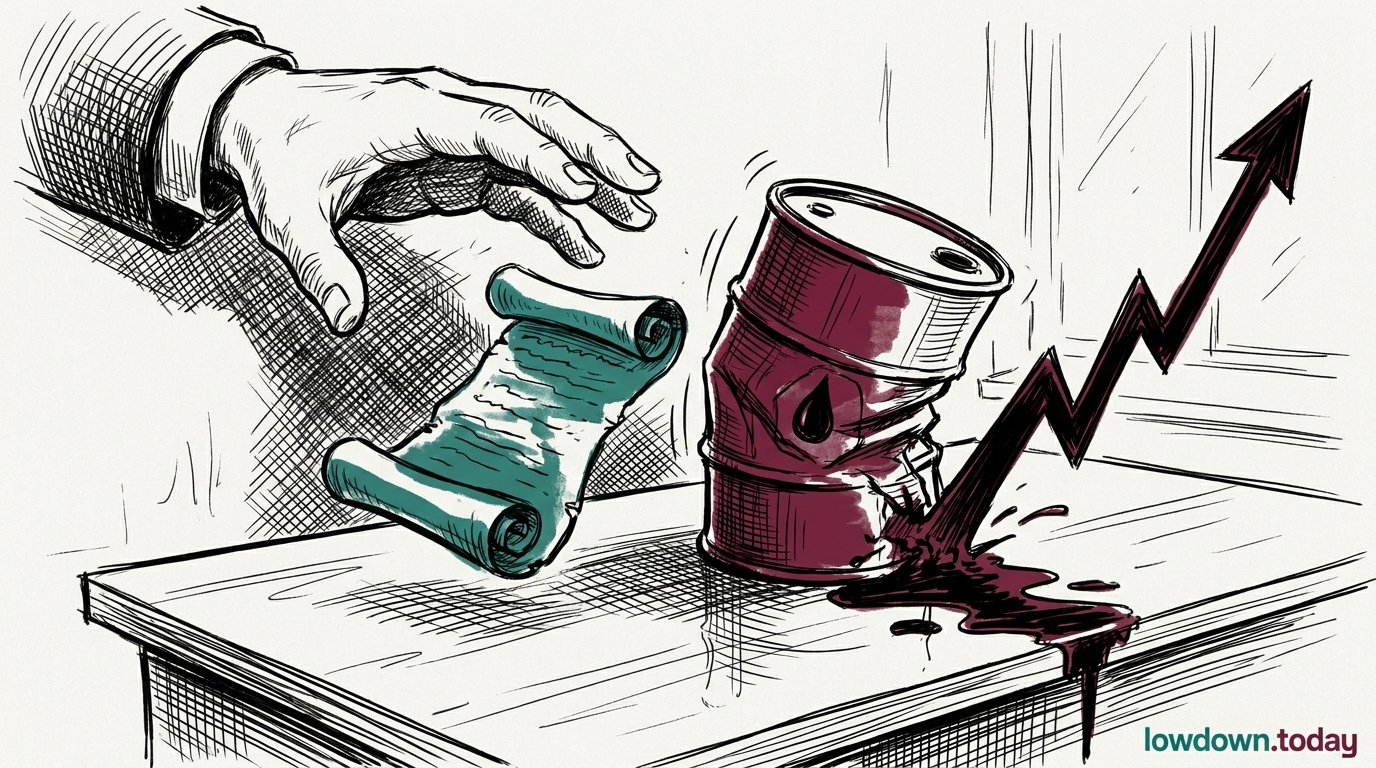
President Trump publicly rejected Tehran's first back-channel approach within hours of its exposure, closing the one diplomatic opening Iran had attempted since the conflict began.

ConflictDeveloping
Key takeaway

Trump's choice of a public social media post to reject a covert diplomatic approach transforms a deniable 'no' into a documented political commitment, raising the threshold Iran must clear — and Trump must clear — to resume contact without appearing to reverse course.

President Trump posted "Too Late!" within hours of The New York Times reporting that Iranian intelligence had reached out to the CIA through a third country's service. CNN confirmed that neither Special Envoy Steve Witkoff nor Jared Kushner has had direct contact with Iranian counterparts. No active negotiations are under way.

Two words, but the analytical content is in what they foreclose. CENTCOM has been directed to "dismantle the Iranian regime's security apparatus" — a war aim that encompasses the IRGC, Basij, MOIS, and the internal security forces that maintain the current government's domestic control. Defence Secretary Hegseth simultaneously claims this is not a regime change war . Both statements cannot be true: dismantling the security apparatus of a state whose government depends on that apparatus for survival is Regime change by another name. If the operational objective is dismantlement rather than deterrence, there is no logical ceasefire point short of that goal. A negotiated pause would, by definition, leave intact the apparatus CENTCOM has been ordered to destroy. Trump's rejection is not impulsive. It is consistent with an expanded war aim that requires continuation.

Axios reported that Israeli Prime Minister Netanyahu directly asked the White House whether secret negotiations with Iran were occurring. The question carries its own history. Netanyahu spent 2013–2015 opposing the secret US-Iran talks that produced the JCPOA, culminating in his March 2015 address to the US Congress — delivered without White House invitation — warning against the deal. His anxiety about being excluded from a US-Iran channel is rooted in direct experience of what such channels can produce. The fact that he felt compelled to ask suggests Israeli intelligence either detected the Iranian approach independently or learned of it through liaison channels and wanted confirmation of Washington's response before it became public.

The sequence — Iranian approach, immediate leak, public rejection — has a structural consequence beyond this specific conflict. Iran's foreign minister had told Oman's Badr Albusaidi that Tehran was "open to any serious efforts that contribute to stopping the escalation" , a formulation that left room for mediated contact. The CIA channel was an attempt to test whether that opening extended to direct engagement with Washington. Its exposure and instant rejection answers that question definitively for now. Any future Iranian approach will require a different intermediary, a different format, and a different American president — or a battlefield reality sufficiently changed to alter the calculation on one side or both. Six days into a conflict with over 1,000 Iranian civilians dead , no diplomatic process of any kind exists.


Deep Analysis

In plain English

When a country quietly reaches out through back channels to propose peace talks, the standard diplomatic practice — even when refusing — is to respond quietly, so both sides can pretend it never happened and try again later without losing face. Trump instead announced the rejection publicly on social media within hours of the news breaking. This means Iran cannot quietly try again without appearing to beg, and Trump cannot quietly change his mind without appearing to reverse himself. The method of rejection is as consequential as the rejection itself.

Deep Analysis
Synthesis

The question of who leaked the MOIS approach to the NYT — and when — is analytically critical and not addressed in the body. Trump's 'Too Late!' response came within hours, suggesting he was informed before publication (standard practice for senior-official national security stories) and chose public rejection over private. Combined with Netanyahu's simultaneous White House inquiry (Event 7), the most parsimonious explanation is that the leak was a coordinated move to surface and kill the channel publicly, foreclosing Iranian peace signalling while maintaining maximum pressure optics — with the 'Too Late!' post serving partly as reassurance to Jerusalem that no deal was being considered.

Escalation

The public rejection raises the political cost for any future Iranian peace initiative — Tehran would need to accept visible domestic humiliation to attempt another approach so soon after a public rebuff. This structurally lengthens the conflict by eliminating low-cost exit ramps: Iran's next contact would need to be substantively significant to justify the political exposure, meaning any future channel would require a higher level of Iranian concession before being initiated, delaying the point at which contact is attempted.

What could happen next?
  • Consequence

    Any future US-Iran contact must now be reframed as new Iranian capitulation rather than resumed dialogue, raising the domestic political threshold Iran must clear to open negotiations.

    Short term · Assessed
  • Risk

    The elimination of deniability from the back-channel framework means future Iranian peace feelers must be substantively significant before initiation, extending the interval before the next contact attempt and prolonging the conflict.

    Medium term · Assessed
  • Precedent

    Using social media to publicly reject a covert diplomatic approach may establish a new norm in crisis communication that erodes the viability of intelligence-channel back-channel diplomacy as a conflict-management tool.

    Long term · Suggested
First Reported In

Update #22 · IRGC drones hit Azerbaijan; CIA link cut

New York Times· 5 Mar 2026
Read original
Causes and effects
This Event
Trump's 'Too Late!' kills Iran's channel
The rejection is consistent with CENTCOM's directive to dismantle Iran's security apparatus — a war aim that has no logical ceasefire point short of completion. By killing the channel publicly rather than ignoring it privately, Trump foreclosed the possibility of future deniable contacts and signalled that the US operational objective requires continuation, not negotiation.
Different Perspectives
International human rights monitors (NetBlocks, IHR, Hengaw)
NetBlocks recorded 1,704 cumulative hours of near-total internet blackout for roughly 90 million Iranians on Day 74, while IHR documented ongoing executions under emergency provisions. These organisations are the only active monitoring windows into a civilian population cut off from the global internet for 71 consecutive days.
UK / France coalition
The Royal Navy confirmed HMS Dragon's Hormuz deployment on its own website on 11 May, converting a press-reported presence into declared force posture; UK and French defence ministers hosted a coalition meeting the same day. Britain and France are now the only named contributors to a Hormuz escort mission all five allies Trump originally asked had declined.
Saudi Aramco / Gulf producers
Saudi Aramco CEO Amin Nasser warned on 11 May that a Hormuz closure could remove 100 million barrels of weekly supply from global markets (roughly 15 million barrels per day for a week), a figure that dwarfs any OPEC+ swing capacity. The warning functions as both a price-floor signal and a public pressure on Washington to protect transit.
Beijing / Chinese Government
China has not publicly acknowledged the four Hong Kong-registered entities designated on 11 May or extended MOFCOM's Blocking Rules cover to HK-domiciled firms. Xi Jinping hosts Trump on 14–15 May having already de-risked state-bank balance sheets via NFRA's quiet loan halt, entering the summit partially compliant before any negotiation.
Tehran / Iranian Government
Foreign Minister Araghchi described Iran's 10-point counter-proposal as 'reasonable and responsible' via spokesman Baqaei on 11 May, and widened the mediator pool by meeting Turkish, Egyptian, and Dutch counterparts in a single day. Tehran is buying procedural runway while Trump's verbal rejection went unmatched by any written US counter.
Trump White House
Trump White House
Trump called the ceasefire 'on massive life support' and dismissed Iran's 10-point counter-proposal as 'a piece of garbage' on 11 May, while departing for Beijing two days later with no signed Iran instrument to show Congress. The verbal maximum and the paper void coexist: the administration is running a legal pressure campaign through Treasury while the president free-lances the rhetoric.



