Skip to content
Briefings are running a touch slower this week while we rebuild the foundations.See roadmap
Iran Conflict 2026
1MAY

200 US troops wounded in eighteen days

3 min read
10:38UTC

American casualties accumulate entirely from Iranian strikes on fixed bases — no ground combat, no front line — with CENTCOM reporting 200-plus wounded and 13 killed.

ConflictDeveloping
Key takeaway

A 15:1 wounded-to-killed ratio points to blast injuries, not sustained ground combat.

US wounded in the Iran conflict surpassed 200 as of 17 March — up from the 140-plus CENTCOM reported three days earlier 1. More than 180 returned to duty. Killed in action remains at 13: six logistics soldiers in Kuwait on 2 March, one service member in Saudi Arabia on 8 March, and six KC-135 crew in western Iraq on 13 March . No American has died from direct Iranian fire since 8 March.

The rate — roughly 11 wounded per day — comes entirely from missiles, drones, and interceptor debris striking fixed installations across a 2,000-kilometre arc from Baghdad to the southern Gulf. There is no ground combat, no front line, no force-on-force engagement. The strike that damaged five KC-135 tankers at Prince Sultan Air Base and the drone attacks on Ahmed al-Jaber in Kuwait that wounded three soldiers illustrate the pattern: Iran is degrading logistics nodes, not engaging infantry. CENTCOM's high return-to-duty rate — over 180 of 200-plus — indicates most injuries are from blast overpressure and shrapnel at distance, consistent with near-miss intercepts. The eight severe casualties in earlier tallies are the exception: permanent injuries from closer impacts.

Thirteen killed and 200-plus wounded in 18 days, extrapolated, yields a monthly rate of roughly 330 wounded. That would be unremarkable during the Iraq occupation's worst years, which saw 400 to 900 per month — but those figures involved 130,000-plus troops in active ground combat. The current toll comes from a far smaller force occupying fixed bases with no ground engagement. More than 250 US organisations have demanded Congress halt war funding . With CSIS calculating operational costs at nearly $900 million per day 2, each wounded American adds a name to the domestic argument that this war's costs — human and fiscal — are accumulating without a defined objective they serve.


Deep Analysis

In plain English

When 200 soldiers are wounded but only 13 die, it typically means they are being hit by explosions — missile fragments and drone blast waves — rather than bullets in direct firefights. Modern trauma care and rapid helicopter evacuation make most blast injuries survivable. The 90% return-to-duty rate confirms most wounds are not permanently disabling. However, at roughly 15 new casualties per day, the total will double within two weeks, which is a different political story even if the kill rate remains low.

Deep Analysis
Synthesis

CENTCOM's 'returned to duty' figure is the key unverified variable. The statement does not distinguish between personnel resuming full combat roles and those assigned to reduced-capacity administrative functions. If a significant fraction are in limited-duty status, the operational readiness picture is materially worse than the headline 90% figure implies — but this cannot be assessed from the public record.

Escalation

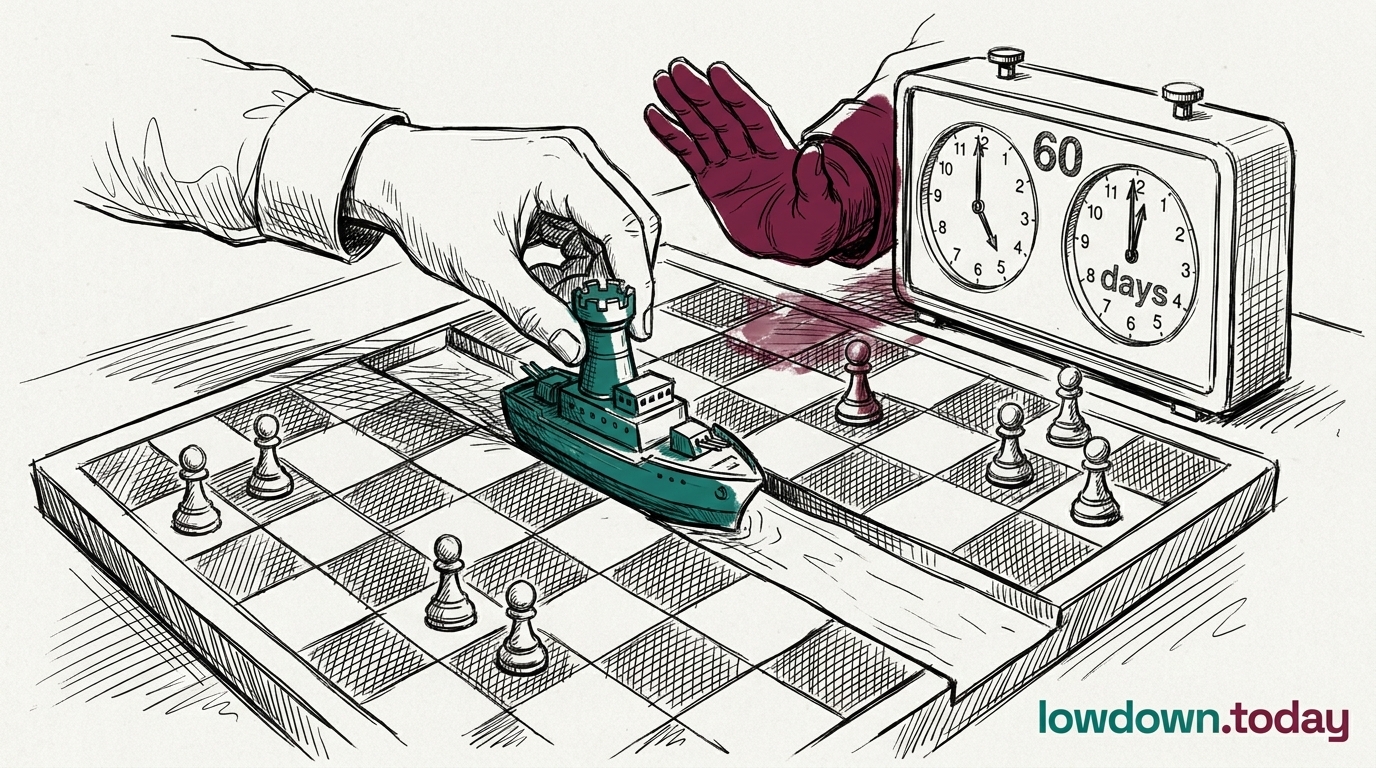
The wound count rose from 140-plus to 200-plus in approximately four days — roughly 15 new casualties daily. At this rate the total exceeds 400 within two weeks and 600 within a month. The War Powers Resolution's 60-day clock operates independently of casualty figures, but congressional scrutiny of an undeclared conflict historically intensifies as wounded lists grow in constituent districts.

What could happen next?
  • Consequence

    At current wound rates US casualties cross 400 within two weeks, a figure that historically generates serious congressional scrutiny of undeclared military action.

    Short term · Assessed
  • Risk

    Sustained blast-injury exposure creates traumatic brain injury and PTSD caseloads that will generate Veterans Affairs costs for decades after the conflict ends.

    Long term · Assessed
  • Precedent

    This marks the first time US forces have sustained casualties at this rate from state missile strikes without a formal declaration of war or congressional authorisation.

    Immediate · Assessed
First Reported In

Update #40 · Larijani dead; Israel hunts the new leader

Washington Post· 18 Mar 2026
Read original
Causes and effects
This Event
200 US troops wounded in eighteen days
The casualty rate of roughly 11 wounded per day comes from strikes on fixed installations across a 2,000-km arc from Baghdad to the southern Gulf, with no ground engagement. Two hundred wounded in 18 days with no declared end date gives congressional opponents a concrete figure, while the eight severe casualties reported earlier represent permanent injuries that will outlast the conflict.
Different Perspectives
Oil markets
Oil markets
Brent fell $1.05 to $106.0 on summit Day 1 but remains $5-7 above the post-ceasefire equilibrium analysts modelled in March; the market is pricing a holding pattern, not a breakthrough. OilPrice.com and Aramco CEO Nasser converge on buffer-exhaustion before Hormuz reopens if the blockade extends past mid-June.
Iranian dissidents and human rights monitors
Hengaw documented a five-prison simultaneous execution cluster on 13 May, with Gorgan appearing for the first time in the wartime register. Espionage charges framed as Israel-linked moharebeh now extend across Mashhad, Karaj, and Gorgan, using the war as judicial cover for protest-era detainees.
BRICS / Global South
Araghchi's Delhi appearance positioned Iran as a victim of US aggression before non-Western foreign ministers, with Deputy FM Bagheri Kani calling on BRICS to act against US aggression. India, as the largest non-Chinese user of Iranian-routed crude, faces pressure to balance bloc solidarity against its own shipping and sanctions exposure.
China
China
Beijing accepted the Nvidia chip clearance on summit Day 1 and gave Rubio verbal acknowledgement of Iran as an Asian stability concern, having already put Pakistan on paper as the mediatory channel on 13 May (ID:3253), deflecting the US ask for direct Chinese action without refusing it.
Iran (government and civilian diplomatic track)
Araghchi denied any Hormuz obstruction at BRICS Delhi on 14 May while Iran's SNSC had finalised a Hormuz security plan the day before. Israel Hayom's single-sourced 15-year freeze offer gives Tehran a deployable figure in non-Western forums regardless of corroboration; the state attributed 3,468 wartime deaths with no independent verification.
United States (Trump administration and Senate moderates)
Trump signed a chip clearance for 10 Chinese firms on summit Day 1 and zero Iran instruments across 76 days; Rubio and Vance made verbal Iran asks without paper. Murkowski voted yes on the 49-50 war-powers resolution after Hegseth told the Senate that Article 2 makes an AUMF unnecessary.



