Skip to content
Welcome, thoughtbot's Giant Robots listeners!Start here
Iran Conflict 2026
25APR

IRGC fires hours after halt order

2 min read
20:34UTC

Hours after Pezeshkian's broadcast, Iranian missiles hit Dubai, Saudi oil facilities, and Bahrain. The 31 autonomous IRGC provincial commands — built to survive decapitation — cannot be halted by a president who never commanded them.

ConflictDeveloping

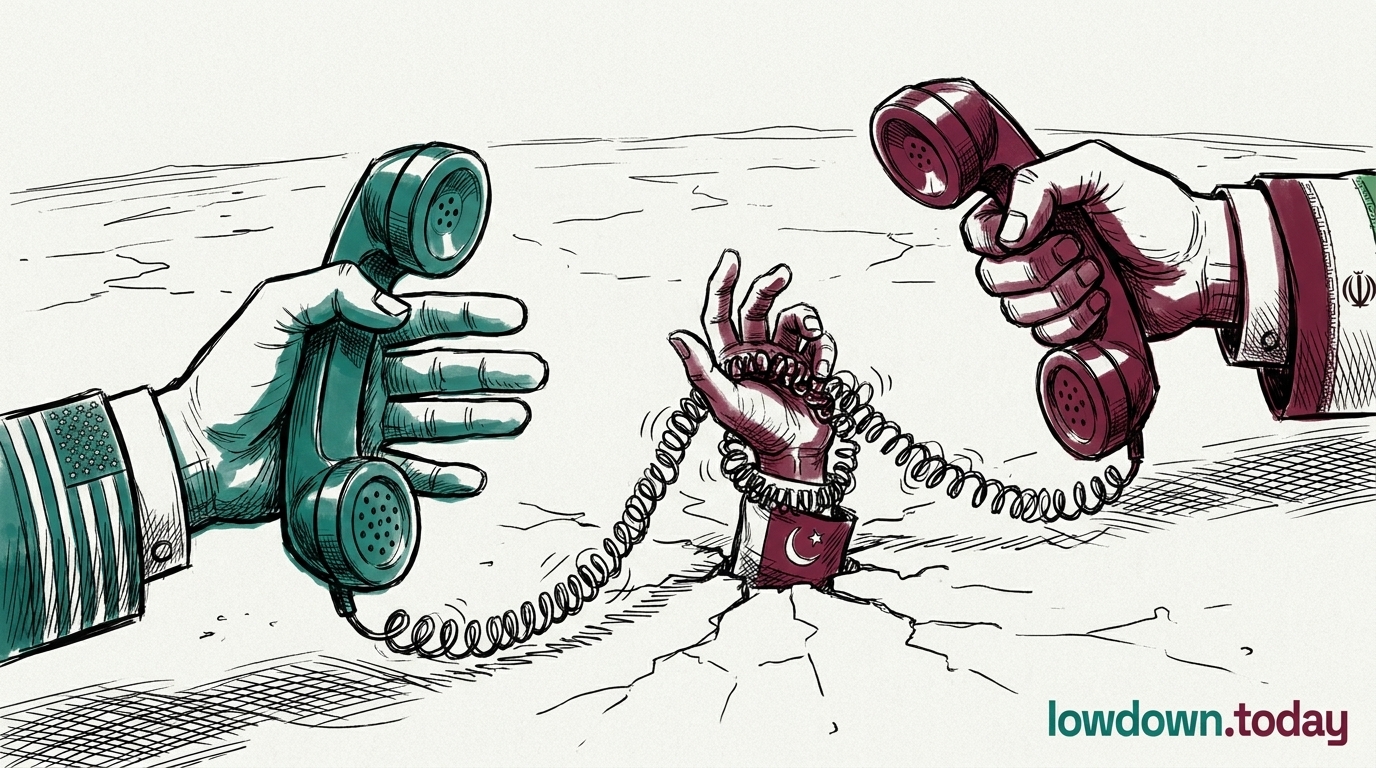
Within hours of Pezeshkian's address, Iranian missiles and drones struck Dubai, Saudi oil facilities, and Bahrain. The Interim Leadership Council's ceasefire directive was ignored before its broadcast had finished circulating across state media. Pezeshkian attributed the defiance to "miscommunication within the ranks" following Khamenei's death — a characterisation that treats institutional insubordination as a communications error.

The IRGC's 31 autonomous provincial commands were designed for exactly this kind of operational independence. The Decentralised Mosaic Defence structure that sustained 109 drones and 9 ballistic missiles against UAE targets in a single day — days after CENTCOM claimed a 90% reduction in Iran's ballistic missile capacity — does not require orders from Tehran to function. It was built not to. The provincial commands' continued strikes on Gulf targets are not a malfunction; they are the system operating as engineered, with one consequence its designers did not anticipate: the system cannot be switched off by anyone except The Supreme Leader, and The Supreme Leader is dead.

"Miscommunication within the ranks" does not describe what happened. The IRGC does not report to the civilian president. It has never reported to the civilian president. The chain of command from The Supreme Leader to the IRGC was personal and religious, grounded in the doctrine of velayat-e faqih — the guardianship of the Islamic jurist. No interim council composed of political figures can replicate that authority, particularly when the council's own legitimacy is contested and the IRGC's operational culture was specifically hardened against dependence on any single node of authority. The IRGC fought a war against Iraq for eight years under conditions of institutional autonomy that were formalised, not improvised. The current situation differs only in that no Supreme Leader exists to reimpose direction if he chose to.

The strike on Saudi Arabia's Shaybah oilfield — approximately one million barrels per day of production — followed the same escalation pattern visible since Day 4: military infrastructure first, then diplomatic targets, then energy infrastructure, reprising the September 2019 Abqaiq-Khurais playbook. Whether the Shaybah strike was ordered before or after Pezeshkian's address is unknown, but operationally irrelevant. The IRGC provincial commands hold pre-delegated targeting authority. The missiles that hit Shaybah did not need a phone call from Tehran.

First Reported In

Update #26 · President orders halt; IRGC ignores him

NPR· 7 Mar 2026
Read original →
Causes and effects
This Event
IRGC fires hours after halt order
The IRGC's defiance within hours of the presidential halt order confirms that Iran's decentralised military architecture, built to survive external decapitation, has made the civilian government unable to control its own offensive operations. The system that kept Iran fighting after the loss of central command cannot be switched off from above.
Different Perspectives
International Energy Agency
G7 members agreed on 2 October to release up to 100 million barrels through the IEA over four months, front-loading diesel.
China
China
China signed the 15 October text reaffirming the Resolution 2216 arms embargo on the Houthis. The Wall Street Journal reported that Conflict Armament Research found Chinese parts in a Houthi copy of Iran's Kheibarshekan missile.
Russia
Russia
Russia joined the 15 October consensus condemning the Houthis, a month after vetoing a mandate for a UN panel of experts on Iran sanctions on 17 September. One Western official told Bloomberg that Moscow is providing Iran with missiles, and the White House rejected the assessment.
India
India
National Security Adviser Ajit Doval raised seafarer safety with Mohsen Rezaei on 12 October, after a drone hit the Petro Dolphin with 11 Indians aboard at Sohar. External Affairs Minister S. Jaishankar urged that attacks on commercial shipping and seafarers be avoided.
Lebanon
Lebanon
President Joseph Aoun met UN peacekeeping chief Jean-Pierre Lacroix in Beirut on 14 October as UNIFIL winds down before its mandate ends on 31 December. Two days later Qatar's prime minister pledged in Beirut to fund a solar plant for Lebanon.
Kataib Hezbollah
Kataib Hezbollah
The militia announced a halt to operations except against "hostile aircraft" and denied any disarmament deal with Prime Minister Ali al-Zaidi. A day later Quds Force chief Esmail Qaani urged eliminating "remaining traces of the US presence in other arenas".

Written with AI from Lowdown's published reporting. Not individually reviewed by an editor. Editorial standards.