Skip to content
Briefings are running a touch slower this week while we rebuild the foundations.See roadmap
Iran Conflict 2026
25APR

Hengaw: two more 'Israel spy' hangings

3 min read
20:34UTC

Hengaw reported the executions of Naser Bakrzadeh and Yaqoub Karimpour in Iran on Saturday 2 May, both charged with spying for Israel; April's monthly total was revised upward to 26.

ConflictDeveloping
Key takeaway

April's revised total of 26 executions runs ahead of any diplomatic motion to slow it.

Hengaw, the Norway-based Kurdish human rights organisation, reported two executions in Iran on Saturday 2 May: Naser Bakrzadeh and Yaqoub Karimpour, both charged with spying for Israel 1. Hengaw simultaneously revised April's monthly execution total upward to at least 26, including 14 political prisoners 2. The previous topic figure was 22 political executions in the six weeks since 19 March ; the April aggregate revises that count upward and tightens the window.

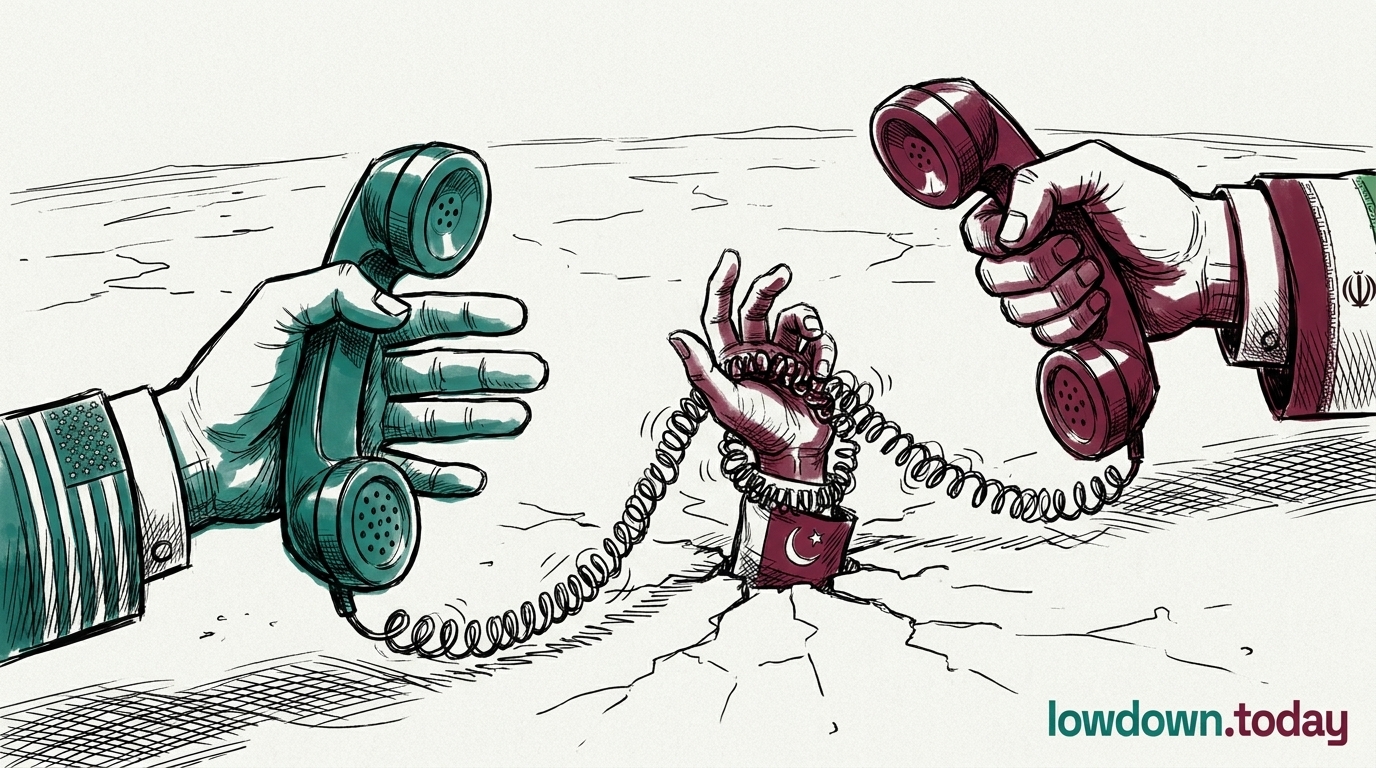
The 'spying for Israel' charge category links the executions directly to the war narrative. Iran's judiciary has been processing politically sensitive cases under that classification at speed since February 28. Bakrzadeh and Karimpour are the latest names attached to a category Hengaw has stopped publishing as a single rolling figure, because the monthly aggregate is now the only way the trajectory remains legible. The diplomatic track that might end the war-spy charge category is still stuck on sequencing.

The three Pakdasht mosque-fire defendants whose Supreme Court appeals were upheld on 27 April remain at imminent risk. Ehsan Hosseinipour Hesarloo, Matin Mohammadi and Erfan Amiri were aged 17 to 18 when arrested; their case files have moved to the implementation office, the administrative step before execution. Masoumeh Azhini, detained in early April, is still missing per Hengaw's 2 May report, with no information from authorities for a month.

Iran's judicial-execution rate during the 2026 conflict is outpacing diplomatic motion in either direction across both the war-spy and Pakdasht categories. The figures Hengaw publishes monthly arrive faster than the briefing cadence, and the next scheduled briefing (#87) will already be running behind a register that is still moving.

Deep Analysis

In plain English

Iran has been executing political prisoners at an accelerating rate since the war began in February. Two more people, Naser Bakrzadeh and Yaqoub Karimpour, were hanged on 2 May, charged with spying for Israel. A human rights group called Hengaw, based in Norway, counted at least 26 executions in April alone, including 14 people classified as political prisoners. Three more men, who were teenagers when they were arrested for allegedly setting fire to a mosque, remain at a pre-execution holding facility and have not yet been killed. Human rights organisations say their convictions were based on confessions extracted under torture.

Deep Analysis
Root Causes

Iran's wartime execution rate has a structural driver the body does not fully surface: the IRGC's political-security apparatus, which controls the Evin Prison intelligence ward and the Ministry of Intelligence's detention facilities, has a documented interest in eliminating opposition figures before a ceasefire creates an accountability window.

The 1988 massacres followed a ceasefire negotiation, not a victory; internal opposition was liquidated while the leadership had emergency authority that a peace settlement would curtail.

The three Pakdasht mosque-fire defendants remain at the implementation office (the documented precursor location to execution) more than two weeks after the Supreme Court upheld their sentences. Their non-execution on 2 May may reflect tactical sequencing of execution batches rather than any change in their status.

What could happen next?
  • Risk

    At the current rate of 14 political executions per month, a two-month ceasefire negotiation period would see roughly 28 more political prisoners executed before any peace agreement could create accountability pressure, deaths that cannot be reversed by any post-war process.

  • Consequence

    The three Pakdasht mosque-fire defendants remain at imminent execution risk despite international attention; their cases have become a visible test of whether external pressure influences Iran's execution pace during wartime.

First Reported In

Update #86 · Trump signs paper. The paper ends the war.

Hengaw Human Rights Organisation· 2 May 2026
Read original
Different Perspectives
Oil markets
Oil markets
Brent fell $1.05 to $106.0 on summit Day 1 but remains $5-7 above the post-ceasefire equilibrium analysts modelled in March; the market is pricing a holding pattern, not a breakthrough. OilPrice.com and Aramco CEO Nasser converge on buffer-exhaustion before Hormuz reopens if the blockade extends past mid-June.
Iranian dissidents and human rights monitors
Hengaw documented a five-prison simultaneous execution cluster on 13 May, with Gorgan appearing for the first time in the wartime register. Espionage charges framed as Israel-linked moharebeh now extend across Mashhad, Karaj, and Gorgan, using the war as judicial cover for protest-era detainees.
BRICS / Global South
Araghchi's Delhi appearance positioned Iran as a victim of US aggression before non-Western foreign ministers, with Deputy FM Bagheri Kani calling on BRICS to act against US aggression. India, as the largest non-Chinese user of Iranian-routed crude, faces pressure to balance bloc solidarity against its own shipping and sanctions exposure.
China
China
Beijing accepted the Nvidia chip clearance on summit Day 1 and gave Rubio verbal acknowledgement of Iran as an Asian stability concern, having already put Pakistan on paper as the mediatory channel on 13 May (ID:3253), deflecting the US ask for direct Chinese action without refusing it.
Iran (government and civilian diplomatic track)
Araghchi denied any Hormuz obstruction at BRICS Delhi on 14 May while Iran's SNSC had finalised a Hormuz security plan the day before. Israel Hayom's single-sourced 15-year freeze offer gives Tehran a deployable figure in non-Western forums regardless of corroboration; the state attributed 3,468 wartime deaths with no independent verification.
United States (Trump administration and Senate moderates)
Trump signed a chip clearance for 10 Chinese firms on summit Day 1 and zero Iran instruments across 76 days; Rubio and Vance made verbal Iran asks without paper. Murkowski voted yes on the 49-50 war-powers resolution after Hegseth told the Senate that Article 2 makes an AUMF unnecessary.