Skip to content
Briefings are running a touch slower this week while we rebuild the foundations.See roadmap
Iran Conflict 2026
23APR

Russia bans gasoline exports to July

2 min read
08:02UTC

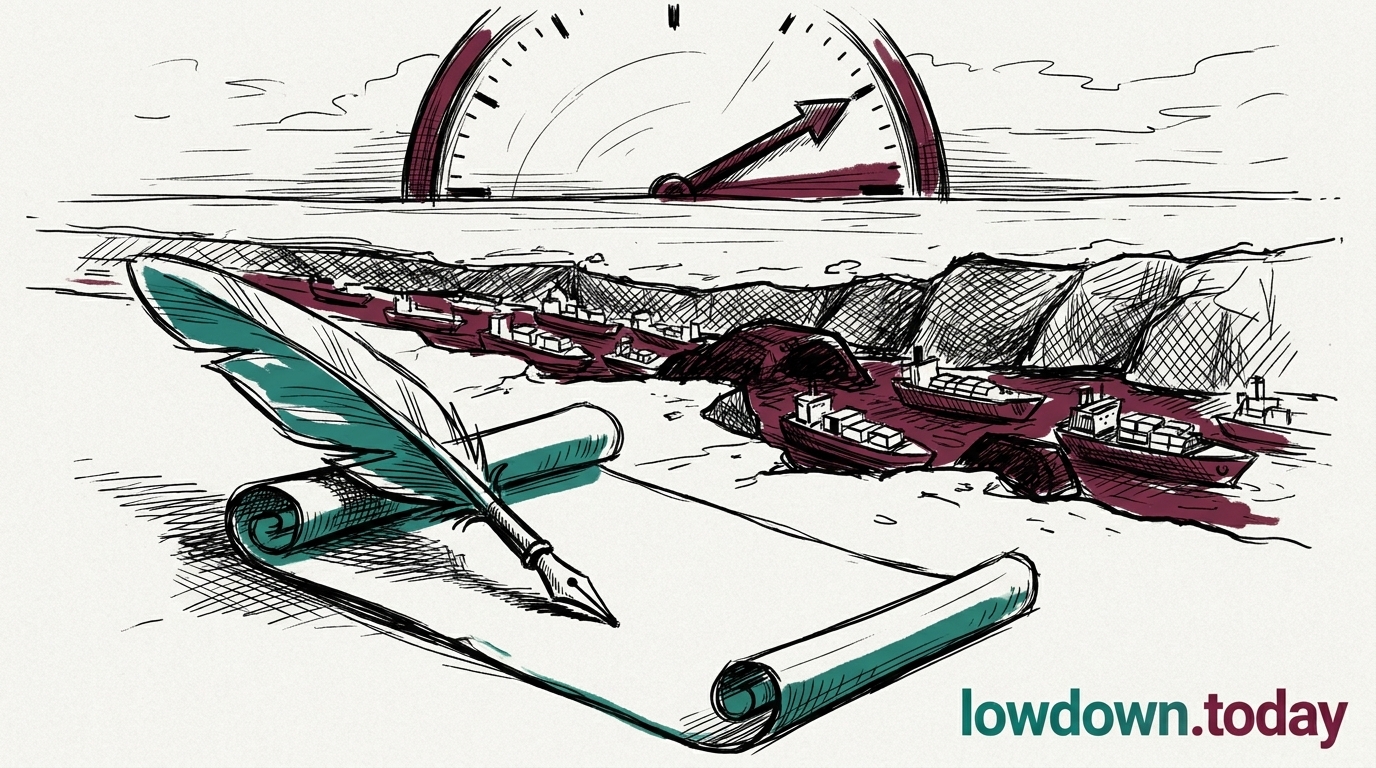
Moscow imposed a four-month gasoline export ban after Baltic port damage forced the Kirishi refinery offline and threatened four more facilities processing 55 million tonnes annually.

ConflictDeveloping
Key takeaway

Russia's gasoline export ban through July confirms Baltic port damage has crippled its refining supply chain.

Russia banned all gasoline exports from 1 April through 31 July 2026 after Ust-Luga halted fuel oil and gasoline intake on 25 March. The Kirishi refinery (KINEF), responsible for 6.6% of Russia's total oil refining, ceased operations 1. Three more refineries, in Yaroslavl (YANOS), Moscow, and Ryazan, face the same problem: fuel oil comprises 18 to 35% of their output, has negligible domestic demand, and now has nowhere to export.

A refinery specialist told Reuters that stockpiles would fill "within days," forcing cuts "to minimum levels and then potentially shut units." The four facilities process a combined 55 million tonnes of crude annually. The ban was framed publicly as a response to Iran-war price volatility. The actual trigger is that the export infrastructure carrying refined products out of northwest Russia no longer functions.

The earlier Ukrainian strikes on the Labinsk oil depot and the Afipsky refinery targeted storage and processing. The Baltic campaign strikes at the chokepoint where refined product meets ocean shipping. Russia now faces the spring and summer driving season with its largest export-facing refineries offline or throttled.

Deep Analysis

In plain English

Oil refineries turn crude oil into usable products: petrol, diesel, and fuel oil. Russian refineries near the Baltic ports produce large amounts of fuel oil, which they export since Russia doesn't burn much of it domestically. With the Baltic ports shut, the refineries have nowhere to send the fuel oil. Storage tanks fill up within days, forcing the refinery to slow or stop entirely. The Kirishi refinery, which handles 6.6% of all Russian oil refining, has already gone offline. Russia banned all petrol exports for four months. This is partly to protect domestic supply, but it also signals that the Baltic ports will not be fixed quickly, and that the damage to refining operations is serious.

Deep Analysis
Root Causes

The immediate cause is the physical blockage of fuel oil export pathways. Fuel oil, which comprises 18-35% of the output at the affected refineries, has no significant domestic market in Russia and must be exported. With Ust-Luga halted, the product accumulates in tanks until refineries must slow or stop production.

The structural cause is Russia's refinery geography. Soviet-era refining capacity was built in northwest Russia to serve European export markets. Post-2022 rerouting moved crude buyers to Asia, but the refinery locations and export infrastructure were not changed. Ukraine's strikes exploit this geographic mismatch.

What could happen next?
  • Consequence

    Russia's domestic fuel price stability depends on maintaining refinery output. If the four threatened facilities reduce to minimum operations, Russia faces summer fuel shortages in regions far from alternative supply.

  • Risk

    If the refinery cascade shutdown reaches the Moscow and Ryazan facilities, Russia faces politically sensitive domestic fuel shortages close to the capital.

First Reported In

Update #9 · Ukraine halves Russia's Baltic oil exports

Moscow Times / Reuters· 1 Apr 2026
Read original
Different Perspectives
Oil markets
Oil markets
Brent fell $1.05 to $106.0 on summit Day 1 but remains $5-7 above the post-ceasefire equilibrium analysts modelled in March; the market is pricing a holding pattern, not a breakthrough. OilPrice.com and Aramco CEO Nasser converge on buffer-exhaustion before Hormuz reopens if the blockade extends past mid-June.
Iranian dissidents and human rights monitors
Hengaw documented a five-prison simultaneous execution cluster on 13 May, with Gorgan appearing for the first time in the wartime register. Espionage charges framed as Israel-linked moharebeh now extend across Mashhad, Karaj, and Gorgan, using the war as judicial cover for protest-era detainees.
BRICS / Global South
Araghchi's Delhi appearance positioned Iran as a victim of US aggression before non-Western foreign ministers, with Deputy FM Bagheri Kani calling on BRICS to act against US aggression. India, as the largest non-Chinese user of Iranian-routed crude, faces pressure to balance bloc solidarity against its own shipping and sanctions exposure.
China
China
Beijing accepted the Nvidia chip clearance on summit Day 1 and gave Rubio verbal acknowledgement of Iran as an Asian stability concern, having already put Pakistan on paper as the mediatory channel on 13 May (ID:3253), deflecting the US ask for direct Chinese action without refusing it.
Iran (government and civilian diplomatic track)
Araghchi denied any Hormuz obstruction at BRICS Delhi on 14 May while Iran's SNSC had finalised a Hormuz security plan the day before. Israel Hayom's single-sourced 15-year freeze offer gives Tehran a deployable figure in non-Western forums regardless of corroboration; the state attributed 3,468 wartime deaths with no independent verification.
United States (Trump administration and Senate moderates)
Trump signed a chip clearance for 10 Chinese firms on summit Day 1 and zero Iran instruments across 76 days; Rubio and Vance made verbal Iran asks without paper. Murkowski voted yes on the 49-50 war-powers resolution after Hegseth told the Senate that Article 2 makes an AUMF unnecessary.