Skip to content
Briefings are running a touch slower this week while we rebuild the foundations.See roadmap
Iran Conflict 2026
22APR

IDF cuts Lebanon's last road north

3 min read
10:22UTC

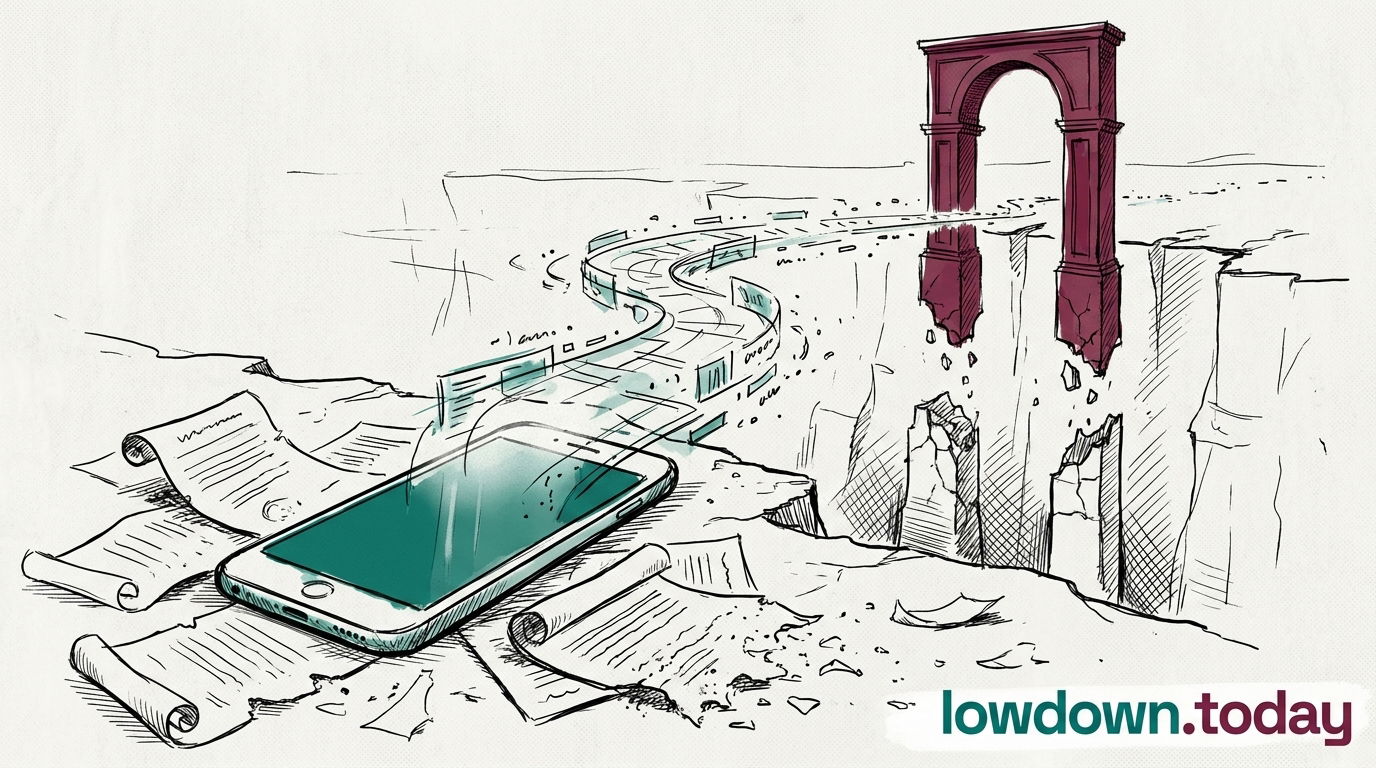
The destruction of the Qasmiyeh Bridge cuts the main road linking southern Lebanon to Beirut and the north, completing the isolation of a zone where two Israeli armoured divisions are operating.

ConflictDeveloping
Key takeaway

Qasmiyeh's destruction completes the isolation box; ground forces can now enter a sealed battlefield.

Israeli forces struck the Qasmiyeh Bridge, destroying southern Lebanon's main highway connection to the north. The bridge carried the coastal road linking Tyre and the southern districts to Sidon, Beirut and beyond. Its destruction follows the IDF's demolition of at least two bridges over the Litani River days earlier , which Defence Minister Katz said were used for weapons smuggling and Hezbollah movement. Southern Lebanon is NOW cut off by road from the rest of the country.

The isolation is methodical. The 36th Armoured Division deployed to southern Lebanon alongside the 91st Galilee Division , giving the IDF two armoured formations operating in a zone whose transport links to the north have been systematically severed. A Northern Command officer stated the ground operation could last "until Shavuot"late May — with contingencies beyond . The 7th Armoured Brigade has conducted raids claiming dozens of Hezbollah fighters killed. Evacuation orders for Tyre, Nabatieh and surrounding villages triggered panic, with heavy traffic and gunfire reported on evacuation routes that NOW lead to destroyed bridges.

Lebanese President Joseph Aoun called the Qasmiyeh strike "a prelude to ground invasion" 1. The pattern matches Israel's approach in both the 1982 invasion and the 2006 war: destroy bridges to prevent resupply and reinforcement, then operate freely within the isolated pocket. In 2006, the IDF destroyed 73 bridges and 31 other infrastructure targets in 34 days. The current campaign has not reached that scale, but it has achieved the same functional objective south of the Litani: a sealed zone.

The human cost accumulates on both sides of the severed roads. Lebanon's death toll passed 1,029 since 2 March — 111 children among them, with 1.2 million displaced. UNICEF deputy chief Ted Chaiban stated the equivalent of "one classroom of children" is killed or wounded each day. The destroyed bridges do not only block Hezbollah supply lines; they block humanitarian access, medical evacuation and civilian movement for the population trapped between the IDF's armour and the Mediterranean. The IDF's stated objective — eliminating Radwan Force commander Abu Khalil Barji, killed in an airstrike on Majdal Selm — is tactical. The bridge campaign is operational. The gap between the two suggests a ground presence intended to outlast individual targeting missions.

Deep Analysis

In plain English

Armies cut roads and bridges before invading to prevent the enemy from being resupplied or reinforced, and to stop civilian movement from complicating operations. By destroying the Qasmiyeh Bridge — the last major highway north — Israel has completed a ring of road cuts around southern Lebanon. Hezbollah fighters there cannot receive fresh troops or equipment. This is standard pre-invasion preparation, and it signals that a ground assault may be imminent.

Deep Analysis
Synthesis

Systematic bridge destruction creates a dual military-political effect: it isolates Hezbollah tactically while generating a humanitarian chokepoint that accelerates international pressure for ceasefire. The IDF may be deliberately compressing the conflict timeline — creating conditions that cannot be sustained — to force a resolution before domestic and international pressure mounts to constrain further action.

Root Causes

The IDF's infrastructure-interdiction approach to Lebanon derives directly from the post-2006 Winograd Commission review, which identified Hezbollah's intact lateral road network as a key enabler of its 2006 military performance. Systematic bridge destruction was explicitly recommended as a preparatory phase before any future Lebanon ground operation.

Escalation

The Litani crossings followed by Qasmiyeh follows the doctrinal sequence of shaping operations — isolating the battlefield before ground assault. With the IDF declaring significant escalation this week and two armoured divisions already positioned, the bridge destruction pattern is operationally consistent with a 48–72 hour ground incursion preparation, not ongoing attrition.

What could happen next?
  • Consequence

    Southern Lebanon is logistically sealed; humanitarian aid delivery is severely constrained pending identification of viable alternative mountain routes.

    Immediate · Assessed
  • Risk

    Ground invasion becomes operationally feasible within days; Lebanon's government loses its primary diplomatic leverage — threatening border instability — as a ceasefire bargaining tool.

    Short term · Assessed
  • Risk

    Civilian humanitarian chokepoint accelerates international calls for ceasefire, potentially constraining the IDF's operational timeline before military objectives are achieved.

    Short term · Suggested
  • Precedent

    Systematic targeting of civilian supply bridges may generate ICC referral exposure for IDF commanders under Additional Protocol I of the Geneva Conventions.

    Long term · Suggested
First Reported In

Update #45 · Ultimatum expires; Iran tolls Hormuz at $2m

Times of Israel· 23 Mar 2026
Read original
Causes and effects
Different Perspectives
IAEA (Board of Governors, Vienna)
Grossi's 4 June Board report invoked 'loss of continuity of knowledge' on Iran's 440.9 kg stockpile after 97 days without access, the IAEA's formal finding that the evidentiary break cannot be retroactively closed. A Board censure resolution before 12 June would harden Iran's refusal to restore access.
Russia (Kremlin / SPIEF)
Putin reaffirmed Russia's offer to hold Iran's uranium at the St Petersburg Economic Forum on 6 June, positioning Moscow as the preferred custodian even after Trump vetoed the arrangement on 27 May. The offer allows Russia to present itself as a constructive actor while the IAEA verification gap renders any custodian arrangement unworkable.
Bahrain (Government and US Fifth Fleet host)
Bahrain's PAC-3 magazine reached 87% depletion after the 5 June IRGC salvo, with its resupply last in a Camden queue behind Qatar and Saudi Arabia. Manama hosts the US Fifth Fleet with terminal air defences that the supply chain cannot replenish before 2027.
China (Ministry of Commerce)
Washington designated Shanghai Qianye Energy on 5 June, the first mainland Chinese firm under Iran energy sanctions this war, the same week Beijing was pitched as a uranium custodian. China has not yet invoked its Blocking Statute; whether it absorbs the designation as a calibrated cost or retaliates is unresolved.
Iran (IRGC and Expediency Council)
The IRGC fired seven ballistic missiles at US bases in Kuwait and Bahrain on 5 June and Rezaei doubled the asset precondition to $24bn on 6 June, blocking both military and diplomatic de-escalation simultaneously. Tehran's hardliners are setting terms the civilian Foreign Ministry cannot override.
Trump administration (White House)
Trump claimed the uranium was 'entombed' and the deal '95% done' on 4 June, while signing no Iran executive instrument across Days 99-100. The gap between presidential assertion and signed executive action is now 100 days wide and structurally unchanged.