Skip to content
Briefings are running a touch slower this week while we rebuild the foundations.See roadmap
Iran Conflict 2026
21APR

Royal Navy to board sanctioned tankers

2 min read
10:51UTC

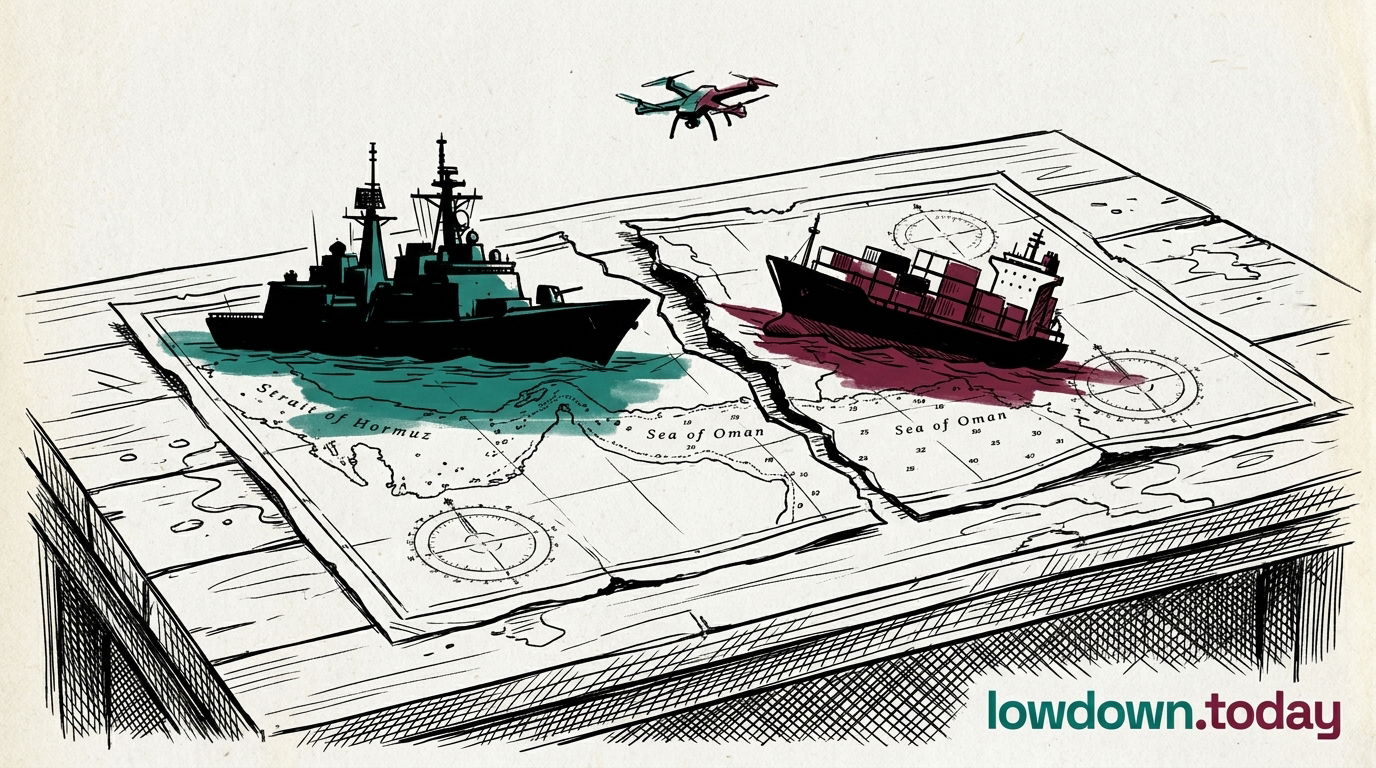
Britain authorised naval interdiction of sanctioned Russian tankers in UK waters, converting a 34-kilometre strait into the most enforceable maritime sanction of the war.

ConflictAssessed
Key takeaway

Britain converted a geographic chokepoint into the most enforceable maritime sanction of the war.

Keir Starmer announced at the JEF summit in Helsinki on 26 March that the Royal Navy is authorised to board and interdict sanctioned shadow fleet vessels in British territorial waters 1. The English Channel is now effectively closed to the more than 600 tankers sanctioned by the EU, UK, and US combined 2.

This is the most aggressive European enforcement action against Russia's oil revenue infrastructure since the war began. Previous seizures of individual vessels, the Ethera in Belgian waters , the Caffa and Sea Owl I off Sweden , were opportunistic. Channel interdiction is structural: it forces sanctioned tankers to circumnavigate Britain, adding over 2,000 nautical miles and several days to each voyage.

For shadow fleet operators, that means tens of thousands of dollars in extra fuel and crew costs per trip, eroding the margin between sanctioned-price oil and market price. The Channel's shallow, narrow waters (34 kilometres at Dover) make boarding operationally straightforward compared to open-ocean enforcement. Shadow fleet vessels are typically older, under-insured, and crewed by mariners with limited consular protection. Geography and legal vulnerability combine to make this chokepoint uniquely enforceable.

The EU had already signalled a shift from chasing individual ships to targeting operators, brokers, and registries . Britain's naval enforcement adds a physical barrier to that administrative squeeze. Denmark controls the only alternative short route through the Danish Straits; if Copenhagen follows London's lead, the last short northern European passage for shadow fleet traffic closes.

Deep Analysis

In plain English

Russia earns billions selling oil to fund its war. It uses a 'shadow fleet' of ageing, poorly insured tankers — over 600 ships — to move oil around Western sanctions. The English Channel at Dover is only 34 kilometres wide. Britain has now told its navy to stop and board any sanctioned Russian tankers using that route. This forces those ships to sail around Britain instead, adding several days and thousands of pounds per trip. The goal is to make sanctions evasion unprofitable, not just inconvenient.

Deep Analysis
Root Causes

The shadow fleet problem has three structural roots.

Western sanctions created a price cap mechanism but not an enforcement mechanism. Ships can lie about cargo origins, use ship-to-ship transfers, and reflag to evade detection. Windward's data shows Sovcomflot has reflagged 56% of its fleet to Russia's own registry, removing Lloyd's oversight.

Insurance markets withdrew from shadow fleet vessels after sanctions, but the vessels found alternative cover in India, the UAE, and Russia itself — degraded but functional.

The Channel interdiction addresses the geography but not the ownership structure. Until flag state accountability is enforced globally — including on India and the UAE — the shadow fleet can route around European chokepoints.

First Reported In

Update #8 · Pentagon diverts funds; 948 drones fired

UK Government· 27 Mar 2026
Read original
Different Perspectives
Israel
Israel
The IDF struck a Lebanese army unit on 6 June, killing a colonel, and privately told Moscow that shelling near Bushehr was accidental, per Putin's SPIEF disclosure. Israel is advancing in Lebanon past an unenforced ceasefire text while maintaining a back-channel to Russia on nuclear-site deconfliction.
Lebanon
Lebanon
President Aoun told CNN on 5 June that Iran uses Lebanon as a bargaining chip and urged Hezbollah toward diplomacy; on 6 June an IDF strike killed a Lebanese army colonel on the Khardali-Nabatieh road. The Lebanese state is publicly rejecting Iranian tutelage while the army sustains casualties from Israeli fire and the Washington framework remains unenforced.
Bahrain
Bahrain
Bahrain's US Fifth Fleet headquarters was among the targets in the 5-6 June two-country salvo; its PAC-3 magazine stands at 87 per cent depletion with an 18-month resupply gap and no comparable arms sale has been announced. The state is defending a critical US regional command on a thinning interceptor stock.
Kuwait
Kuwait
Kuwait received a $1.98bn US counter-drone sale approval on the same day IRGC missiles targeted its bases; it expelled two Iranian diplomats on 4 June and filed a formal protest. The arms approval gives Kuwait a future capability but leaves a 6-18 month delivery gap that the salvo tempo is already pressing.
Russia
Russia
Putin reaffirmed Russia's offer to hold Iran's 440.9 kg HEU at SPIEF on 6 June, said Russia is not arming Iran, and disclosed that both the US and Israel privately told Moscow that shelling near Bushehr was accidental. The restatement casts Moscow as the only remaining mediator both sides call, a position serving Russian interests whatever the nuclear file produces.
Iran
Iran
The IRGC, per Iranian state media, fired seven ballistic missiles at US bases in Kuwait and Bahrain, the largest two-country salvo of the war, and framed the launches as lawful retaliation; Foreign Minister Araghchi rejected Aoun's bargaining-chip accusation and Velayati warned Beirut against diplomatic naivety. Tehran has sent no HEU counter-proposal since Araghchi confirmed no progress on 4 June.