Skip to content
You can now search across every topic, entity and event.What's new
Iran Conflict 2026
21APR

Maersk suspends Gulf container routes

3 min read
10:51UTC

The world's second-largest container line suspended two key services and its Gulf shuttle. CMA CGM and Hapag-Lloyd followed. The war's trade disruption now reaches far beyond oil.

ConflictDeveloping
Key takeaway

P&I insurance withdrawal is the decisive mechanism: without liability cover, vessels cannot legally sail under most flags or dock at most ports regardless of owner risk appetite, making commercial transit structurally impossible rather than merely costly.

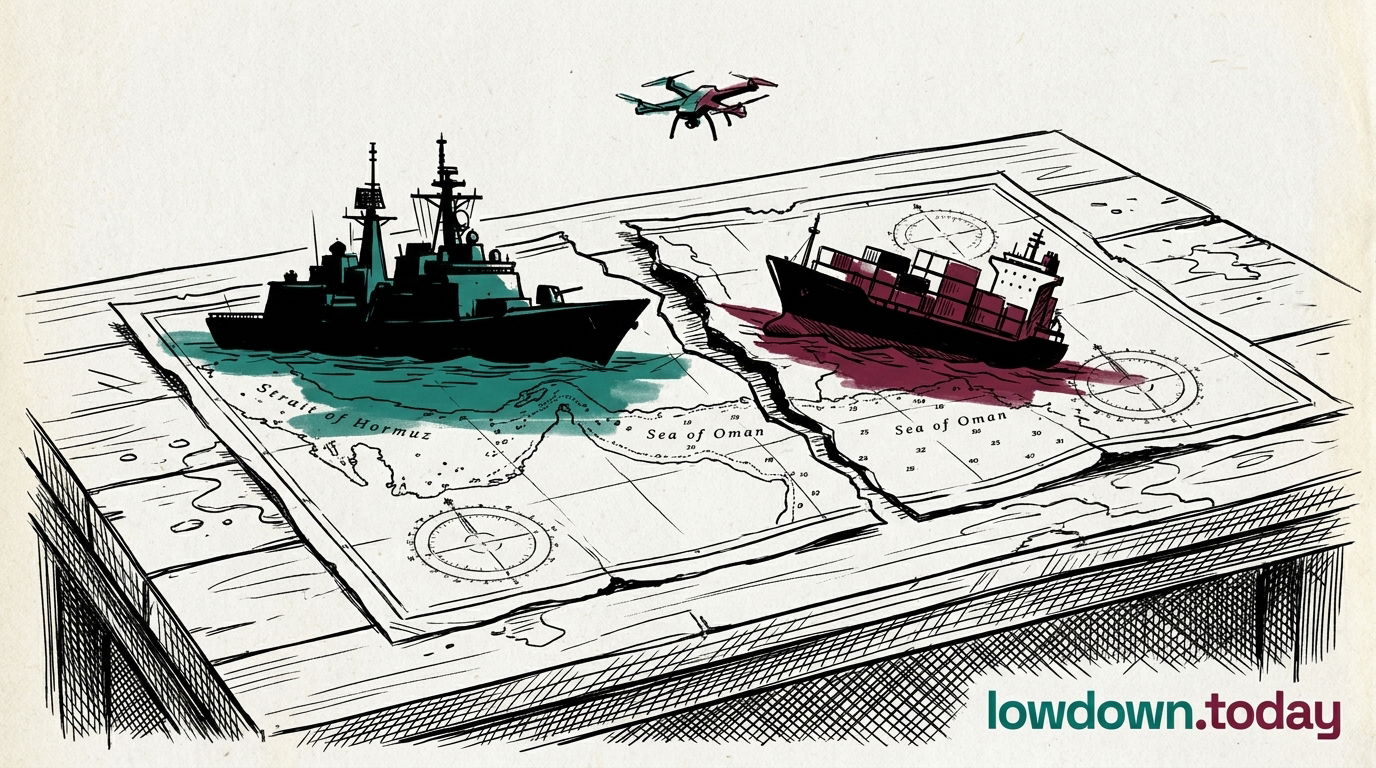
Maersk suspended two container shipping services on Friday — FM1, connecting the Far East to the Middle East, and ME11, connecting the Middle East to Europe — along with its Gulf shuttle service, halted 'until further notice.' CMA CGM and Hapag-Lloyd took similar steps. Maersk is the world's second-largest container shipping company; CMA CGM and Hapag-Lloyd rank among the top five globally.

The suspensions follow, rather than lead, the insurance collapse. Every major P&I club cancelled war risk cover effective midnight 5 March . Without insurance, commercial vessels cannot legally enter most ports; without port access, container services have no function. Brent crude reached $92.69 on Friday , and VLCC freight rates hit an all-time record of $423,736 per day , but these figures capture only the energy dimension. Container shipping carries electronics, pharmaceuticals, machinery, textiles, and food. The FM1 route alone connects East Asian manufacturing centres to Gulf consumer markets serving more than 50 million people.

The distinction matters because oil disruptions have established policy responses — strategic reserves, emergency IEA releases, demand rationing. Container trade disruptions do not. A Jordanian hospital waiting for medical equipment from China, a Saudi construction firm awaiting steel from South Korea, an Egyptian food importer dependent on Asian rice — none have a strategic petroleum reserve equivalent. The $18 million in WHO health supplies stranded at Dubai's emergency logistics hub , with a further $8 million in inbound shipments blocked, is one visible example of a pattern replicated across thousands of commercial relationships.

Shipping consultancy Simpson Spence Young had already assessed Navy convoys as 'unlikely in the near-term' given simultaneous combat demands . Even a ceasefire would not restore commercial shipping immediately; insurers require reassessments that typically take weeks. The trade disruption now operates on its own timeline, decoupled from the military campaign that caused it. Three of the world's largest container lines have made the same calculation independently: The Gulf is commercially uninsurable, and no government has offered a credible alternative.

Deep Analysis

In plain English

Maersk, CMA CGM, and Hapag-Lloyd together move a large share of the world's containerised cargo — the boxes on ships carrying electronics, clothing, car parts, and food. They have stopped sending ships through the Gulf because their insurance has been cancelled. Ship insurance is not optional: without it, ships cannot legally enter most ports or sail under most national flags. So even if a company wanted to keep running, it legally cannot. This is also distinct from the oil crisis: oil tankers and container ships are different vessel types, and the disruption now hits the full range of manufactured goods people buy, not only fuel.

Deep Analysis
Synthesis

The simultaneous P&I withdrawal, carrier suspension, and China-Iran preferential passage negotiation (Event 6) are three facets of the same underlying dynamic: the global shipping system is sorting itself into geopolitically affiliated lanes in real time. What is emerging is not a temporary disruption but the prototype of a bifurcated maritime trade architecture — one Western-flagged lane that is commercially uninsurable in the Gulf, one Chinese-linked lane that remains operationally functional.

Root Causes

P&I club war-risk withdrawal follows the Lloyd's Joint War Committee's designation process, which is driven by actuarial models rather than diplomatic considerations — once a zone is designated, the market exits regardless of geopolitical preferences. The concentration of global container capacity across three alliances (Ocean Alliance, 2M, THE Alliance) means suspension decisions by Maersk propagate rapidly across the industry because all competitors face identical insurance conditions simultaneously.

What could happen next?
  • Consequence

    Gulf petrochemical and manufacturing exporters — including Saudi SABIC and UAE free-zone industrial operators — face effective export paralysis as container carriers exit and no alternative logistics infrastructure scales quickly enough.

    Immediate · Assessed
  • Risk

    Asian electronics supply chains routing components through UAE and Bahrain distribution hubs face compounding delays; manufacturers without 60-day inventory buffers may face production stoppages.

    Short term · Suggested
  • Precedent

    The speed of commercial exit from the Gulf — faster than during any previous regional crisis — normalises supply-chain fragility to geopolitical risk and accelerates corporate investment in diversification away from single-chokepoint dependencies.

    Long term · Assessed
  • Opportunity

    Air freight carriers and overland China-Europe rail routes via Central Asia stand to capture diverted cargo volumes at significant premium, benefiting logistics operators with capacity outside the Gulf corridor.

    Short term · Suggested
First Reported In

Update #27 · Israel kills 41 on failed 1986 airman raid

CNBC· 7 Mar 2026
Read original
Causes and effects
This Event
Maersk suspends Gulf container routes
The suspension of container shipping services by three of the world's largest carriers means the war's economic disruption extends to manufactured goods, food, and raw materials — not only crude oil. Any business that ships goods through or to the Middle East is affected.
Different Perspectives
Jordan
Jordan
Jordan's armed forces downed three Iranian missiles on Tuesday with no casualties, a second successful interception since the 19 July strike on Muwaffaq Salti that killed three US service members. Amman has neither confirmed nor denied ISW's assessment that its intelligence sharing is a Russia-China cover story.
Operation Aspides
Operation Aspides
Operation Aspides has not needed to intervene against the Houthi Bab al-Mandab embargo: six vessels, including the Chinese VLCC Xin Long Yang, reversed course after radio hailing alone, with no vessel boarded, fired on or stopped by force.
Pete Hegseth, US Secretary of War
Hegseth told the Senate Appropriations Committee the campaign has cost $37.5 billion so far, without saying whether the figure is obligated, appropriated or incremental. It is the first cost Washington has put on the war, arriving as OMB seeks $87.6 billion for the wider supplemental.
Iran's IRGC and Artesh
Iran's IRGC and Artesh reported destroying radar and Patriot installations at four Gulf bases on Tuesday night, the fifth dated iteration of the same claim against the same sites since 13 July. Neither Kuwait nor Bahrain has named or confirmed a single base as destroyed.
Saudi Arabia
Saudi Arabia
Riyadh has pressed Washington to end the Hormuz blockade specifically to remove Tehran's incentive for the Houthis to escalate Bab al-Mandab beyond radio warnings. It treats the embargo as coordinated pressure on Saudi shipping tied to the Hormuz campaign, not an independent Yemeni action.
Kuwait's Ministry of Electricity, Water and Renewable Energy and defence ministry
Kuwait reported power and desalination stations struck for a fourth consecutive day and four cruise missiles plus 21 drones intercepted since dawn Wednesday, while its defence ministry statement used only the word interception, never destruction. Kuwait has confirmed no Iranian claim of a destroyed base.