Skip to content
Briefings are running a touch slower this week while we rebuild the foundations.See roadmap
Iran Conflict 2026
21APR

12,300 Targets Struck; Strait Still Closed

2 min read
10:51UTC

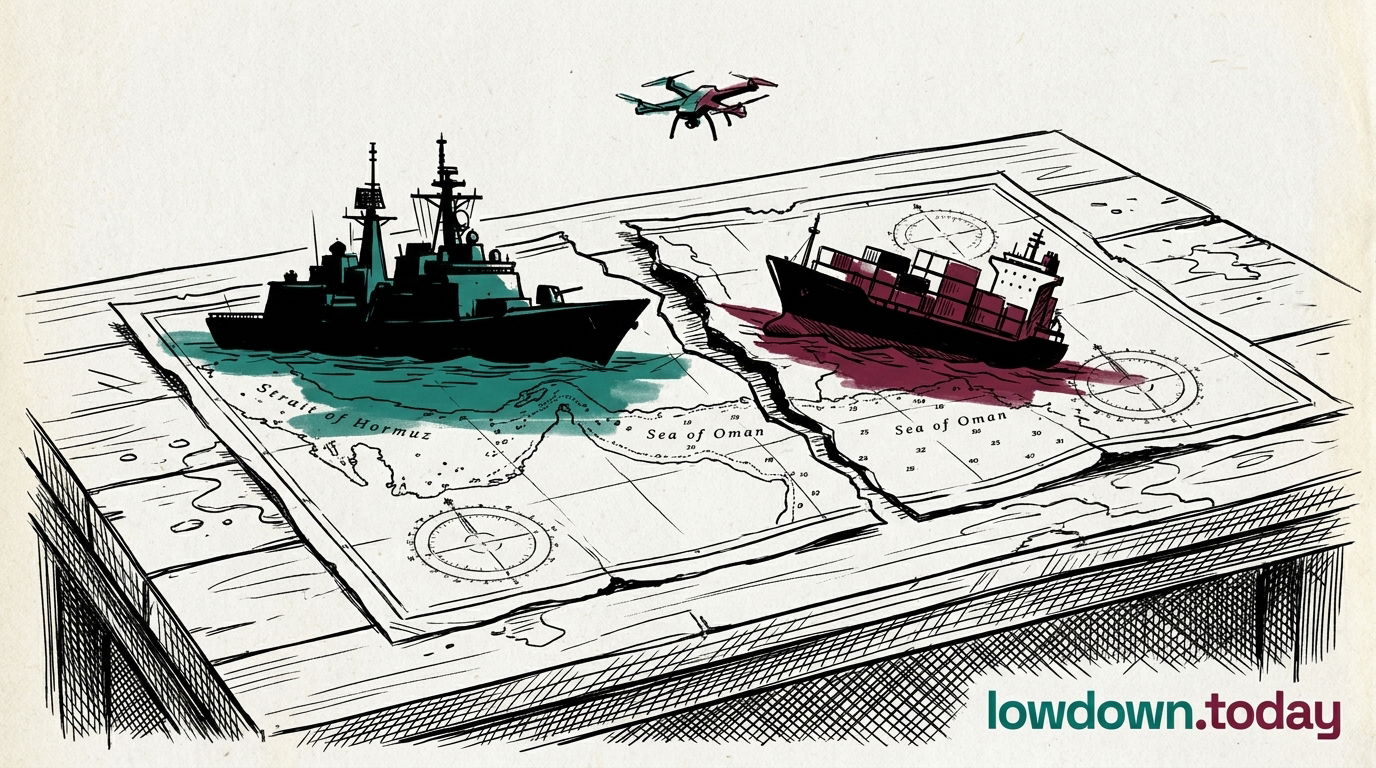
The US has fired more Tomahawk missiles than in any campaign in history and destroyed 155 Iranian vessels. The Strait of Hormuz remains shut.

ConflictDeveloping
Key takeaway

Record-breaking bombing has not shifted Iran's posture or reopened Hormuz.

CENTCOM reported on 1 April that US forces have struck over 12,300 targets and fired 850 Tomahawk cruise missiles in Operation Epic Fury, the most in any single US campaign in history 1. 155 Iranian vessels have been destroyed. B-52 bombers now fly overland inside Iran , a transition from the standoff-only strikes of the war's first 30 days.

The numbers are imposing. The outcome is not. Hormuz remains closed. The toll system operates . Eleven vessels transited on 31 March, 93% below the pre-war baseline 2. ACLED concludes that 'full capitulation remains unlikely' and 'the only clear path to decisive victory would be a change of government' 3. Heavy bombing has reinforced Iran's siege mentality rather than breaking it.

CSIS counts 850 Tomahawks expended 4. The US Navy's total Tomahawk inventory before the war was approximately 4,000. At current consumption, the stockpile question joins Israel's Arrow-3 depletion as a constraint on sustained operations.

Deep Analysis

In plain English

The US has now struck more targets and fired more cruise missiles than in any war in American history. It has also destroyed 155 Iranian naval vessels. Despite all of this, the Strait of Hormuz is still closed. The question this raises is whether more bombing will change the outcome. The evidence so far says no: Iran is firing fewer missiles per day than at the war's start, but it has not changed its fundamental position.

Deep Analysis
Root Causes

The bombing has not changed Iran's strategic calculus because the campaign was designed around target categories, not political outcomes. CENTCOM is striking what it can locate and destroy; Iran's decision to keep Hormuz closed resides in a small number of IRGC commanders whose locations are either unknown or protected by anticipated US domestic opposition to decapitation strikes.

Russia's provision of satellite imagery showing US warship and aircraft locations increases Iran's ability to absorb the campaign by reducing tactical surprise. An adversary that knows where your aircraft are cannot be coerced by those aircraft in the same way as one operating without that intelligence.

The 850 Tomahawk expenditure rate also matters structurally. At pre-war inventory of roughly 4,000, the campaign has consumed 21% of the total supply in 34 days. The US cannot sustain current strike rates indefinitely without accepting munitions constraints that will become visible to Iran and its partners.

First Reported In

Update #55 · The Last Door Closes

Irish Times / Majorca Daily Bulletin· 2 Apr 2026
Read original
Different Perspectives
Israel
Israel
The IDF struck a Lebanese army unit on 6 June, killing a colonel, and privately told Moscow that shelling near Bushehr was accidental, per Putin's SPIEF disclosure. Israel is advancing in Lebanon past an unenforced ceasefire text while maintaining a back-channel to Russia on nuclear-site deconfliction.
Lebanon
Lebanon
President Aoun told CNN on 5 June that Iran uses Lebanon as a bargaining chip and urged Hezbollah toward diplomacy; on 6 June an IDF strike killed a Lebanese army colonel on the Khardali-Nabatieh road. The Lebanese state is publicly rejecting Iranian tutelage while the army sustains casualties from Israeli fire and the Washington framework remains unenforced.
Bahrain
Bahrain
Bahrain's US Fifth Fleet headquarters was among the targets in the 5-6 June two-country salvo; its PAC-3 magazine stands at 87 per cent depletion with an 18-month resupply gap and no comparable arms sale has been announced. The state is defending a critical US regional command on a thinning interceptor stock.
Kuwait
Kuwait
Kuwait received a $1.98bn US counter-drone sale approval on the same day IRGC missiles targeted its bases; it expelled two Iranian diplomats on 4 June and filed a formal protest. The arms approval gives Kuwait a future capability but leaves a 6-18 month delivery gap that the salvo tempo is already pressing.
Russia
Russia
Putin reaffirmed Russia's offer to hold Iran's 440.9 kg HEU at SPIEF on 6 June, said Russia is not arming Iran, and disclosed that both the US and Israel privately told Moscow that shelling near Bushehr was accidental. The restatement casts Moscow as the only remaining mediator both sides call, a position serving Russian interests whatever the nuclear file produces.
Iran
Iran
The IRGC, per Iranian state media, fired seven ballistic missiles at US bases in Kuwait and Bahrain, the largest two-country salvo of the war, and framed the launches as lawful retaliation; Foreign Minister Araghchi rejected Aoun's bargaining-chip accusation and Velayati warned Beirut against diplomatic naivety. Tehran has sent no HEU counter-proposal since Araghchi confirmed no progress on 4 June.