Skip to content
Iran Conflict 2026
20APR

Iran softens enrichment offer; US holds 20 years

3 min read
10:10UTC

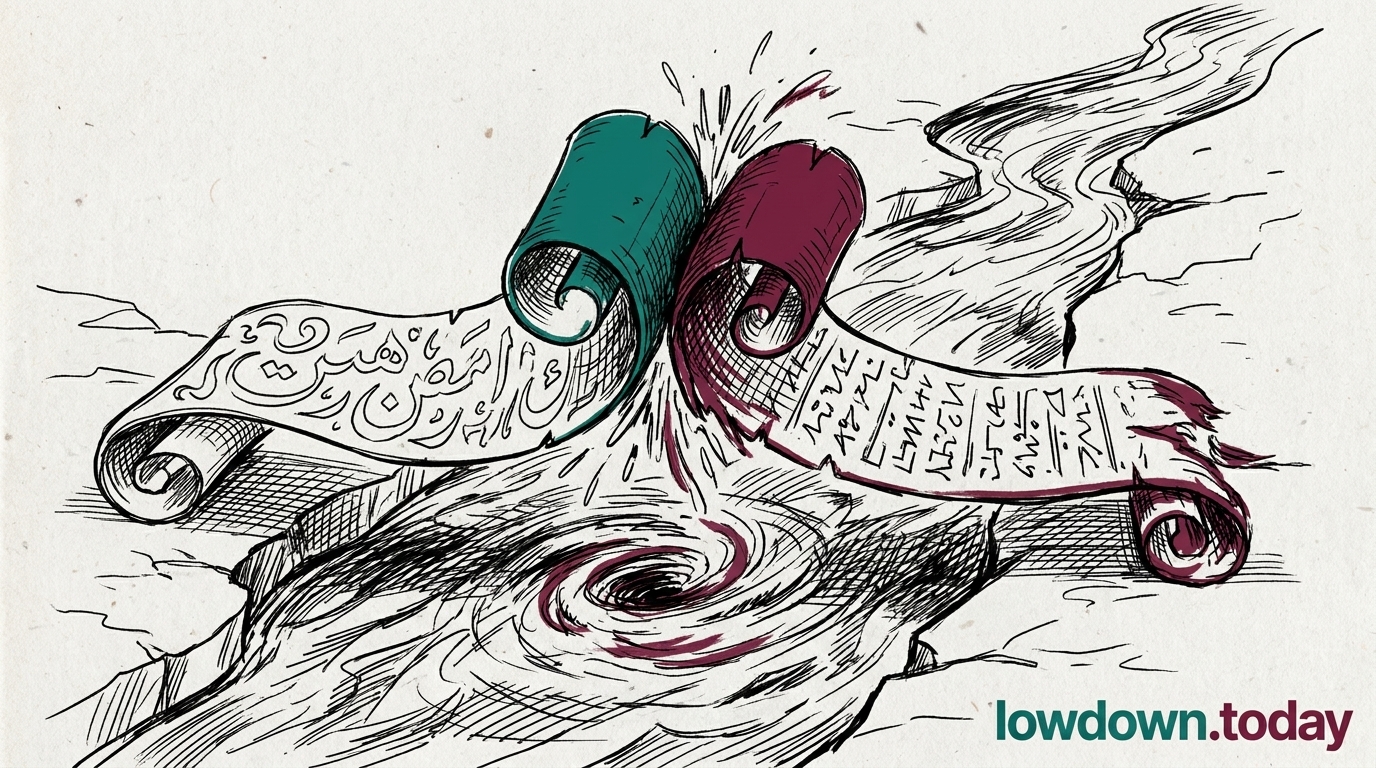
Iran shifted its enrichment-pause offer from a firm five years to a three-to-five-year range, while Washington's demand remained at 20 years, leaving an arithmetic gap of at least 15 years.

ConflictDeveloping
Key takeaway

Iran moved down; Washington stayed put; the pause distance widened rather than narrowed.

Iran shifted its enrichment-pause offer from a firm 5 years to a 3-to-5-year range; Washington's demand held at 20 years, leaving an arithmetic gap of at least 15 years 1. The shift was first recorded on 16 April and the 18 April talks codified the range without closing the distance to the US figure .

The direction of travel matters. Iran's original public offer was five years as a firm floor; the new range has moved the floor down to three . Washington's figure of 20 years has not moved since it was first placed on the table. A pause of three years is a political breathing space; a pause of 20 years is a disarmament timetable. The gap between the two is not a rounding error to be split; it is a definitional disagreement about what the pause is for.

Iran's revised offer also arrives with weaker verification footing than the predecessor five-year version. Iran's 440.9 kg high-purity stockpile has gone unmonitored since the IAEA was suspended on 11 April. A three-year pause that begins without verified baseline inventory is a pause only by self-declaration; Pakistan's Munir concession has not published the quartet that would monitor it. The distance between three years and 20 years is therefore wider than the numbers suggest, because the shorter offer comes with no mechanism to confirm it has begun, while the longer demand assumes the inspector regime the Majlis has voted out.

Deep Analysis

In plain English

Iran and the United States are negotiating over how long Iran would be willing to pause its uranium enrichment. Tehran's foreign ministry negotiators put a range of three to five years on the table in mid-April 2026; Washington is holding out for twenty years. Think of it like a lease negotiation: Iran is offering a short-term renewal, and the US wants a multi-decade commitment. Splitting the difference at fifteen years still leaves both sides well outside their stated positions. Why does the length matter? A short pause gives Iran the ability to restart its nuclear programme relatively quickly. A longer pause gives the US and other countries more time to negotiate a permanent arrangement. Iran argues it needs enrichment capacity as a sovereign right; the US argues a short pause is not worth the sanctions relief Iran wants in return.

What could happen next?
  • Consequence

    Iran's shift from a firm five years to a 3-5 year range widens the downward possibility ; the lower bound of three years is now publicly on the table, reducing even the floor of any eventual agreement.

  • Risk

    GL-U's lapse on 19 April removes the economic inducement that might have persuaded Iran to extend toward the US's 20-year position ; sanctions pressure without carrots rarely produces concessions on duration.

First Reported In

Update #73 · Russia yes, Iran no: Treasury signs only one waiver

CBS News· 19 Apr 2026
Read original
Causes and effects
This Event
Iran softens enrichment offer; US holds 20 years
The negotiating distance on enrichment is now quantifiable in signed-document terms; Iran has moved downward and Washington has not moved at all.
Different Perspectives
Global South governments (Indonesia, Brazil, South Africa)
Neutrality was possible when the targets were military. 148 dead schoolgirls made it impossible — no government can explain that away to its own citizens.
Trump administration
Oscillating between claiming diplomatic progress and threatening escalation, while deploying additional ground forces to the Gulf.
Israeli security establishment
Fears a rapid, vague US-Iran agreement that freezes military operations before the IDF achieves what it considers full strategic objectives. A senior military official assessed the campaign is 'halfway there' and needs several more weeks.
Iraqi government
Iraqi government
Iraq's force majeure is the position of a non-belligerent whose entire petroleum economy has been paralysed by a war between others — storage full, exports blocked, production being cut with no timeline for resumption.
Russia — Ambassador Vassily Nebenzia
Moscow calibrated its position between Gulf states and Iran: abstaining on Resolution 2817 rather than vetoing it, signalling it would not block protection for Gulf states, while refusing to endorse a text that ignores the US-Israeli campaign it regards as the conflict's proximate cause. Russia proposed its own ceasefire text — which failed 4-2-9 — allowing Moscow to claim the peacemaker role while providing Iran with satellite targeting intelligence, a duality consistent with its approach in Syria.
France — President Macron
France absorbed its first combat death in a conflict it has publicly declined to join. The killing of Chief Warrant Officer Frion in Erbil forces Macron to choose between escalating involvement and accepting casualties from the margins.