Skip to content
Iran Conflict 2026
18APR

$4,000-per-box Hormuz surcharge imposed

3 min read
14:57UTC

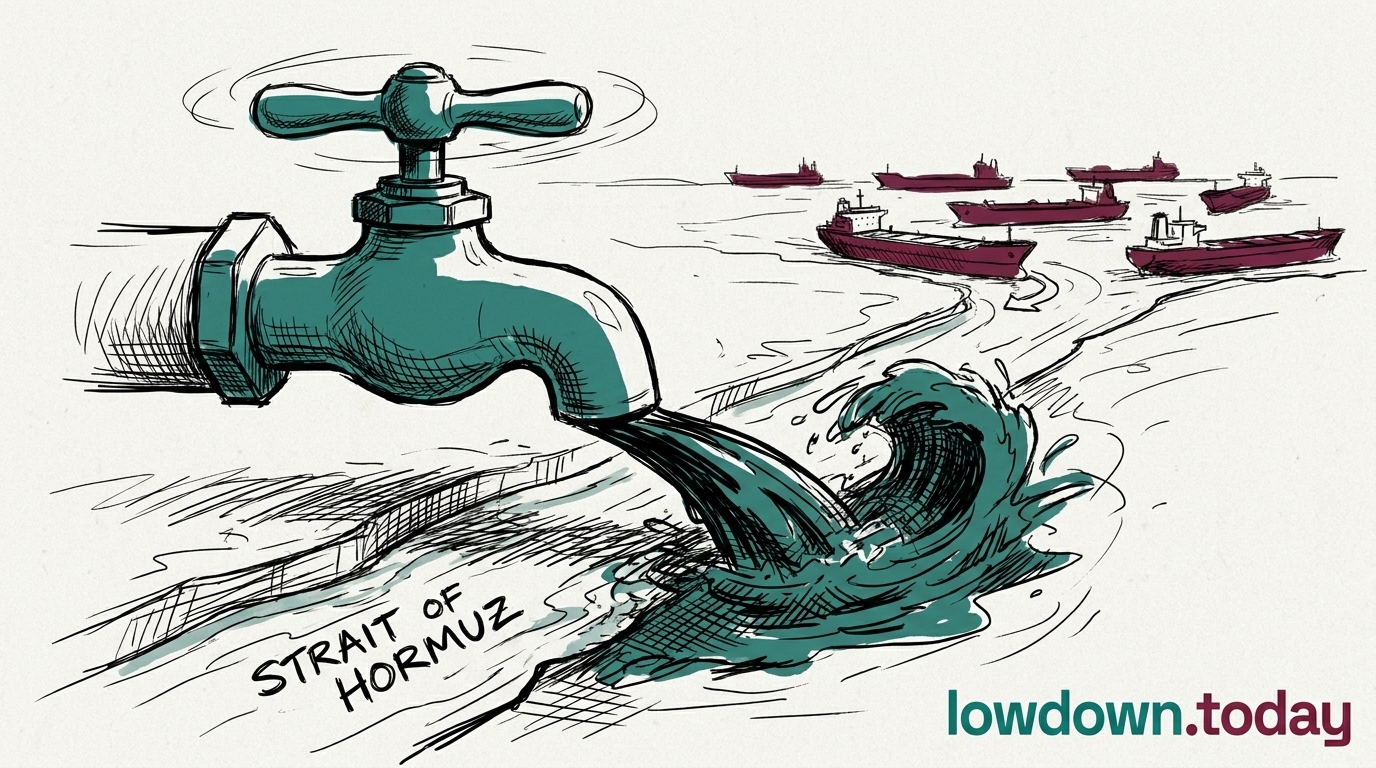
CMA CGM's emergency surcharge is the first concrete price tag on the strait's closure — the mechanism through which a military conflict in the Persian Gulf becomes a grocery bill in Hamburg and Yokohama.

ConflictDeveloping
Key takeaway

At $2,000-4,000 per container, the surcharge already exceeds the peak emergency fees of the 2023-24 Red Sea crisis ($500-2,500), signalling the market is pricing in a structurally more severe and longer-lasting disruption.

CMA CGM imposed an emergency surcharge of $2,000 to $4,000 per container on all Strait of Hormuz routes, effective immediately. The French shipping giant — the world's third-largest container line — is the first carrier to attach a specific price to the strait's conversion from commercial waterway to active combat zone. Other carriers that have halted transits will follow with their own surcharge structures; the question is speed, not whether.

The precedent is the 2024 Red Sea disruption. When Houthi attacks forced rerouting around the Cape of Good Hope, container surcharges reached comparable levels, and the European Central Bank identified measurable inflationary effects within months. The Hormuz disruption is worse by every relevant metric: the Red Sea carries roughly 12–15% of global trade by volume; Hormuz handles 20% of the world's oil and approximately a quarter of its liquefied natural gas. And unlike the Red Sea, there is no maritime detour.

The surcharge compounds on top of energy price increases already under way. Brent Crude has risen $9 per barrel since the strikes began (ID:108). 1,579 flights have been cancelled across the Middle East (ID:99). Dubai International Airport is operating at roughly 30% of normal capacity . The economic footprint extends well beyond hydrocarbons — Gulf States are major transhipment hubs, and the closure disrupts commerce in electronics, manufactured goods, and food that routes through the region regardless of origin.

For import-dependent economies — particularly in South and Southeast Asia — the price transmission is fastest and most damaging. Countries that import both energy and food through Gulf-adjacent routes face simultaneous increases in fuel costs and shipping costs. The IMF's standing estimates suggest a sustained $10-per-barrel increase in oil prices reduces global GDP growth by approximately 0.3 percentage points. With tankers under fire and no diplomatic process visible, the surcharge announced today is a floor, not a ceiling.

Deep Analysis

In plain English

Shipping companies charge extra fees — surcharges — when they face higher costs or risks, passing them directly to whoever ordered the goods. CMA CGM is one of the world's three largest container lines; its surcharge levels typically set the benchmark that smaller carriers follow within 24-48 hours. Every product moving through Hormuz — electronics, clothing, food — becomes more expensive to ship, and those costs reach consumers within weeks.

Deep Analysis
Synthesis

Iran achieved a measurable economic objective within 72 hours without formally closing the strait. The Red Sea precedent shows that once major carriers impose surcharges and suspend services, normalisation takes months even after the security threat subsides; the Hormuz conflict is more intense and structurally more severe. The surcharge also functions as a real-time, market-denominated measure of the conflict's economic cost — one financial and political audiences can track daily, creating visible pressure on all parties.

Root Causes

Three tanker strikes in 72 hours crossed the threshold from threat to reality, triggering insurance market re-pricing that forces carriers to impose surcharges or exit the route. Iran's decision to target commercial shipping likely executes a pre-planned contingency, mirroring the 1980s Tanker War playbook.

Escalation

With all major carriers suspended, no competitive pressure exists to undercut the surcharge — the normal market mechanism that would moderate fee levels is absent. Emergency surcharges historically become baseline rates once threat conditions persist beyond approximately two weeks; if the situation is unresolved in that window, $2,000-4,000 per container becomes the new floor.

What could happen next?
  • Consequence

    Consumer goods prices, particularly for electronics and clothing manufactured in Asia, are likely to rise within four to eight weeks as the surcharge propagates through supply chains.

    Short term · Assessed
  • Risk

    If the surcharge becomes a baseline rate rather than a temporary measure — as occurred after the Red Sea crisis — long-term supply chain restructuring away from Hormuz-dependent routing could reshape global trade patterns.

    Medium term · Suggested
  • Consequence

    Other major carriers will almost certainly match CMA CGM's surcharge within 24–48 hours, eliminating price competition and making the $2,000–4,000 range an industry floor.

    Immediate · Assessed
  • Precedent

    The Hormuz surcharge exceeds Red Sea crisis levels, establishing a new ceiling for maritime risk pricing in Middle East conflict scenarios.

    Long term · Suggested
First Reported In

Update #7 · Hezbollah enters; tankers burn in Hormuz

gCaptain· 2 Mar 2026
Read original
Causes and effects
This Event
$4,000-per-box Hormuz surcharge imposed
The surcharge is the economic transmission belt converting a regional military conflict into global consumer price increases. Unlike tariffs, which are debated and phased in, shipping surcharges propagate immediately through supply chains and reach retail prices within weeks. The Hormuz disruption is structurally worse than the 2024 Red Sea crisis because no rerouting option exists for the bulk of Gulf energy exports.
Different Perspectives
Global South governments (Indonesia, Brazil, South Africa)
Neutrality was possible when the targets were military. 148 dead schoolgirls made it impossible — no government can explain that away to its own citizens.
Trump administration
Oscillating between claiming diplomatic progress and threatening escalation, while deploying additional ground forces to the Gulf.
Israeli security establishment
Fears a rapid, vague US-Iran agreement that freezes military operations before the IDF achieves what it considers full strategic objectives. A senior military official assessed the campaign is 'halfway there' and needs several more weeks.
Iraqi government
Iraqi government
Iraq's force majeure is the position of a non-belligerent whose entire petroleum economy has been paralysed by a war between others — storage full, exports blocked, production being cut with no timeline for resumption.
Russia — Ambassador Vassily Nebenzia
Moscow calibrated its position between Gulf states and Iran: abstaining on Resolution 2817 rather than vetoing it, signalling it would not block protection for Gulf states, while refusing to endorse a text that ignores the US-Israeli campaign it regards as the conflict's proximate cause. Russia proposed its own ceasefire text — which failed 4-2-9 — allowing Moscow to claim the peacemaker role while providing Iran with satellite targeting intelligence, a duality consistent with its approach in Syria.
France — President Macron
France absorbed its first combat death in a conflict it has publicly declined to join. The killing of Chief Warrant Officer Frion in Erbil forces Macron to choose between escalating involvement and accepting casualties from the margins.