Skip to content
Briefings are running a touch slower this week while we rebuild the foundations.See roadmap
Iran Conflict 2026
1MAR

Dubai airport hit; 70% of flights cut

3 min read
19:00UTC

Iranian strikes damaged a concourse at the world's busiest international airport and grounded 70% of flights, threatening the connectivity-dependent economic model that underpins Dubai's prosperity.

ConflictDeveloping
Key takeaway

Striking Dubai International Airport attacks the economic nervous system of the UAE and the wider Gulf aviation network simultaneously.

A concourse at Dubai International Airport was damaged by Iranian strikes on Saturday, and 70% of flights were cancelled. Dubai International is the world's busiest airport by international passenger traffic. The cancellation rate, combined with full flight suspensions at Abu Dhabi's Zayed International and in Qatar, contributed to 1,579 flight cancellations across the Middle East.

Dubai's economic model depends on connectivity. Emirates airline and its associated operations — tourism, cargo, transit services — form a substantial share of the emirate's GDP. A 70% shutdown at the airport does not merely disrupt travel. It tests the assumptions underlying Dubai's growth model. If insurers reclassify Gulf airspace as a conflict zone or airlines permanently reroute, the economic damage will outlast the war.

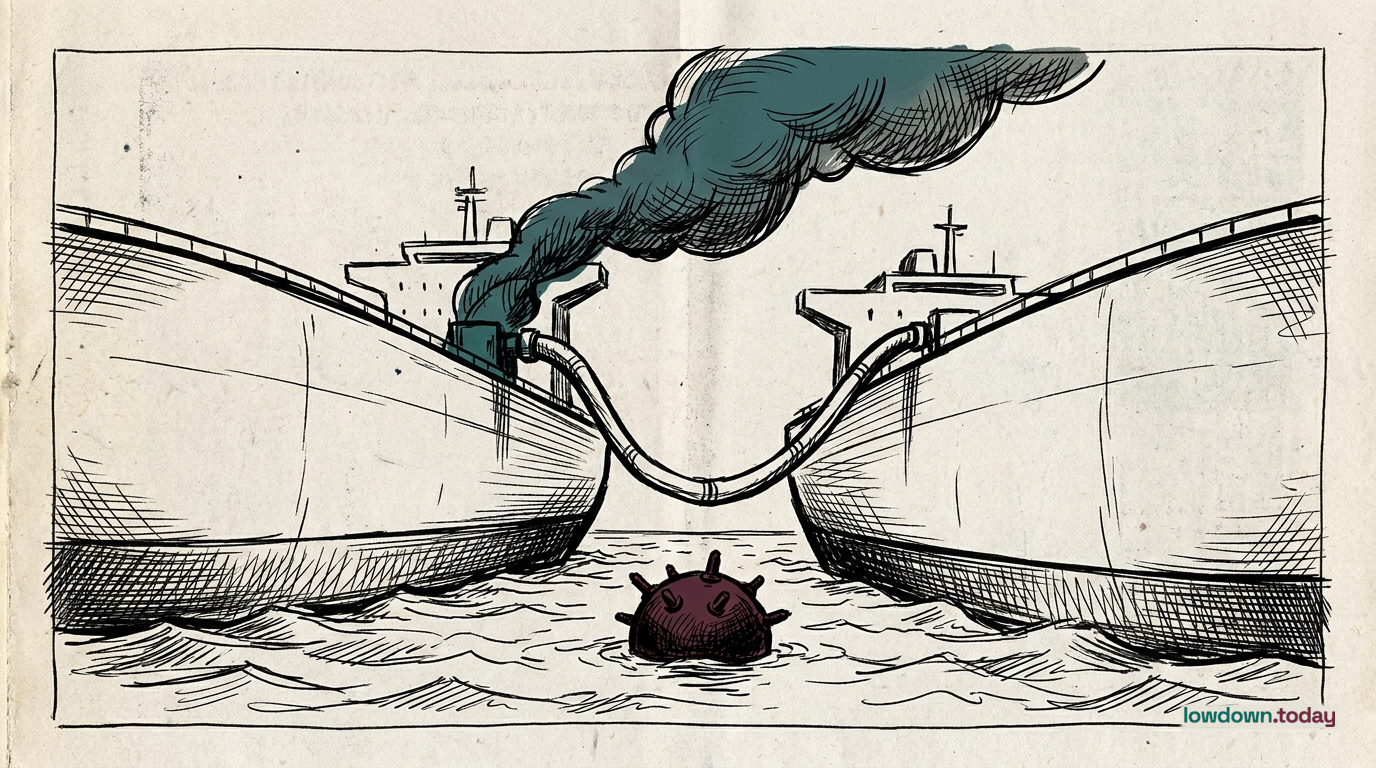
The airport damage compounds the IRGC's closure of the Strait of Hormuz , which has frozen maritime commerce since the strikes began. Dubai's two primary economic arteries — sea trade and aviation — are now both compromised. Iran's retaliatory strikes have targeted Gulf economic infrastructure alongside military installations, imposing costs on states that host American forces but had no role in launching the campaign .

Deep Analysis

In plain English

Dubai International Airport is one of the main hubs connecting Europe, Asia, and Africa — hundreds of airlines use it as a stopover or destination. With a concourse physically damaged and 70% of flights cancelled, tens of thousands of passengers are stranded or rerouted, and the airlines, cargo operators, and businesses dependent on that flow are absorbing immediate losses. Because DXB is also a major air-freight hub, goods that would normally transit there — from electronics to pharmaceuticals — are backed up or diverted.

Deep Analysis
Synthesis

The concourse strike and 70% flight cancellation at DXB represents a weaponisation of economic interdependency: Iran is exploiting the fact that Gulf states have built their prosperity on openness — open skies, open ports, open finance — and that openness is structurally vulnerable to precisely this kind of attritional strike. Dubai's brand as a stable, conflict-exempt business hub has been a primary driver of its growth; that brand is now materially damaged in ways that physical repair alone cannot restore. The reputational signal to multinational corporations, regional headquarters, and the sovereign wealth funds that anchor Gulf financial markets may have longer-lasting consequences than the physical damage itself.

Root Causes

Iran's strike on UAE infrastructure reflects a doctrine of horizontal escalation: when direct military retaliation against the attacking force (Israel and the US) is asymmetrically costly, Iran redirects pressure towards the enabling environment — the Gulf states whose territory, airspace, and logistics underpin American power projection in the region. The UAE hosts Al Dhafra Air Base, used by US fifth-generation aircraft. By striking Dubai's civilian airport, Iran maximises economic pain, generates international headlines, and tests the political will of Gulf governments to continue acquiescing to US basing arrangements, all without directly engaging US or Israeli forces.

Escalation

The damage to DXB escalates the strategic calculus in a specific direction: it punishes a country that did not launch the strikes but hosts US infrastructure, thereby signalling that Iran's retaliatory logic is geographic rather than purely causal. The UAE's inability to prevent the strike — despite hosting US air-defence assets — undermines the deterrent value of American military presence for Gulf partners. If Iran assesses that Gulf states cannot protect their civilian infrastructure even with US backing, pressure will mount on those states to distance themselves from Washington's posture, potentially fracturing coalition cohesion in the medium term. The 70% flight cancellation figure also suggests that operational disruption exceeded what the physical damage alone would explain, indicating either a precautionary shutdown by airport authorities or a broader air-defence lockdown that grounded traffic.

What could happen next?
  • Consequence

    Sustained flight cancellations at DXB will redirect passenger and cargo traffic to alternative hubs — Istanbul, Doha (if flights resume), and potentially Mumbai — redistributing revenue away from the UAE aviation ecosystem.

    Short term · Assessed
  • Risk

    War-risk insurance surcharges on Gulf airspace, if applied broadly, will raise ticket prices and cargo costs on routes connecting Europe, Africa, and Asia, with knock-on effects on supply chains.

    Medium term · Assessed
  • Risk

    Prolonged perception of Dubai as a conflict-adjacent city may trigger corporate headquarter relocations and dampen foreign direct investment inflows that underpin the emirate's growth model.

    Medium term · Suggested
  • Precedent

    A successful strike on the world's busiest international airport establishes that major civilian aviation infrastructure in nominally neutral states is a viable target in Iranian retaliatory doctrine.

    Long term · Assessed
First Reported In

Update #6 · Pentagon produced no evidence for Iran war

Al Jazeera· 1 Mar 2026
Read original
Different Perspectives
Gulf shipping and insurance markets
With Hormuz and Bab el-Mandeb both hostile at once, war-risk underwriters face their first dual-chokepoint pricing problem; the rerouting hedge that absorbed one closure is gone for Israeli-linked hulls. Any deal that reopens Hormuz without a Houthi stand-down clause delivers only partial shipping relief.
Russia and China
Russia and China
Russia and China met IAEA chief Grossi jointly in Geneva on 5 June to coordinate an advance blocking position against Washington's censure resolution, the first documented instance of proactive pre-session obstruction rather than reactive post-vote dissent. Beijing's move came four days after OFAC designated Shanghai Qianye Energy under Iran energy sanctions.
Saudi Arabia
Saudi Arabia
Saudi Arabia was left out of the emergency $4.01 billion Patriot waiver Qatar received on 2 May as its own PAC-3 stocks ran near-empty from intercepting Iranian salvoes over Aramco facilities. Riyadh is on a standard 18-month FMS queue behind a production line booked through 2030, with no equivalent priority to Qatar's Al Udeid basing role.
Houthis (Ansar Allah)
The Houthis declared a complete ban on Israeli Red Sea navigation on 8 June and struck Jaffa, their first attack on Israeli territory since April, seven days after the Tasnim authorisation to activate other fronts including Bab el-Mandeb. The declaration put both chokepoints under hostile authority simultaneously.
Iran
Iran
Iran agreed the 9 June mutual halt after the Mahshahr exchange and coordinated with Russia and China to block Washington's IAEA censure resolution, using the Board as a second front while the bilateral pause held on the military one. Tehran's acceptance of the Lebanon carve-out contradicts the linkage position it stated on 1 June.
Benjamin Netanyahu and the IDF
Israel struck the Karun Petrochemical plant at Mahshahr on 8 June over Trump's explicit objection, then agreed a halt with Iran the following day scoped on Israeli terms with Lebanon carved out. Netanyahu's posture is that the IDF will not accept Iranian missile factories as off-limits regardless of US diplomatic timelines.