Skip to content
You can now search across every topic, entity and event.What's new
Iran Conflict 2026
18APR

Brent falls $14.83 in a session

4 min read
14:57UTC

Brent crude settled at $108.17 on 1 May, down $14.83 from the prior close, the largest single-session decline of the war, before Trump's rejection partly repriced the war premium.

ConflictDeveloping
Key takeaway

Brent's largest single-session fall of the war priced the proposal more credibly than Trump did.

Brent Crude settled at $108.17 on Friday 1 May, down $14.83 from the 30 April $123.00 close 1. The drop is the largest single-session decline since hostilities began on 28 February, equivalent in absolute terms to the spike that followed the United Arab Emirates OPEC (Organization of the Petroleum Exporting Countries) exit , running in reverse. Donald Trump rejected Iran's proposal from The White House the same afternoon: 'They're asking for things I can't agree to' 2.

For roughly six trading hours on Friday, markets priced the fourth proposal as a credible Ceasefire path, applying a textbook Ceasefire-probability discount to the war premium. Trump's rejection partly repriced the premium back in, but Brent did not return to $123, which means the next Iranian text enters the market with a larger residual Ceasefire discount baked in than the last one did. The price layer has now rated Iran's proposals as more credible than the President has rated them on four out of four occasions.

The OPEC+ Seven 206,000 barrels-per-day June increase had been holding the prior settle in place. Saudi fiscal arithmetic at $108 still favours leaving that increase on the calendar: Riyadh's $87 fiscal breakeven holds with $21 of headroom. A sustained move below $100 would change the calculation, because the volume increase only stays attractive while the price stays above the level at which the budget tips into deficit. The 1 May session put Brent within a single comparable move of that threshold.

The pattern across all four Iranian proposals of the war is one-directional: each text has produced a Brent move toward de-escalation. Each presidential rejection has produced a smaller reversal in the opposite direction. The market is treating Iranian texts as the leading indicator and US verbal responses as the lagging one, and a fifth proposal that moves price the same way will turn the divergence from a tendency into a structural feature of how the war is priced.

Deep Analysis

In plain English

Oil prices dropped sharply on 1 May because news broke that Iran had sent a ceasefire proposal. Traders bet that the war might end soon, so they sold oil contracts, which pushed the price down. Brent crude, the main global price benchmark, fell about $15 to $108 a barrel. Then Trump publicly rejected the proposal, and prices bounced back a little, but not all the way to where they were before. That leftover gap matters: it suggests that even though this deal failed, markets think there is a real chance a deal happens soon. After the first three failed proposals, prices always bounced all the way back. This time they did not.

Deep Analysis
Root Causes

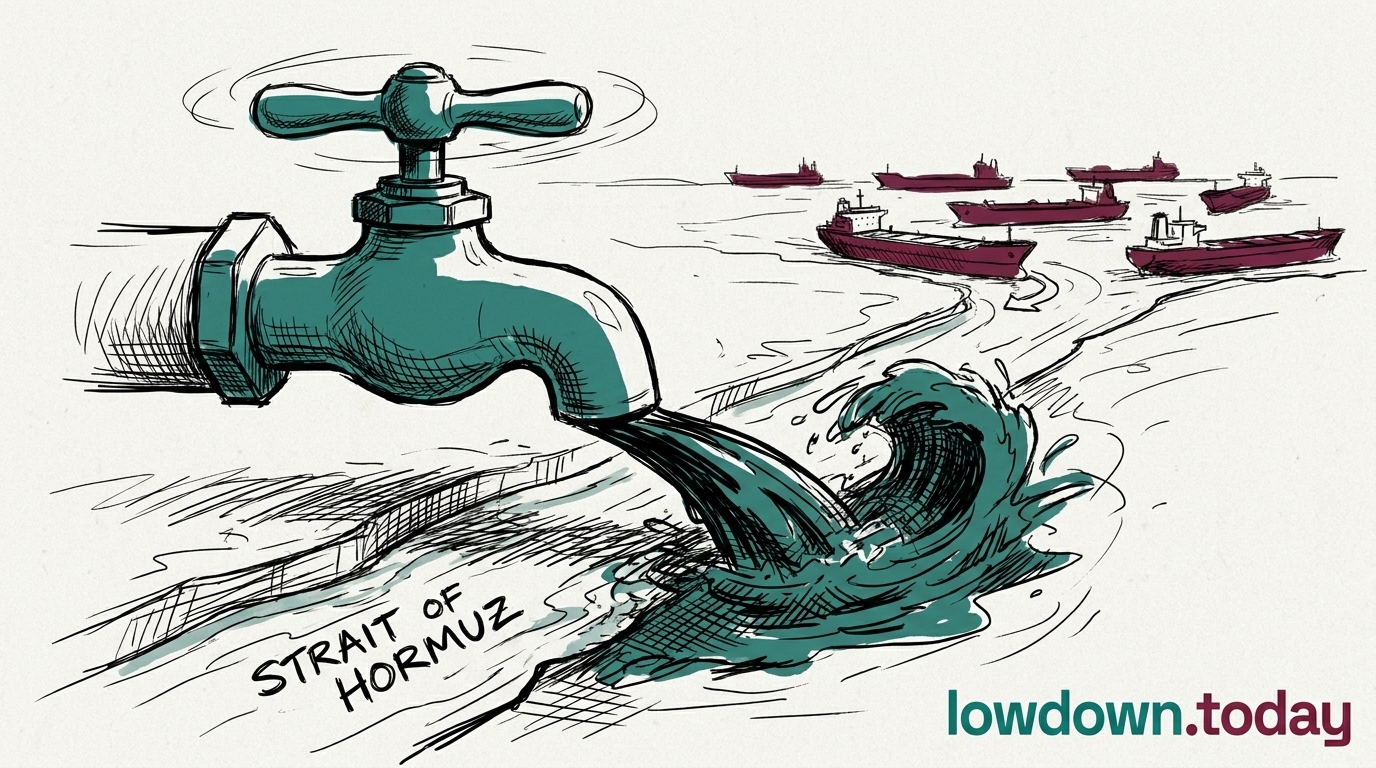
Brent crude's sensitivity to ceasefire signals traces to a specific structural constraint: the Strait of Hormuz carried roughly 20 million barrels per day before the war, and the IEA assessed the closure as the largest supply shock in oil market history. Oil markets price forward, so any credible probability of reopening produces an immediate price move proportional to the expected reopening timeline and volume.

The asymmetric recovery pattern (prices fell more on the ceasefire signal than they recovered after the rejection) reflects a rational Bayesian update: each successive ceasefire proposal that comes closer to a deal structure, even if rejected, raises the baseline probability that a deal exists.

Trump's rejection raised the estimated probability less than the proposal's submission lowered it, because the proposal's two-phase structure (Hormuz first, nuclear later) is more bridgeable than prior single-demand frameworks.

What could happen next?
  • Consequence

    The residual ceasefire discount in Brent after Trump's rejection signals that markets are now pricing a real probability of near-term resolution, the first such pricing shift in 65 days of war, which increases the economic cost to the US of further diplomatic rejection.

  • Risk

    If a fifth proposal fails and Brent returns to the $120-plus range, the residual discount disappears and markets may stop treating diplomatic signals as price-relevant, making any future ceasefire announcement less effective at producing immediate relief.

First Reported In

Update #86 · Trump signs paper. The paper ends the war.

Al Jazeera· 2 May 2026
Read original
Different Perspectives
Hengaw and Iranian protest detainees
Hengaw documented three secret executions of protest-linked detainees at Isfahan and Karaj on 15 and 16 July, including Mohammad Amini Dehaghani, hanged over a January arson charge with no public trial record. Tehran is carrying out capital punishment against 2026 protesters while global attention stays fixed on the war with the US.
Russia
Russia
OFAC named Moscow aviation firm Avratek OOO and its principals Mariya Selina and Vadim Druzhbin directly for the first time in this war's Iran arms track, under an Executive Order 13382 designation issued 15 July. The designation converts years of rhetorical claims about Russian arms supply to Iran into named, sanctionable individuals and a documented company.
Bahrain
Bahrain
Bahrain sounded air-raid sirens during Iran's 14 July Gulf-wide barrage and was struck again in the 16 July Artesh claim against Sheikh Isa air base, home to the US Fifth Fleet. Manama's air-defence stocks were already reported near-exhausted before this second strike claim against the same base in a week.
Kuwait
Kuwait
Kuwait's armed forces intercepted the drones Iran's Army claimed against Ali Al Salem air base on 16 July and separately reported intercepting missiles and drones in Iran's Gulf-wide barrage on 14 July. Kuwait now absorbs strikes from two rival Iranian commands while hosting Camp Arifjan, the US logistics base Iran also claims to have destroyed.
Iran (Artesh and IRGC)
Iran's regular Army claimed the 16 July drone strikes on Kuwait's Ali Al Salem and Bahrain's Sheikh Isa air bases under its own banner, Operation Saeqeh phase ten, while the IRGC separately claimed a mine strike closing Hormuz on 18 July. Two Iranian institutions are now claiming parallel operations, with neither claim confirmed by Kuwait, Bahrain or CENTCOM.
United States
United States
CENTCOM bombed the interior cities of Ahvaz and Yazd for the first time overnight into 17 July, Marines began boarding vessels including the tanker Wen Yao, and Treasury let General License X1 lapse at 12:01am the same day. Washington closed every remaining channel for de-escalation without a new executive action, a posture of attrition rather than a wind-down.