Skip to content
Briefings are running a touch slower this week while we rebuild the foundations.See roadmap
Iran Conflict 2026
18APR

Brent closes $107.05 into Beijing summit

3 min read
14:57UTC

Brent crude closed $107.77 on 12 May on Trump's verbal rejection of Iran's 10-point MOU reply via Pakistan, then settled at $107.05 on 13 May. Goldman Sachs and Morgan Stanley flagged a structural Hormuz premium that will outlast any ceasefire.

ConflictDeveloping
Key takeaway

Brent closed $107.05 on 13 May, $2.84 above the 11 May ceasefire-alive baseline.

Brent Crude closed at $107.77 on 12 May 2026, a 3.4 per cent jump on Trump's verbal rejection of Iran's 10-point MOU reply via Pakistan , then settled at $107.05 on 13 May 1. That is $2.84 above the $104.21 close that priced the Ceasefire as still alive . The verbal rejection had no signed instrument behind it; the price still moved as if one had been signed against the Ceasefire.

Brent is the global oil benchmark; roughly two-thirds of internationally traded crude prices off it, as do European retail diesel and the wholesale gas contracts that feed UK household bills. For UK drivers that translates to a pump price around £1.55 per litre through summer; for UK consumers on index-linked tariffs it adds roughly £180 a year to a typical household gas bill via the wholesale contracts that price off Brent. Traders are pricing both Trump's 11 May "life support" remarks on the Ceasefire and the OFAC Hong Kong designations two days later .

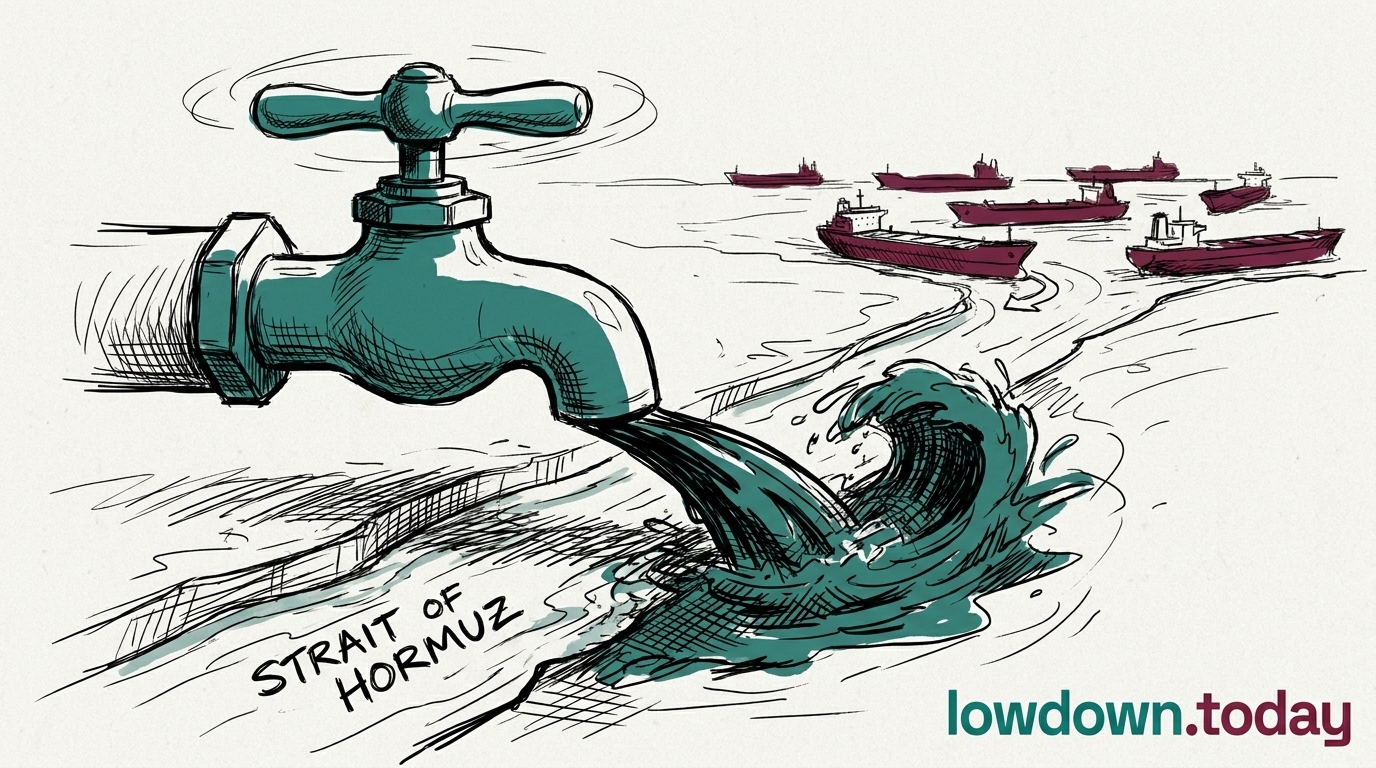
Goldman Sachs and Morgan Stanley both noted on 13 May that the structural Hormuz premium will persist beyond any Ceasefire because P&I (Protection and Indemnity) insurers cannot reopen war-risk cover for the strait until written rules of engagement exist for the European mission and the US blockade. The insurance freeze, not summit hope, sets the floor for Brent through the rest of May. The market is pricing the absence of signed paper for the rest of May.

Deep Analysis

In plain English

The price of oil on world markets is tracked via a benchmark called Brent crude. When Brent goes up, everything that uses oil, including petrol, diesel, home heating, and many food products, tends to get more expensive too. Brent closed at $107.05 on 13 May. Before the Iran conflict began about 75 days ago, it was around $67. That $40 difference is being called the "Hormuz premium", the extra cost the market adds because nobody can get war-risk insurance to ship oil through the strait right now. Two big investment banks, Goldman Sachs and Morgan Stanley, said on 13 May that this premium will not go away just because a ceasefire is signed. The shipping insurance industry needs to see written rules about how the strait will be managed before they will insure tankers again. Until that paperwork exists, oil stays expensive.

What could happen next?
  • Consequence

    The two-layer Brent premium, kinetic and structural insurance, means a signed ceasefire alone will not restore pre-war pump prices; the insurance layer requires a separate written rules-of-engagement document from the European coalition.

  • Risk

    UK Q3 2026 Ofgem price-cap calculations will incorporate the current Brent forward curve, locking elevated household energy costs through September 2026 regardless of any ceasefire signed in May or June.

First Reported In

Update #96 · Hegseth: no AUMF needed. Trump flies east

CNBC· 13 May 2026
Read original
Different Perspectives
Lloyd's of London underwriters
Lloyd's held its Hormuz war-risk rate at $10-14 million per voyage; underwriters need a UN Security Council resolution or formal PGSA de-listing before repricing, not a Senate testimony. The PGSA remains on the SDN list under EO 13224, so any vessel transiting a nominally reopened strait still deals with a sanctioned counterparty.
Saudi Arabia and Gulf states
Brent crude at $95-97 on 2-3 June reflects Gulf producers benefiting from the conflict premium; a genuine Hormuz deal would likely cut that premium by $10-15 per barrel. Riyadh's $87 per barrel budget breakeven means the current price is comfortable, reducing the Gulf's urgency to push for a rapid settlement.
China
China
OFAC's Nobitex designation leaves China's informal bilateral currency-swap lines with Iran as the CBI's remaining rial-defence mechanism; Chinese financial institutions face secondary-sanctions risk if they interact with successor wallets. Beijing's MOFCOM Blocking Rules protect mainland refineries from direct designation but do not shield informal swap-line counterparties.
Lebanon / Hezbollah
Lebanon / Hezbollah
Lebanon's Washington delegation demanded full Israeli withdrawal and the return of 1.2 million displaced; Hezbollah deployed an FPV drone that killed an Israeli soldier at Yohmor while talks ran, demonstrating it can impose costs even at Israel's deepest penetration point. Lebanon's government cannot deliver the Hezbollah disarmament guarantee Israel demands.
Israel / Benjamin Netanyahu
Israeli forces seized Beaufort Castle above the Litani on 1-2 June and advanced to within 10 km of the Zaharani river while ceasefire delegations sat in Washington; the advance ran entirely outside the Beirut-only truce Netanyahu accepted on 1 June. Each kilometre taken raises Israel's withdrawal price before any permanent text is signed.
Iran: Foreign Ministry and domestic population
Araghchi rang six capitals in 48 hours to reopen talks the SNSC had suspended, calling the IRGC line 'speculation'; at home, 37 political prisoners were executed since 19 March while students marched in Tehran, Mashhad and Hamadan. The diplomatic thaw has not eased the state's wartime repression tempo.