Skip to content
Briefings are running a touch slower this week while we rebuild the foundations.See roadmap
Iran Conflict 2026
11APR

Ghalibaf threatens UAE over Kharg help

2 min read
11:03UTC
ConflictDeveloping

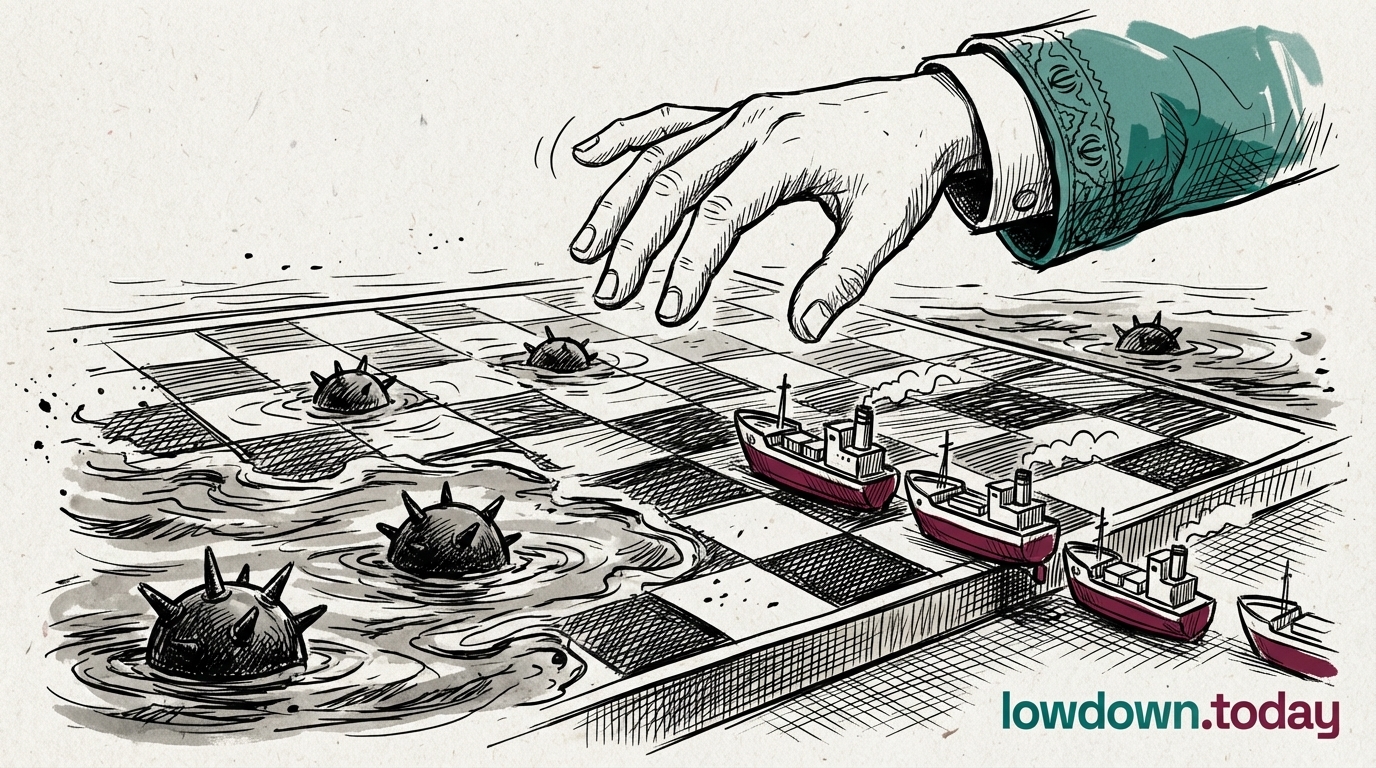
Iranian Parliamentary Speaker Mohammad Bagher Ghalibaf warned on 26 March that if any regional country assists in a Kharg Island occupation operation, Iran will conduct 'continuous and relentless attacks' on that country's vital infrastructure. 1 The unnamed 'regional neighbour' is widely understood to be the UAE, the most plausible staging point for US amphibious forces given its proximity, port infrastructure, and existing military relationships.

The threat is directed at a specific operational concern. Pentagon sources confirmed active planning for a US Marine amphibious assault on Kharg Island , which handles approximately 90% of Iran's oil exports. Iran has fortified the island with mines, anti-personnel and anti-armour devices, and MANPAD shoulder-fired anti-aircraft systems . The logistics of any assault require a staging base, and the UAE is the operationally obvious choice.

Ghalibaf issued a near-identical threat earlier in the conflict : 'regional energy and oil infrastructure' would be targeted if Gulf states facilitated military action against Iran. Wednesday's statement is more specific: it explicitly ties the threat to Kharg Island and uses the word 'occupation,' signalling Iranian intelligence awareness of the Marine planning documented in .

The threat does diplomatic work that military signalling alone cannot: it puts pressure on Abu Dhabi to resist Washington's requests for basing access or logistical support, knowing that compliance risks Iranian strikes on UAE desalination plants and oil infrastructure. If the UAE refuses to host US forces, the Kharg Island logistics become considerably harder and the operation's feasibility, already questioned by CNN analysts and the Foundation for Defense of Democracies, declines further.

Deep Analysis

In plain English

Iran's parliamentary speaker warned that any Middle Eastern country that helps the US seize Kharg Island (the terminal from which Iran exports 90% of its oil) will face sustained attacks on its own infrastructure. The unnamed country is almost certainly the UAE. The US military cannot easily launch an island assault without a staging base nearby, and the UAE has the ports and infrastructure that would be needed. Iran is essentially telling the UAE: let the Americans use your territory and we will bomb your desalination plants and oil facilities. Given that the UAE gets most of its drinking water from desalination, this is a serious threat.

Deep Analysis
Root Causes

The UAE faces a genuine dilemma: refusing US basing requests damages the strategic relationship with Washington; accepting them risks Iranian strikes on infrastructure the UAE cannot easily replace.

The underlying structural cause is Gulf states' dependency on both US security guarantees and Iranian non-aggression. These two requirements are now in direct conflict.

First Reported In

Update #49 · Hormuz toll into law; Tangsiri killed

Bloomberg· 27 Mar 2026
Read original
Different Perspectives
Qatar
Qatar
Qatar holds approximately $12 billion in frozen Iranian assets that Tehran named as the precondition for any Hormuz reopening sequence; with Oman sidelined and no agreed HEU custodian, the asset-routing architecture that any deal requires has no operational channel and no neutral financial intermediary to run it through.
Hengaw and Iranian civilian population
Iranians face an internet capped at 40 per cent by hardware their president cannot dismantle, field killings that leave no court record, and judicial executions running in parallel; Hengaw, based in Norway, is the primary remaining monitor of a repression system the IRGC is deliberately moving beyond auditable records. The real toll is higher than any single monitor's count.
China
China
China supplied deep-packet-inspection hardware that caps Iran's internet at 40 per cent and enables an instant on-demand blackout, and was barred by Trump as a potential HEU custodian on 27 May. Beijing gains from Iran's continued non-alignment with the West while the DPI sale extends Chinese surveillance-technology exports as a geopolitical instrument.
Pakistan
Pakistan
Foreign Minister Ishaq Dar met Rubio in Washington on 29 May, formally inheriting the role of sole active mediator after Oman's forced withdrawal. Pakistan lacks Oman's banking infrastructure for frozen-asset routing and carries its own regional stakes, making it a less structurally neutral broker for the Qatar-held $12 billion sequencing.
Kuwait
Kuwait
Kuwait invoked Article 51 of the UN Charter after absorbing an Iranian ballistic-missile strike on Ali Al Salem Air Base on 28 May, becoming the first Gulf state to make a formal individual self-defence claim in the war. The invocation creates a legal record enabling a future bilateral defence-pact activation without yet triggering it.
Oman
Oman
Oman denied any Hormuz toll plan within hours of Bessent's 28 May threat, absorbing a sanctions warning from the country it has brokered for since 1981. The rapid capitulation preserved the channel formally, but Tehran now knows Washington will threaten its own mediator, which changes Muscat's calculus on how far it can lean into any joint-management architecture.