Skip to content
You can now search across every topic, entity and event.What's new
Iran Conflict 2026
10APR

War powers vote; it cannot stop the war

4 min read
08:05UTC

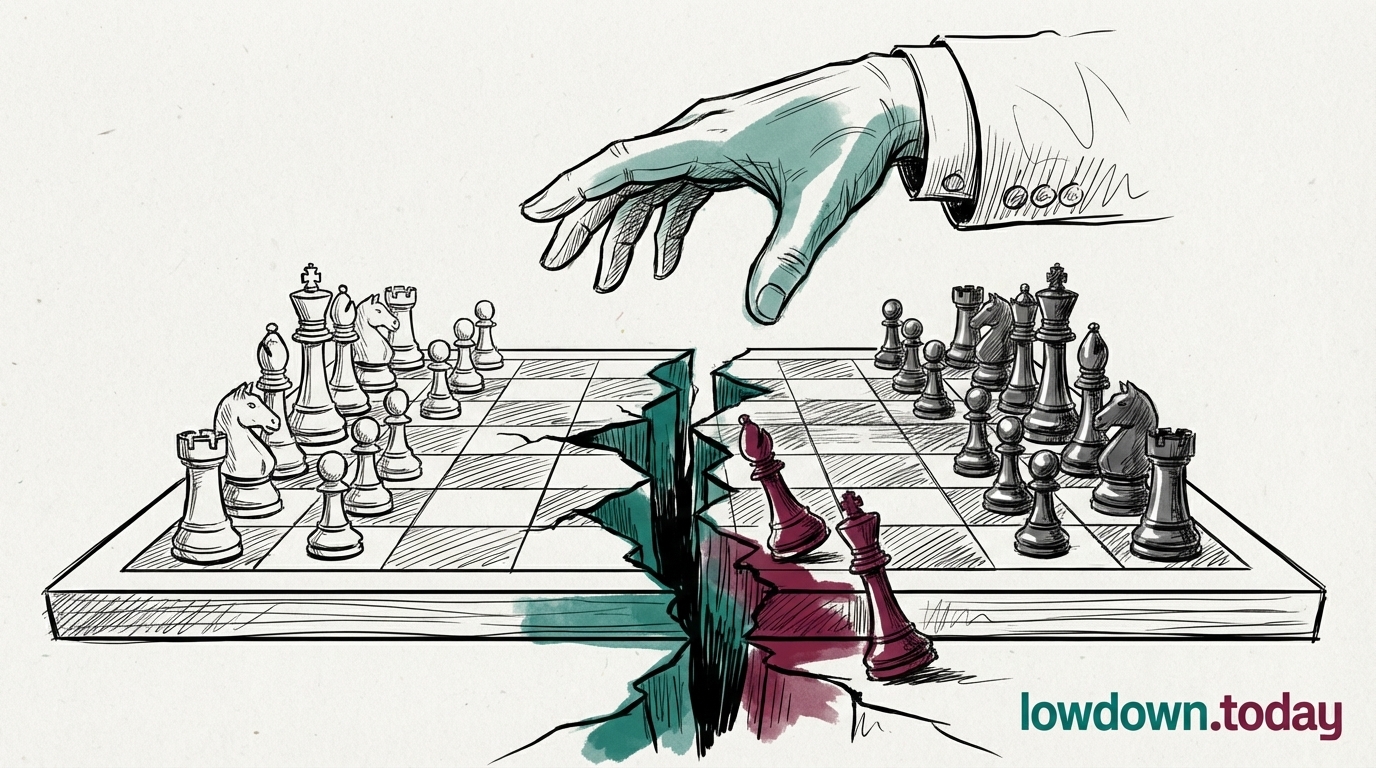
Congress will vote on war powers this week. The votes cannot override a presidential veto. What they can do is write the record of whether the legislature consented or objected — a record that outlasts the campaign.

ConflictDeveloping
Key takeaway

The anticipated war powers votes are constitutionally toothless against a presidential veto but historically significant as a documented record of congressional opposition to executive war-making.

War powers votes are expected in both chambers of Congress this week. They will not halt the campaign. A presidential veto requires a two-thirds supermajority to override, and the current Republican majority in the Senate ensures that threshold cannot be reached. President Trump has framed the operation as limited — explicitly ruling out ground forces and nation-building — but the constitutional question does not depend on the campaign's declared scope.

The War Powers Resolution has been invoked repeatedly since its passage in 1973 and has never once compelled a president to withdraw from a military engagement. Congress debated war powers over Lebanon in 1983, Somalia in 1993, Kosovo in 1999, Libya in 2011, and Yemen from 2018 onwards. No president has conceded the resolution's binding authority. No court has enforced it. But each vote creates a legislative record that outlasts the conflict itself. The 2002 Iraq authorisation vote followed legislators for years — most consequentially Hillary Clinton, whose vote to authorise the invasion became her defining political liability in the 2008 primary, a campaign she lost to a senator WHO had opposed the war. Members voting this week are aware of that precedent. The record they create will be read against whatever evidence does or does not emerge to justify the campaign.

The structural pattern extends beyond any single vote. Congress's constitutional war power has eroded steadily since President Truman committed forces to Korea in 1950 without a declaration of war. Each subsequent conflict further established the precedent that the president initiates and Congress reacts. The War Powers Resolution was written to reverse that dynamic. Fifty-three years later, the dynamic is unchanged. The UN Security Council has followed the same trajectory at the international level — convening an emergency session on the Iran strikes that produced no binding action . The domestic legislature and the international body designed to authorise or constrain the use of force have both convened, both spoken, and both failed to act. The votes this week will add to that record: Congress will object, the campaign will continue, and the constitutional question will remain where it has sat since 1973 — unresolved.

Deep Analysis

In plain English

In 1973, Congress passed the War Powers Resolution to limit the president's ability to send American forces into combat without congressional approval. Under that law, operations must end within 60 days unless Congress authorises them. This week, members of Congress plan to vote on resolutions invoking that law — essentially telling the president he is acting without legal authority. However, the president can veto such resolutions, and Congress almost certainly lacks the two-thirds majority needed to override a veto. The votes will therefore not stop the war. What they do is create a formal, public record: Congress on record saying this conflict was not authorised, that it was started without legal basis, and that elected representatives objected. That record matters for future legal challenges, for how history judges the decision-makers, and for the political costs they may eventually face — particularly if the campaign goes badly.

Deep Analysis
Synthesis

The anticipated war powers votes occupy a specific and well-understood role in US constitutional history: they are the mechanism through which Congress registers dissent it cannot enforce, in order to preserve a legal and historical record it intends to use later. The significance of these votes lies not in their immediate effect — nil — but in what they enable subsequently: committee investigations, legal challenges, future appropriations battles, and ultimately the historical verdict on the decision-makers. In the context of a campaign that a US defence official has said will last 'weeks, not days,' and for which the Pentagon could not produce evidence of an imminent threat in classified session, the votes create a documented predicate for accountability proceedings that could extend well beyond the conflict's conclusion.

Root Causes

The expected war powers votes are the direct product of the structural tension between the War Powers Resolution and decades of executive branch refusal to treat it as binding. Every administration since 1973 has maintained, in practice if not always in formal legal opinions, that the president has inherent constitutional authority as Commander-in-Chief to commit forces to hostilities. Congress has repeatedly failed to enforce the Resolution through the one mechanism that would be constitutionally unambiguous — appropriations cut-offs — defaulting instead to symbolic votes that satisfy the political need to register opposition without bearing the electoral cost of appearing to abandon troops in the field. This pattern of symbolic enforcement has progressively hollowed out the Resolution's practical effect whilst preserving its formal existence.

Escalation

The war powers votes represent a contained form of political escalation within the domestic constitutional framework — they do not affect military operations directly, but they raise the political cost of continuation. If the votes reveal significant bipartisan opposition rather than a purely partisan divide, the administration's political room to expand operations, seek supplemental appropriations without conditions, or negotiate a ceasefire from a position of domestic strength narrows appreciably. The more significant escalatory risk is external: adversaries and international actors could use the vote as evidence that the United States is conducting a war its own legislature deems illegal, thereby legitimising their own responses or intensifying diplomatic pressure at the UN Security Council and the International Court of Justice.

What could happen next?
  • Precedent

    A successful war powers vote — even one subsequently vetoed — establishes a documented congressional record that future legal challenges, committee investigations, and international legal bodies can cite as evidence of domestic opposition to the campaign's authorisation.

    Long term · Assessed
  • Consequence

    If the vote reveals significant bipartisan opposition, the administration's domestic political capacity to expand operations or seek supplemental appropriations without conditions will narrow materially.

    Short term · Suggested
  • Risk

    Adversaries and international actors could use the war powers vote as evidence that the United States is conducting a legally contested war, legitimising their own responses and intensifying diplomatic pressure at the UN and international courts.

    Immediate · Suggested
  • Meaning

    The votes represent Congress's only available formal mechanism for registering opposition to a war it cannot legally stop, preserving constitutional accountability under conditions of extreme executive pressure.

    Immediate · Assessed
First Reported In

Update #6 · Pentagon produced no evidence for Iran war

Newsweek· 1 Mar 2026
Read original
Causes and effects
This Event
War powers vote; it cannot stop the war
The expected votes are constitutionally unable to halt the campaign but will establish the formal legislative record of congressional consent or objection — a record that shaped political accountability after Iraq and will determine how this war is judged historically and legally.
Different Perspectives
Oil markets / Lloyd's of London
Brent fell to near $87.33 on 80 per cent deal-probability pricing, but Lloyd's has not de-listed Hormuz from its war-risk register and shipping diversions continue at 139 vessels. Insurance markets are lagging futures: physical risk remains while financial markets have spent the good news before the paper exists.
India
India
Modi is expected to raise the deaths of three Indian sailors in the 11 June CENTCOM strike on the MT Settebello with Trump at G7 sidelines, the first non-party leader to put the blockade's human cost into a formal bilateral. New Delhi is also a major Iranian oil buyer whose import volumes the sanctions-relief terms will govern.
Israel (Netanyahu)
Israel (Netanyahu)
Netanyahu stated Israel is not party to the deal on 12 June; Defence Minister Katz ruled out the Lebanon withdrawal Iran's draft demands, inserting a third blocker the US-Iran negotiating channel cannot resolve. Israel's position tethers Hormuz reopening to a Lebanon settlement Washington has not brokered.
Pakistan (mediator, Sharif/Naqvi)
Sharif declared a final agreed text on 12 June before either principal confirmed it, running two Tehran visits in under a week without securing a written IRGC or Khamenei response. Islamabad's incentive to claim a diplomatic win outpaces its standing to deliver either capital's signature.
Iran foreign ministry (Araghchi)
Araghchi declared digital signing within days while setting dilute-in-Iran as a non-negotiable red line on the 440.9 kg HEU stockpile, a standing Tehran position he cannot override without authorisation from Khamenei, reachable only by courier. The FM track is sprinting to close before the IRGC reasserts control.
Trump administration / CENTCOM
Vance called the deal still TBD on 12 June while CENTCOM downed Iranian drones over Hormuz for a second consecutive night and the White House register stayed blank. Washington holds the ship-out position on HEU and has not signed an Iran instrument in over 100 days of conflict.