Skip to content
You can now search across every topic, entity and event.What's new
Iran Conflict 2026
10APR

Rubio: US knew Israel would strike Iran

4 min read
08:05UTC

The secretary of state told Congress the US struck Iran because Israel's planned attack would trigger retaliation against American forces — his own words now form the core evidence in Congress's war powers challenge.

ConflictDeveloping
Key takeaway

Rubio's statement is not a political gaffe but a legal admission that eliminates the administration's primary constitutional defence for the strikes.

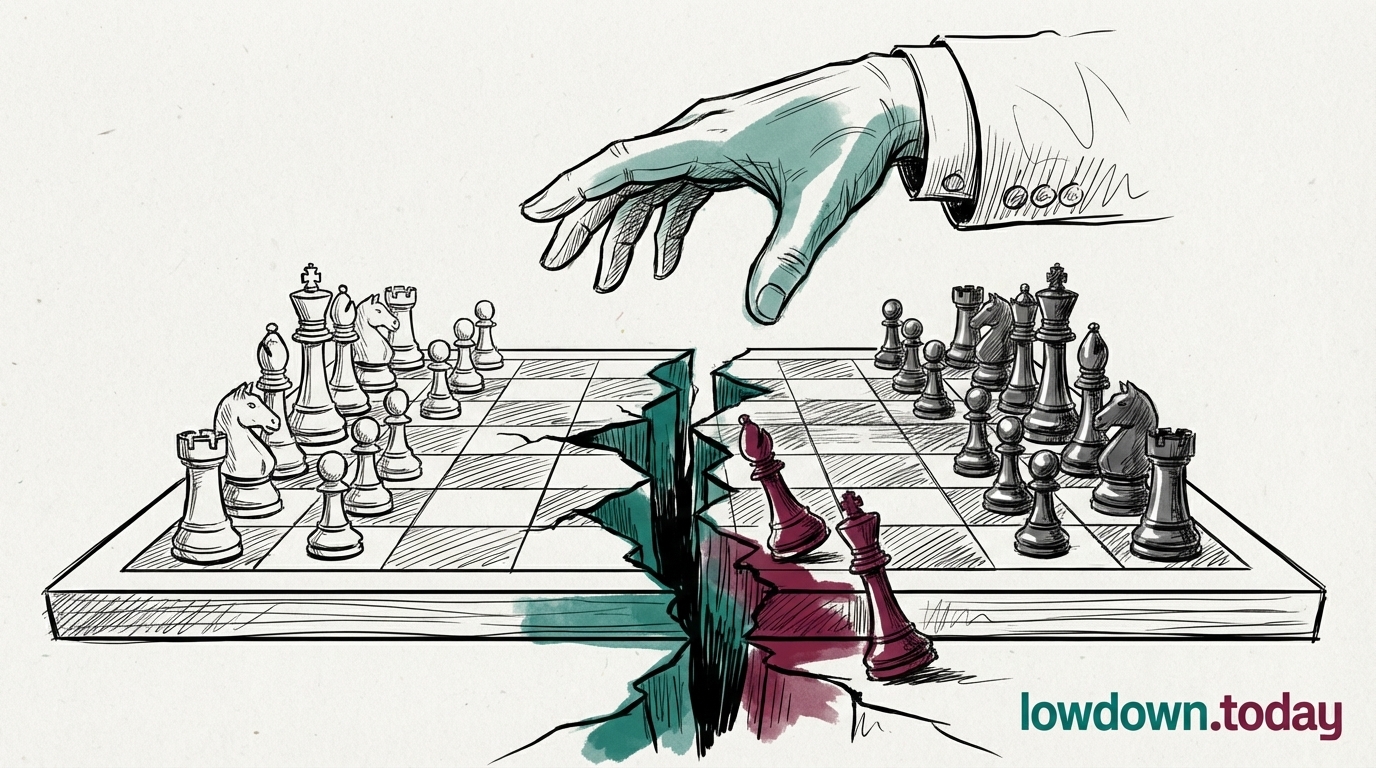
Secretary of State Marco Rubio told congressional leaders on Monday that the United States knew Israel was going to strike Iran, knew that strike would provoke retaliation against American forces, and launched pre-emptive attacks to reduce the casualties the US would absorb from the consequences of Israel's operation. His words, reported by Al Jazeera and confirmed across multiple outlets: "We knew that there was going to be an Israeli action. We knew that that would precipitate an attack against American forces, and we knew that if we didn't pre-emptively go after them before they launched those attacks, we would suffer higher casualties."

The statement resolves a question that had been building since the campaign's first hours. Pentagon officials briefed congressional staff for ninety minutes on Saturday and reportedly produced no evidence for the White House's "imminent threat" claim . Senator Mark Warner, vice-chairman of the Senate Intelligence Committee, publicly stated he had seen no intelligence showing an immediate, imminent threat . Defence Secretary Pete Hegseth introduced a nuclear justification from the Pentagon podium on the same day . Rubio's admission goes further than any of these disclosures — it reframes the threat itself. The danger to American forces was not independent Iranian aggression but the foreseeable blowback from an Israeli operation Washington elected to join.

Under the War Powers Resolution of 1973, a president may commit forces without congressional authorisation only in response to an attack on the United States or its forces, or to address an imminent threat. Rubio described neither. He described a policy calculation: Israel would act, Iran would retaliate against US assets in the region, and pre-emptive American strikes would reduce the casualties Washington would absorb from its ally's war. That is alliance management — a strategic choice, not self-defence as the statute defines it. The distinction matters because it determines whether the president had lawful authority to launch the campaign without a congressional vote.

The war powers votes expected this week were always going to be symbolic — a presidential veto cannot be overridden with current margins. But Rubio has changed their evidentiary basis. Congress will now vote with The Administration's own account on record: the United States entered this war to manage the consequences of Israel's decision, not to counter an independent threat to American security. Six Americans are dead in 72 hoursthree in the initial retaliatory wave , a fourth at a tactical operations centre , and two more overnight. Netanyahu's contemporaneous declaration — "This Coalition of forces allows us to do what I have yearned to do for 40 years" — frames the American role from the Israeli side with equal directness. Between the two statements, the war's origins are described with unusual clarity by the principals themselves.

Deep Analysis

In plain English

US presidents are legally permitted to use military force without Congress's prior approval only in one circumstance: American forces face an immediate, unavoidable attack. Rubio has now publicly stated that the threat to US forces would only have existed because of a choice the US itself made — to join Israel's operation. That is the legal equivalent of saying 'we chose to walk into traffic, then swerved to avoid being hit.' The self-defence claim requires the threat to exist independently of your own decision-making. Congress now has the administration's own senior diplomat providing the evidence that the legal threshold was not met on the administration's own terms, while the campaign is still active.

Deep Analysis
Synthesis

The statement creates an inversion of the normal political dynamic: administrations typically face legal challenges only after operations end and documents are declassified years later. Here, the legal case against the administration's own war powers theory has been made by the Secretary of State in real time, while the campaign is active — removing the administration's ability to claim the legal question is unsettled and foreclosing the usual tactic of running out the clock on congressional scrutiny.

Root Causes

Four decades of presidential war-making through executive interpretation — from Reagan's Grenada to Clinton's Kosovo to both Bush administrations — eroded the expectation that presidents seek prior authorisation and atrophied Congress's institutional muscle for asserting it. The political cost of admissions like Rubio's has historically been near-zero because Congress has never successfully enforced the WPR against a sitting president; that normalisation is why the statement was made without apparent legal caution.

Escalation

The admission paradoxically constrains further escalation options: any expansion of operations — ground troops, additional strike packages — will face the same legal challenge with a compounding evidentiary record. Each new action taken under the same legal theory deepens the constitutional exposure rather than resetting it.

What could happen next?
  • Consequence

    The war powers vote this week is the first such vote where the administration's own senior diplomat has provided affirmative evidence against the legal threshold, creating a congressional record that will bind future legal challenges regardless of the vote's outcome.

    Immediate · Assessed
  • Risk

    A presidential veto of a War Powers Resolution — supported by the Secretary of State's own admission — would produce a constitutional standoff with no clear resolution mechanism, potentially paralysingstrategic decision-making during an active campaign.

    Short term · Suggested
  • Precedent

    Congressional failure to act on this admission would effectively remove the imminent-threat requirement from the War Powers Resolution as a practical constraint, leaving presidential war-making unconstrained by prior authorisation for all future administrations regardless of stated legal rationale.

    Long term · Assessed
First Reported In

Update #12 · Rubio rewrites war's legal case in Congress

Al Jazeera· 3 Mar 2026
Read original
Causes and effects
This Event
Rubio: US knew Israel would strike Iran
The administration's top diplomat has stated on the record that the legal threshold for presidential war-making — imminent threat to US forces — was not met independently but was instead a predictable consequence of an Israeli operation the US chose to support, transforming this week's congressional war powers vote from a political exercise into a constitutional confrontation armed with the administration's own testimony.
Different Perspectives
Oil markets / Lloyd's of London
Brent fell to near $87.33 on 80 per cent deal-probability pricing, but Lloyd's has not de-listed Hormuz from its war-risk register and shipping diversions continue at 139 vessels. Insurance markets are lagging futures: physical risk remains while financial markets have spent the good news before the paper exists.
India
India
Modi is expected to raise the deaths of three Indian sailors in the 11 June CENTCOM strike on the MT Settebello with Trump at G7 sidelines, the first non-party leader to put the blockade's human cost into a formal bilateral. New Delhi is also a major Iranian oil buyer whose import volumes the sanctions-relief terms will govern.
Israel (Netanyahu)
Israel (Netanyahu)
Netanyahu stated Israel is not party to the deal on 12 June; Defence Minister Katz ruled out the Lebanon withdrawal Iran's draft demands, inserting a third blocker the US-Iran negotiating channel cannot resolve. Israel's position tethers Hormuz reopening to a Lebanon settlement Washington has not brokered.
Pakistan (mediator, Sharif/Naqvi)
Sharif declared a final agreed text on 12 June before either principal confirmed it, running two Tehran visits in under a week without securing a written IRGC or Khamenei response. Islamabad's incentive to claim a diplomatic win outpaces its standing to deliver either capital's signature.
Iran foreign ministry (Araghchi)
Araghchi declared digital signing within days while setting dilute-in-Iran as a non-negotiable red line on the 440.9 kg HEU stockpile, a standing Tehran position he cannot override without authorisation from Khamenei, reachable only by courier. The FM track is sprinting to close before the IRGC reasserts control.
Trump administration / CENTCOM
Vance called the deal still TBD on 12 June while CENTCOM downed Iranian drones over Hormuz for a second consecutive night and the White House register stayed blank. Washington holds the ship-out position on HEU and has not signed an Iran instrument in over 100 days of conflict.