Skip to content
Briefings are running a touch slower this week while we rebuild the foundations.See roadmap
Iran Conflict 2026
10APR

Iran rejects US plan, sets five terms

2 min read
08:05UTC

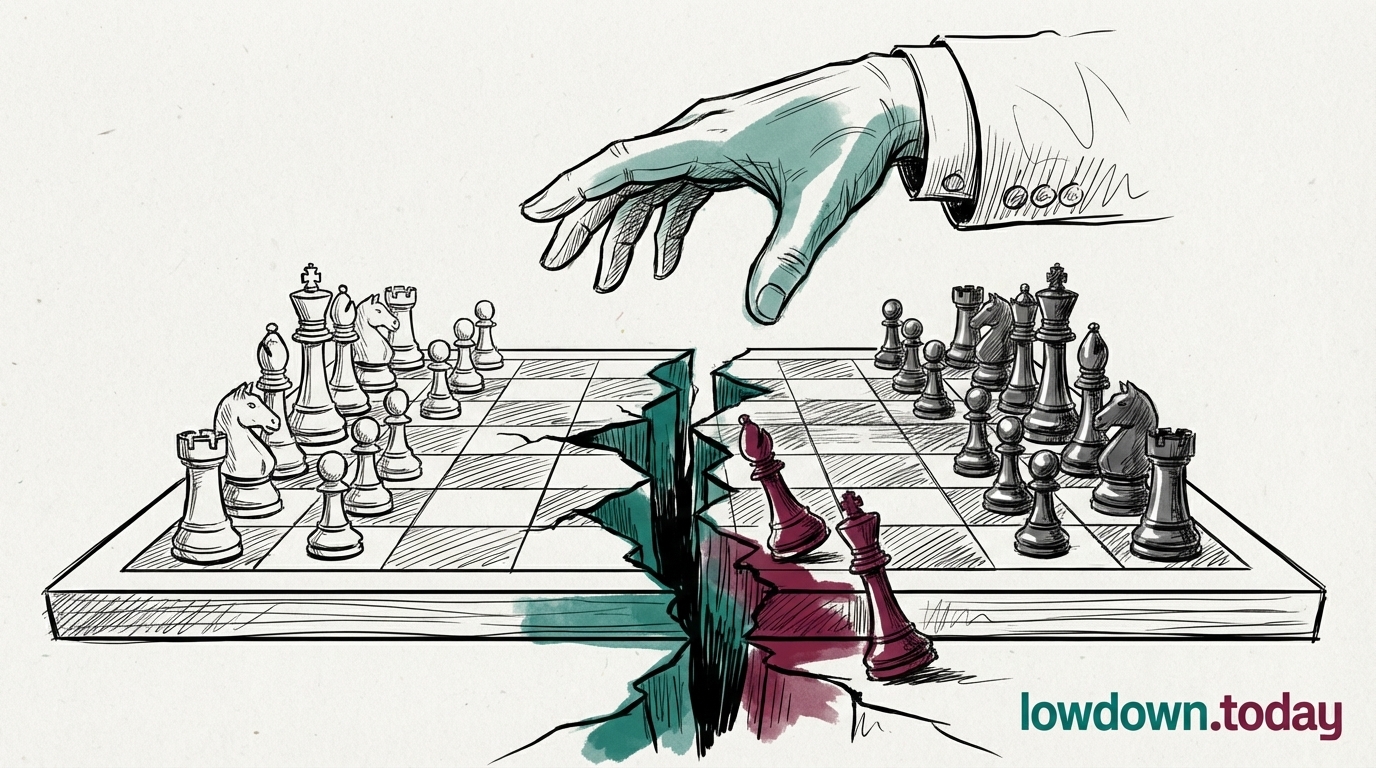
Tehran's five conditions amount to a demand for unconditional victory; the gap with Washington's 15-point plan is structural, not tactical.

ConflictAssessed
Key takeaway

Neither side's peace terms overlap, making diplomatic resolution impossible without one side fundamentally changing its war aims.

Abbas Araghchi, Iran's Foreign Minister, dismissed Washington's 15-point ceasefire plan as "extremely maximalist and unreasonable" on Tuesday 1. Hours later, Tehran published five counter-conditions through Press TV: a complete halt to US and Israeli attacks, war reparations, international recognition of Iran's sovereignty over the Strait of Hormuz, protection of Hezbollah and allied militias in Iraq, and fulfilment of pre-war Geneva demands. Araghchi told state media: "At present, our policy is the continuation of resistance" 2.

The 15-point plan reached Tehran via Pakistan . Israel's Channel 12 reported its contents: dismantling Iran's nuclear programme, limiting its ballistic missile arsenal, abandoning regional proxy networks, and conditionally reopening Hormuz 3. Donald Trump said Washington is "very close to meeting the core objectives of the operation."

Iran's counter demands formal sovereignty over the strait where the Islamic Revolutionary Guard Corps (IRGC) already runs a $2 million per-vessel toll system . Washington asks Tehran to surrender its nuclear capacity. Tehran asks Washington to recognise its authority over the waterway that carries one-fifth of the world's oil.

Iran insists on Vice President Vance as sole interlocutor , rejecting both Steve Witkoff and Jared Kushner 4. The Trump administration says all four officials are authorised. Neither side has agreed on WHO sits at the table.

Deep Analysis

In plain English

Iran and the US have each published their wish list for ending the war. Iran wants the US to recognise its right to control the shipping lane that carries a fifth of the world's oil. The US wants Iran to give up its nuclear programme and its militias. If you listed both sides' demands, not a single item would appear on both lists.

Deep Analysis
Root Causes

Neither side entered the war with a theory of acceptable peace.

Escalation

Escalating. Both sides' published positions are maximalist. Military preparations advance faster than diplomacy.

What could happen next?
  • Consequence

    Islamabad talks may collapse before starting if neither side concedes on format

  • Risk

    Oil markets pricing non-existent diplomacy; correction upward likely

First Reported In

Update #48 · Iran rejects ceasefire; Kharg fortified

Middle East Eye· 26 Mar 2026
Read original
Different Perspectives
Lloyd's of London
Lloyd's of London
The Joint War Committee left Hormuz war-risk premiums at $10-14 million per voyage on 25 May, declining to move on Brent's 5% fall. The JWC's protocol requires a UN Security Council resolution or bilateral government certification letter before de-listing, and neither has arrived: a verbal understanding does not satisfy the formal condition the reinsurance market's treaty terms require.
Gulf Arab producers
Gulf Arab producers
Saudi Arabia and UAE depend on Hormuz for their own crude exports; Aramco CEO Nasser has warned no oil market recovery arrives until 2027 if the blockade continues past mid-June. Monday's $98.96 Brent settlement shortens nothing for Gulf producers without a signed instrument and a Pentagon mine-clearance timeline that runs up to six months post-ceasefire.
Qatar
Qatar
Qatar holds $12bn of frozen Iranian assets at the centre of the sequencing dispute but cannot release them without explicit US Treasury authorisation, given the original freeze was a US instrument. As the asset-holding state, Qatar's leverage is real but passive: it is the escrow holder, not the decision-maker, and any resolution requires US Treasury sign-off that Trump has withheld.
Pakistan
Pakistan
With both Prime Minister Sharif and army chief Munir simultaneously in Beijing on 25 May, Pakistan has for the first time consolidated its civilian and military mediation tracks under China's roof. Munir's direct Tehran-to-Beijing flight signals that the security and financial threads of the sequencing problem are now being worked in parallel rather than sequentially.
China
China
Beijing hosted Pakistan's principal mediators and Iran's China envoy Ghalibaf simultaneously on 25 May while its banking regulator capped new state-bank lending to five sanctioned refiners. China is simultaneously the most credible third-party underwriter of the $12bn sequencing and the state whose institutions face live OFAC secondary-sanctions exposure if the deadlock persists through GL V's expiry.
United States
United States
Trump posted on 24 May that the blockade holds until a deal is certified and signed, ruling out the informal MOU structure both sides had been building. The 'certified, and signed' condition is the first operational bar Trump has attached in 87 days, but it arrived without an executive instrument, maintaining the gap between posted ultimatum and signed US policy.