Skip to content
Welcome, thoughtbot's Giant Robots listeners!Start here
Iran Conflict 2026
31MAR

Oman offers a coalition to police Hormuz

2 min read
08:23UTC

Oman has proposed a voluntary-funded regional coalition to run security in the Strait of Hormuz, with Qatar, Pakistan and Egypt working parallel proposals, Al Jazeera reported on 28 July.

ConflictDeveloping
Key takeaway

Oman's coalition has no named funder and no named enforcer, and the toll dispute is untouched.

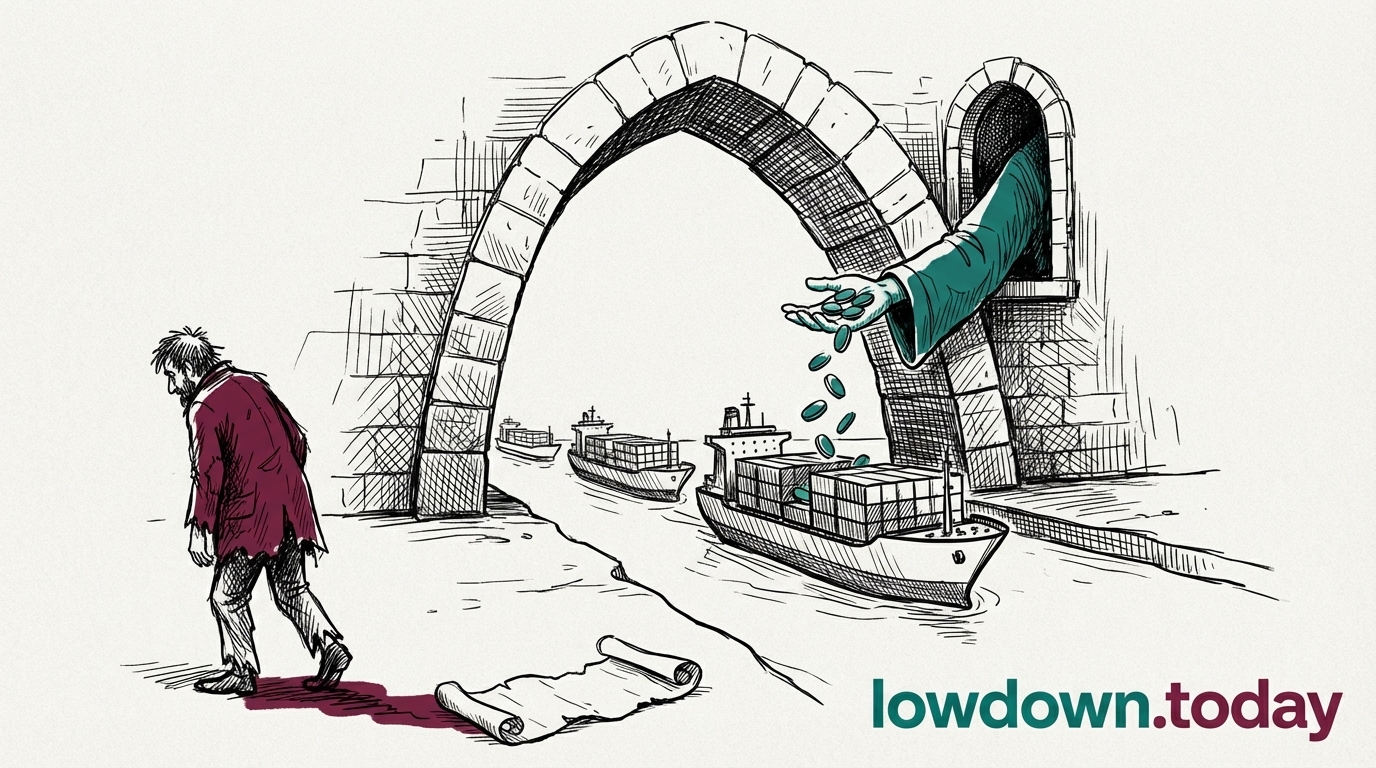
Oman has proposed a voluntary-funded regional coalition to police security in the Strait of Hormuz, the 33km chokepoint at the mouth of The Persian Gulf that carries roughly a fifth of the world's seaborne oil, Al Jazeera reported on Tuesday 28 July⁠1. Qatar, Pakistan and Egypt are running parallel proposals of their own⁠2.

Iran wants control and toll rights over shipping near its coast; Washington insists the strait is an international waterway nobody may charge for⁠3. Muscat has been here before. Its 30 June proposal offered shipping companies "service fees" explicitly modelled on the voluntary contributions vessels make in the Malacca and Singapore Straits, and its two co-authors immediately disagreed over whether the charges were optional or compulsory.

The Malacca model works because a private foundation administers contributions from shipowners who face no penalty for declining. Grafting it onto a strait where one coastal state calls the fee mandatory imports the ambiguity rather than settling it, and a coalition funded by voluntary contributions has no enforcement beyond its members' willingness to sail. The states being asked to sail first are the ones whose power stations, desalination plants and tankers have been under attack since 14 July.

Qatar reopened its own waters to all maritime traffic on 27 July, which restores traffic without settling who patrols the lane. Every proposal on the table addresses the movement of ships. The dispute is over who may charge them, and that question has now outlived one memorandum and two mediators' drafts.

Deep Analysis

In plain English

Oman suggested a group of countries could pay to keep the strait of Hormuz, the narrow waterway between Iran and the Arabian Peninsula that much of the world's oil passes through, safe for shipping. Qatar, Pakistan and Egypt have their own similar ideas. The catch is that Iran wants to control the strait and charge ships to pass through it, while the United States insists ships should be able to sail through free, with nobody's permission needed. That gap is why none of these proposals has gone anywhere yet.

What could happen next?
  • Opportunity

    A multilaterally funded coalition, if agreed, would let Gulf states manage strait security without formally taking Washington's or Tehran's side.

First Reported In

Update #163 · Pentagon puts four dead back, renames war

Al Jazeera Arabic· 28 Jul 2026
Read original →
Different Perspectives
Wang Yi
Wang Yi
China's foreign minister and Djibouti's issued a joint communique on 21 October saying the war should not reach the Horn of Africa and stressing free navigation through Bab al-Mandeb. The text names neither Iran nor the Houthis, and Djibouti hosts China's only overseas military base, opposite the Yemeni coast.
Ministry of External Affairs
India's foreign ministry called the attacks on Saudi civilian and energy sites "unacceptable" on 22 October and said they must stop at once. An Indian died at Dammam, Indians were injured there and at Shaybah, and about 4,000 Umrah pilgrims remain stranded by one MP's count.
Iraq
Iraq
Iraq closed the al-Sheeb crossing with Iran to travellers and trucks from 21 October and said other crossings would close gradually. Unlike September's closure, which ended on a staged timetable, this one has none, and Iran's interior ministry said it received no notice.
Abdel Fattah el-Sisi
Egypt's president said on 21 October that Cairo's support would "defend Saudi territory, and does not include an attack on Yemen". Araghchi warned that Egyptian involvement would further complicate the situation, and Cairo's limit matches the one Ankara set on 8 October against attacking another state's soil.
UK Ministry of Defence
The MoD said on 20 October that RAF Typhoons over Saudi Arabia will not strike the Houthis, but extended tanker support to Saudi operations including against Houthi targets in Yemen. The tanker line sets no limit on strikes, so British aircraft may now refuel Saudi jets on bombing runs.
Turkey
Turkey
Ankara sent the Mecca Joint Defence Agreement to parliament around 20 October, and its published text treats an attack on one party as an attack on all. Article 16 brings it into force only on the last ratification, so the 5 October invocation in Riyadh could not yet bind Turkey.

Written with AI from Lowdown's published reporting. Not individually reviewed by an editor. Editorial standards.
