Skip to content
Briefings are running a touch slower this week while we rebuild the foundations.See roadmap
Iran Conflict 2026
31MAR

$16.5bn and 8,700 strikes in two weeks

3 min read
08:23UTC

NPR's first comprehensive two-week audit puts numbers to the war. The gap between Iran's official death toll and independent counts runs threefold.

ConflictDeveloping
Key takeaway

This is the highest-tempo air campaign in post-Cold War history by strikes per day.

NPR published the first comprehensive two-week assessment of the war's costs 1. The Center for Strategic and International Studies calculated US expenditure at $16.5 billion in 12 days — approximately $1.4 billion per day. That daily rate is lower than the $1.9 billion per day the Pentagon disclosed to the Senate Appropriations subcommittee for the war's first six days , though Senator Chris Coons noted at the time that even those figures excluded munitions replacement costs. The apparent decline may reflect a shift from intensive opening strikes to sustained operations, or methodological differences between Pentagon accounting and CSIS estimates.

Israeli forces have conducted 7,600 strikes in Iran and 1,100 in Lebanon since 28 February — 8,700 strikes in a fortnight, or roughly one every two and a half minutes. The Iranian death toll remains contested: Iran's Health Ministry reports 1,444 killed, while the Hengaw Human Rights Organisation counted 4,300 dead in the war's first ten days alone 2. The gap is partly structural — Hengaw's figure includes military casualties (91% by its own estimate, as previously reported ), while the Health Ministry tallies civilians. It also reflects the basic difficulty of counting the dead during sustained aerial bombardment across a country of 88 million, and political incentives pulling both counts in opposite directions.

Thirteen US service members have been killed — six logistics soldiers in Kuwait on 2 March, one in Saudi Arabia on 8 March, and six in the KC-135 crash near the Jordanian border . More than 140 have been wounded, eight severely. Gulf civilian deaths stand at 16 or more — a figure that includes the two migrant workers killed in Al-Kharj and Oman's first wartime fatalities . Twelve Israeli civilians and two soldiers have died.

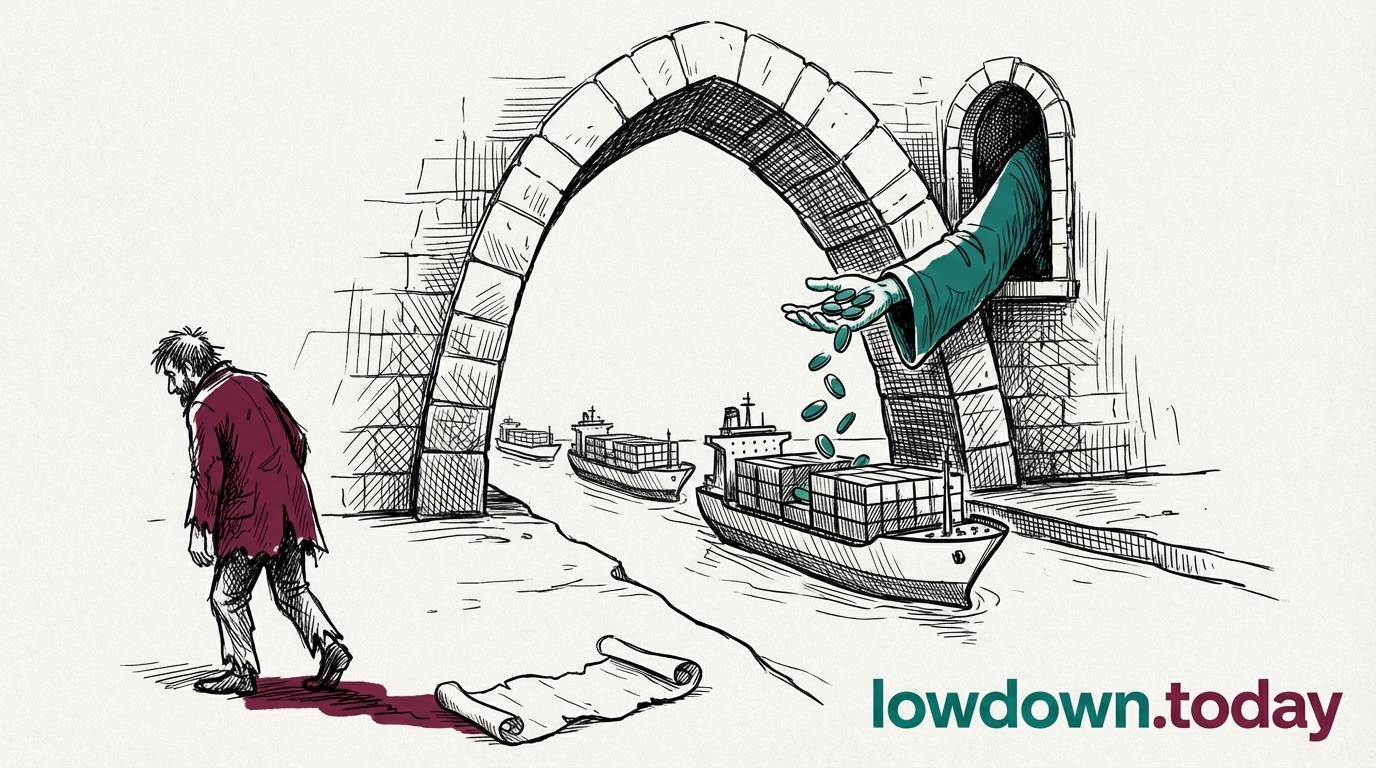
The war is defined by its asymmetries. US daily expenditure exceeds the combined annual military budgets of Lebanon, Jordan, and Iraq. Iran has absorbed 8,700 strikes in two weeks. Trump's stated war aim — popular revolution inside Iran — is one he has already conceded requires "people that don't have weapons" . The audit quantifies what the campaign has cost. It does not establish what it has achieved.

Deep Analysis

In plain English

Think of this audit as the first full receipt for two weeks of war. The US alone has spent $16.5 billion — roughly what it costs to run the entire US Navy for three months. Israel has launched more airstrikes on Iran in 16 days than NATO flew against Serbia across its entire 78-day Kosovo campaign. The death toll gap between Iran (up to 4,300) and the US (13) reflects the difference between fighting from aircraft and ships versus absorbing precision munitions on the ground. The counting gap for Iranian dead — nearly threefold between official and NGO figures — is not unusual in active conflicts, but it will define historical memory of this war for decades.

Deep Analysis
Synthesis

The 7,600-strike figure on Iran in 16 days implies target sets well beyond military installations. At that tempo, degrading dual-use infrastructure — power, communications, logistics — is mathematically near-inevitable. The 7:1 ratio of Iran strikes to Lebanon strikes confirms Iran, not Lebanon, as the campaign's primary theatre despite Lebanon absorbing more media attention.

The US casualty profile — 13 KIA, 140+ wounded, 8 severely — masks an important secondary figure. Modern trauma medicine converts deaths into severe disabilities. The 8 'severely wounded' almost certainly includes amputees and traumatic brain injuries with multi-decade care costs not captured in any expenditure figure cited.

What could happen next?
  • Risk

    Without a supplemental appropriations bill, DoD will exhaust existing reprogramming authority within 30–45 days, forcing a contentious mid-conflict congressional vote.

    Short term · Suggested
  • Consequence

    The threefold Iranian death toll discrepancy will become a permanent historical dispute, complicating any post-war accountability or reparations mechanism.

    Long term · Assessed
  • Precedent

    A strike rate of 7,600 on a state adversary in 16 days resets the benchmark for US-Israeli combined air power, reshaping deterrence calculations for China and Russia.

    Long term · Suggested
  • Meaning

    US KIA of 13 reflects a stand-off strike posture; ground engagement in Lebanon would sharply and rapidly alter that ratio.

    Short term · Assessed
First Reported In

Update #36 · Israel plans full Litani seizure

NPR· 15 Mar 2026
Read original
Different Perspectives
Markets
Markets
Brent crude rose 2.2 per cent to $96.34 on 10 June, reversing a 7 per cent weekly decline built on deal optimism, as the overnight exchange repriced the Strait of Hormuz risk premium in a single session. The move reflects transit-risk repricing rather than supply shock: Iran's exports had already collapsed to below 300,000 barrels per day.
Pakistan
Pakistan
Pakistan's Naqvi channel, the only mediation track carrying both civilian and military buy-in, was stress-tested by live ordnance within 48 hours of the 6-7 June Tehran visit. Whether Washington informed Islamabad of the imminent strike plan while Naqvi was in Tehran remains undisclosed, putting the channel's neutrality under scrutiny.
Kuwait
Kuwait
Kuwait hosted the third Iranian strike on its soil since the 3 June airport drone attack, with Ali Al Salem airbase targeted in the three-country salvo. Its recent $1.98 billion Anduril Anvil counter-drone purchase signals it is rearming rather than reconsidering its hosting posture.
Bahrain
Bahrain
Bahrain absorbed the IRGC barrage via PAC-3 intercepts with its magazine already at 87 per cent depletion and no resupply before 2027. Sounding air-raid sirens over Manama, it faced the intercept burden with the thinnest defensive stack in the Gulf coalition.
Jordan
Jordan
Jordan reported all five incoming missiles intercepted with no injuries and no damage, a clean defensive performance that strengthens Amman's case for staying in the Western coalition without escalating its own posture. It now sits on Iran's target list for the first time despite not being a party to the Abraham Accords confrontation.
Iran / IRGC
Iran / IRGC
Foreign Minister Araghchi posted on X that US forces should 'leave our region if you want to be safe' and framed the exchange as a US defeat, while the IRGC claimed 21 targets hit and an F-35 hangar destroyed. The claims serve a domestic and Arab-audience framing rather than a verified battle-damage assessment.