Skip to content
Welcome, thoughtbot's Giant Robots listeners!Start here
Iran Conflict 2026
24MAR

The squeeze is the LNG the ban misses

2 min read
05:37UTC

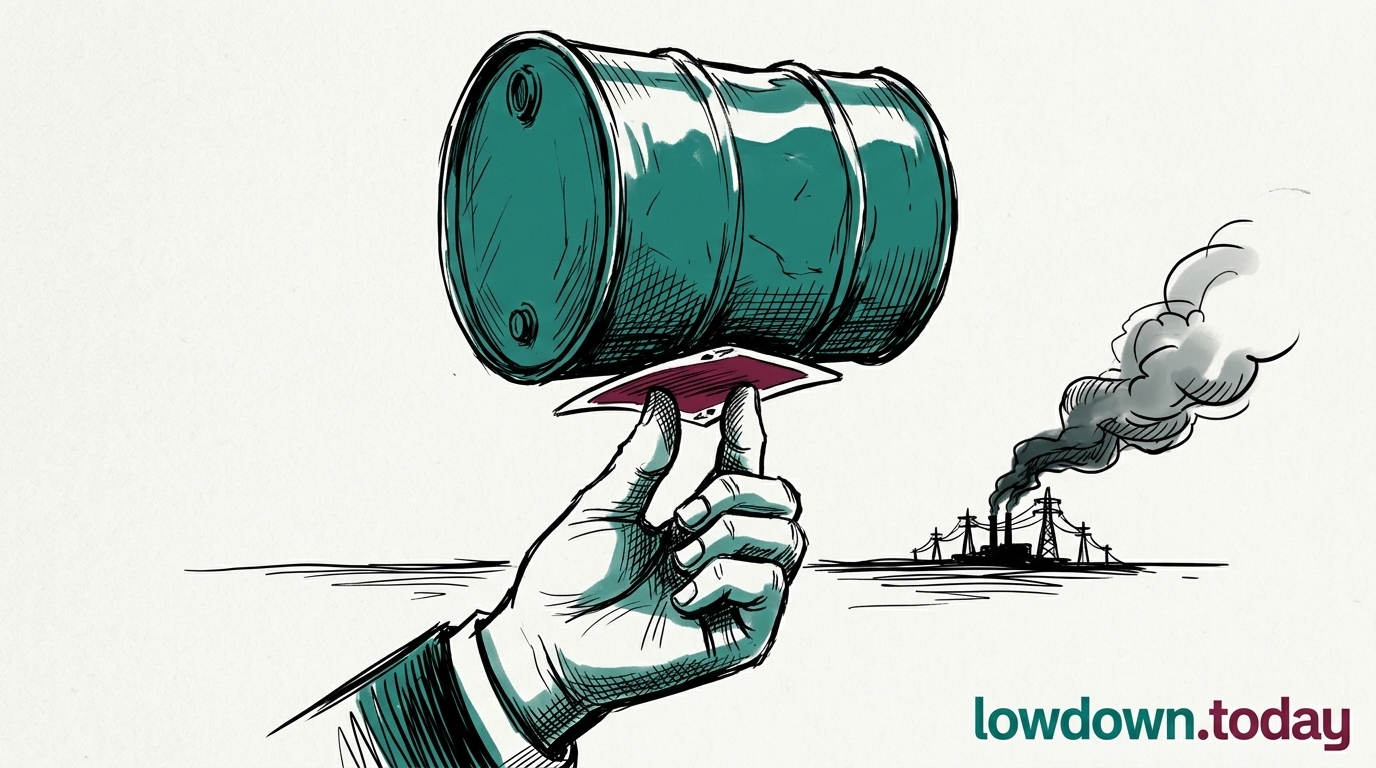
JKM printed $18.86/MMBtu on 12 June, more than doubling the arb against TTF to roughly $5.26/MMBtu and pulling Atlantic LNG cargoes east to Asia, away from Europe in injection season.

ConflictAssessed

The JKM-TTF arbitrage more than doubled, with JKM printing $18.86/MMBtu on Friday 12 June against a TTF equivalent near $13.6, up from a far narrower gap on 11 June⁠1. JKM, the Japan Korea Marker, is the Northeast Asian spot-LNG benchmark; the arb is the gap that decides whether a flexible Atlantic cargo sails east or west. The implied spread works out to roughly $5.26/MMBtu, a figure that should be read as approximate, because it converts the EUR-denominated TTF print into USD/MMBtu across a few-day date offset; the sourced anchor is JKM at $18.86 and the direction of the pull.

The arb had compressed to $1.225 in the week to 1 June before diverging from the flat prompt. At that compressed level a cargo sat near the round-trip threshold between basins. At roughly $5.26 the economics firmly favour Asia, and a flexible US or Atlantic Basin cargo routes east rather than discharging into Europe.

The direction is the opposite of what Europe needs in injection season, when terminals want every spare cargo. This is the genuine supply tightening in the briefing, and the 17 June ban does nothing about it, because the regulation covers pipeline gas, not seaborne LNG. The one force actually pulling molecules away from Europe sits entirely outside the measure's scope, which is why the prompt can fall through its floor in the same week a real tightening is underway.

Deep Analysis

In plain English

JKM is the Japanese-Korean Marker, the price tag on a cargo of liquefied natural gas (LNG) delivered to Japan or South Korea. It is set daily by S&P Global Platts, the same company that prices oil markets. When JKM is higher than the equivalent European gas price (TTF), ship operators load their gas cargoes in the US Gulf, Africa, or the Atlantic and sail east to Asia rather than west to Europe. On 12 June 2026, JKM printed $18.86 per million British thermal units while the equivalent European price was around $13.6. That $5.26 gap is more than enough to cover the extra voyage cost to Asia. So flexible cargoes that could have gone to European storage terminals during the summer injection season headed east instead. This is the market working exactly as designed, but the effect for Europe is reduced supply at a time when storage is already well below target.

Deep Analysis
Root Causes

Japan and South Korea entered mid-June with lower-than-seasonal LNG inventories after a cooler-than-average May that delayed the normal spring demand reduction. Chinese independent power producers simultaneously increased LNG spot procurement from mid-May as domestic coal prices stayed elevated, competing with Japanese utilities for the same Atlantic Basin spot pool. The combination pushed JKM to $18.86/MMBtu on 12 June from a base of roughly $15-16 in early June.

The Hormuz supply disruption since February 2026 removed Qatari long-term contract flexibility from the Atlantic spot market: LNG that previously appeared as spot supply to European terminals during periods of Asian demand softness now moves on restricted long-term routes. That structural reduction in Atlantic swing supply means the JKM arb threshold that pulls cargoes east is now lower, because the European buffer of spot Qatari supply that would have competed with Asian demand is absent.

What could happen next?
  • Risk

    JKM-TTF at USD 5.26/MMBtu on 12 June pulls every uncommitted Atlantic LNG cargo east for the remainder of the summer loading cycle, reducing spot LNG availability for European storage injection by an estimated 5-8 cargoes per month.

  • Consequence

    The arb widening compounds the EU storage deficit: Europe needs LNG most when the arb is highest and JKM incentivises eastward diversion, creating a structural supply-demand misalignment during the critical June-August injection window.

First Reported In

Update #18 · TTF breaks the floor into the import ban

Bloomberg· 15 Jun 2026
Read original →
Causes and effects
This Event
The squeeze is the LNG the ban misses
The widening arb is the one genuine supply tightening in the window, and it is the LNG the pipeline ban does not cover.
Different Perspectives
International Energy Agency
G7 members agreed on 2 October to release up to 100 million barrels through the IEA over four months, front-loading diesel.
China
China
China signed the 15 October text reaffirming the Resolution 2216 arms embargo on the Houthis. The Wall Street Journal reported that Conflict Armament Research found Chinese parts in a Houthi copy of Iran's Kheibarshekan missile.
Russia
Russia
Russia joined the 15 October consensus condemning the Houthis, a month after vetoing a mandate for a UN panel of experts on Iran sanctions on 17 September. One Western official told Bloomberg that Moscow is providing Iran with missiles, and the White House rejected the assessment.
India
India
National Security Adviser Ajit Doval raised seafarer safety with Mohsen Rezaei on 12 October, after a drone hit the Petro Dolphin with 11 Indians aboard at Sohar. External Affairs Minister S. Jaishankar urged that attacks on commercial shipping and seafarers be avoided.
Lebanon
Lebanon
President Joseph Aoun met UN peacekeeping chief Jean-Pierre Lacroix in Beirut on 14 October as UNIFIL winds down before its mandate ends on 31 December. Two days later Qatar's prime minister pledged in Beirut to fund a solar plant for Lebanon.
Kataib Hezbollah
Kataib Hezbollah
The militia announced a halt to operations except against "hostile aircraft" and denied any disarmament deal with Prime Minister Ali al-Zaidi. A day later Quds Force chief Esmail Qaani urged eliminating "remaining traces of the US presence in other arenas".

Written with AI from Lowdown's published reporting. Not individually reviewed by an editor. Editorial standards.