Skip to content
Briefings are running a touch slower this week while we rebuild the foundations.See roadmap
Iran Conflict 2026
23MAR

Houthis strike Israel for third day

2 min read
05:40UTC

Two drones intercepted over Israel. Three attacks in three days confirms sustainable tempo, not a one-off provocation. The Houthi deputy minister named Bab al-Mandeb closure as 'among our options.'

ConflictAssessed
Key takeaway

Three days of attacks confirm Houthi tempo is sustainable.

Houthi forces fired at Israel for a third consecutive day on 30 March. Two drones were intercepted by Israeli defences. 1 Deputy Information Minister Mohammed Mansour described Bab al-Mandeb closure as 'among our options' in a staged escalation programme. Blockade was described as 'likely' in the next phase if Israel targets Hodeidah port or Yemeni civilian infrastructure.

Ansar Allah entered the war with ballistic missiles on 28 March and threatened Bab al-Mandeb closure the same day . A third consecutive attack now establishes sustainable operational tempo. Hezbollah fired 600 projectiles at Israel in a single 24-hour period on 28 March . Iran's proxy network is activating in sequence, each front requiring separate defensive resources from a coalition already stretched by the primary conflict.

Houthi entry came the day after Pakistan confirmed US-Iran indirect talks had stalled and the day Iran published its five conditions for ending the war . Tehran coordinated the opening of this front. The Long War Journal reports that Houthi leaders conditioned further escalation on whether other nations join anti-Iran operations or use the Red Sea for strikes.

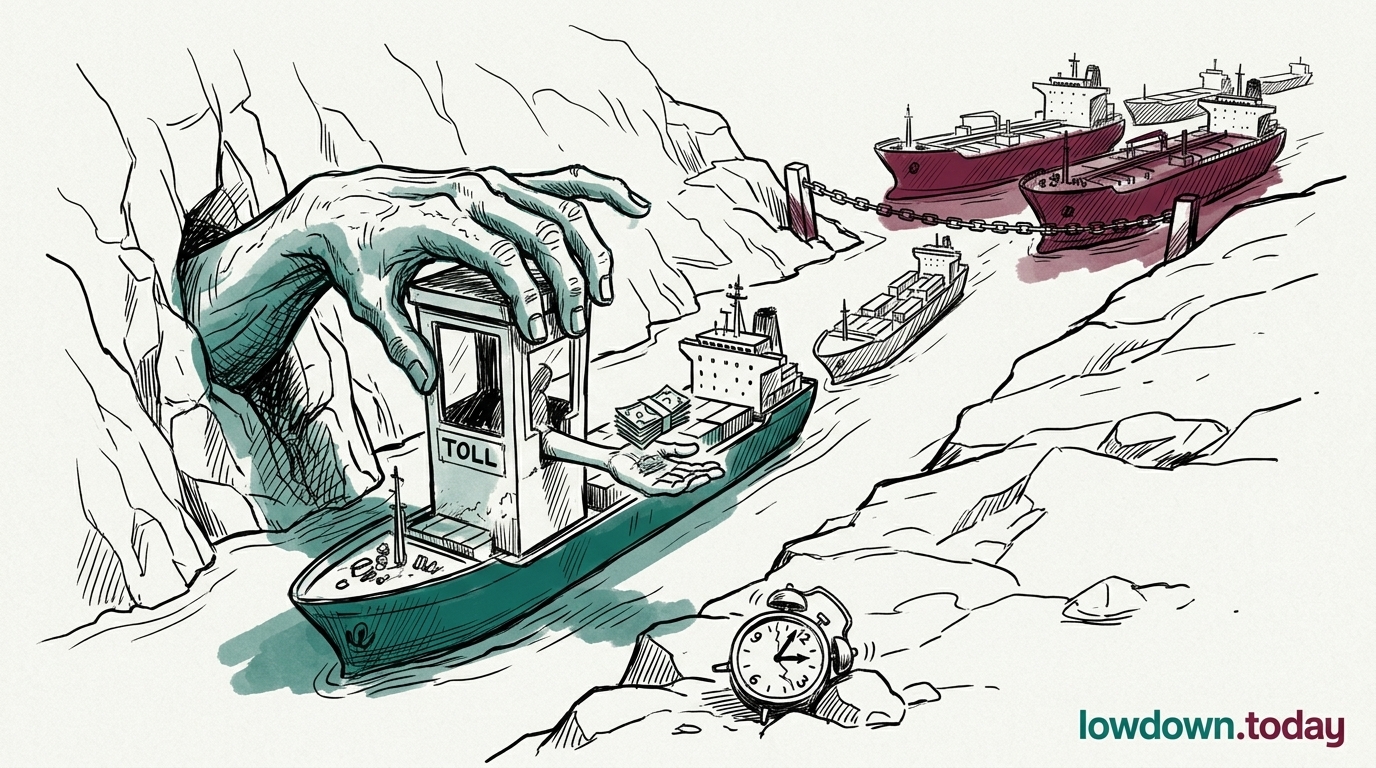
Combined with near-total Hormuz closure, formal Bab al-Mandeb blockade would place simultaneous pressure on the world's two most critical oil transit routes for the first time since the 1973 oil crisis. MARAD and UKMTO have already confirmed deliberate GNSS denial spanning from Hormuz to Bab al-Mandeb . An electronic warfare corridor now links both chokepoints.

Deep Analysis

In plain English

The Houthis are an armed group based in Yemen that has been fighting a civil war there for years. They also have a history of firing at ships in the Red Sea. Now they are firing drones and missiles at Israel. This is the third day in a row they have attacked. The attacks are being intercepted, but three consecutive days of attacks is different from a one-off strike: it shows they can sustain the effort. The Houthis have also suggested they might close the Bab al-Mandeb strait, which is the narrow water passage between Yemen and Africa. Oil tankers going from the Gulf to Europe pass through it. If both the Strait of Hormuz (near Iran) and Bab al-Mandeb (near Yemen) are closed or disrupted at the same time, the world's two biggest oil shipping routes would be blocked simultaneously, something that has not happened since 1973.

What could happen next?
  • Risk

    If Israel strikes Hodeidah port or Yemeni civilian infrastructure, Houthi officials have stated Bab al-Mandeb closure becomes operational, creating simultaneous dual-chokepoint pressure not seen since 1973.

  • Meaning

    Three consecutive attacks on Israel establish the Houthis as a sustainable second front in the conflict, requiring separate Israeli and US defensive resources distinct from the primary Iran campaign.

First Reported In

Update #52 · Trump wants Iran's oil; 3,500 Marines land

Al Jazeera / Middle East Monitor· 30 Mar 2026
Read original
Different Perspectives
IAEA
IAEA
Director General Rafael Grossi appeared in person at the UNSC on 19 May and warned that a direct hit on an operating reactor 'could result in very high release of radioactivity'. The session produced a condemnation record but no resolution, and the Barakah perimeter was already struck on 17 May.
Hengaw (Kurdish rights monitor)
Hengaw documented three judicial executions and the detention of Kurdish writer Majid Karimi in Tehran on 19 May, establishing Khorasan Razavi province as the newest geography in Iran's wartime judicial record. The organisation's Norway-based operation continues to surface a domestic repression track running in parallel with every diplomatic and military development.
India
India
Six India-flagged vessels conducted a coordinated cluster transit under PGSA bilateral assurances during the 17 May window, paying no yuan tolls. New Delhi's inclusion in Iran's state-to-state passage track insulates Indian energy supply without requiring endorsement of the PGSA's yuan-toll architecture or alignment with the US coalition.
Pakistan
Pakistan
Pakistan is the only functioning diplomatic bridge between Tehran and Washington. Its role is relay, not mediation in the settlement sense: it conveyed Iran's 10-point counter-MOU in early May, relayed the US rejection, and is now passing 'corrective points' in the third documented exchange of this sub-cycle without either side working from a shared text.
UK and France (Northwood coalition)
Twenty-six coalition members have published no rules of engagement eight days after the Bahrain joint statement; Lloyd's underwriters have conditioned war-risk reopening on written ROE from either Iran or the coalition. Italian and French mine-countermeasures deployments are operating on the in-water clearance task CENTCOM Admiral Brad Cooper's 90% mine-stockpile claim does not address.
Saudi Arabia
Saudi Arabia
Riyadh has not publicly commented on the Barakah strike or the 50-47 discharge vote. Saudi output feeds the IEA's $106 base case; the $5 Brent premium above that model reflects institutional uncertainty no Gulf producer can compress through supply adjustment alone.