Skip to content
Briefings are running a touch slower this week while we rebuild the foundations.See roadmap
Iran Conflict 2026
22MAR

US hits Natanz again; no radiation leak

3 min read
05:50UTC

The US hit Iran's main enrichment facility for the second time in this war. The IAEA says 440 kg of near-weapons-grade uranium — enough for roughly ten bombs — remains where it was.

ConflictDeveloping
Key takeaway

Second Natanz strike leaves 440 kg of weapons-grade uranium untouched and unaccounted for.

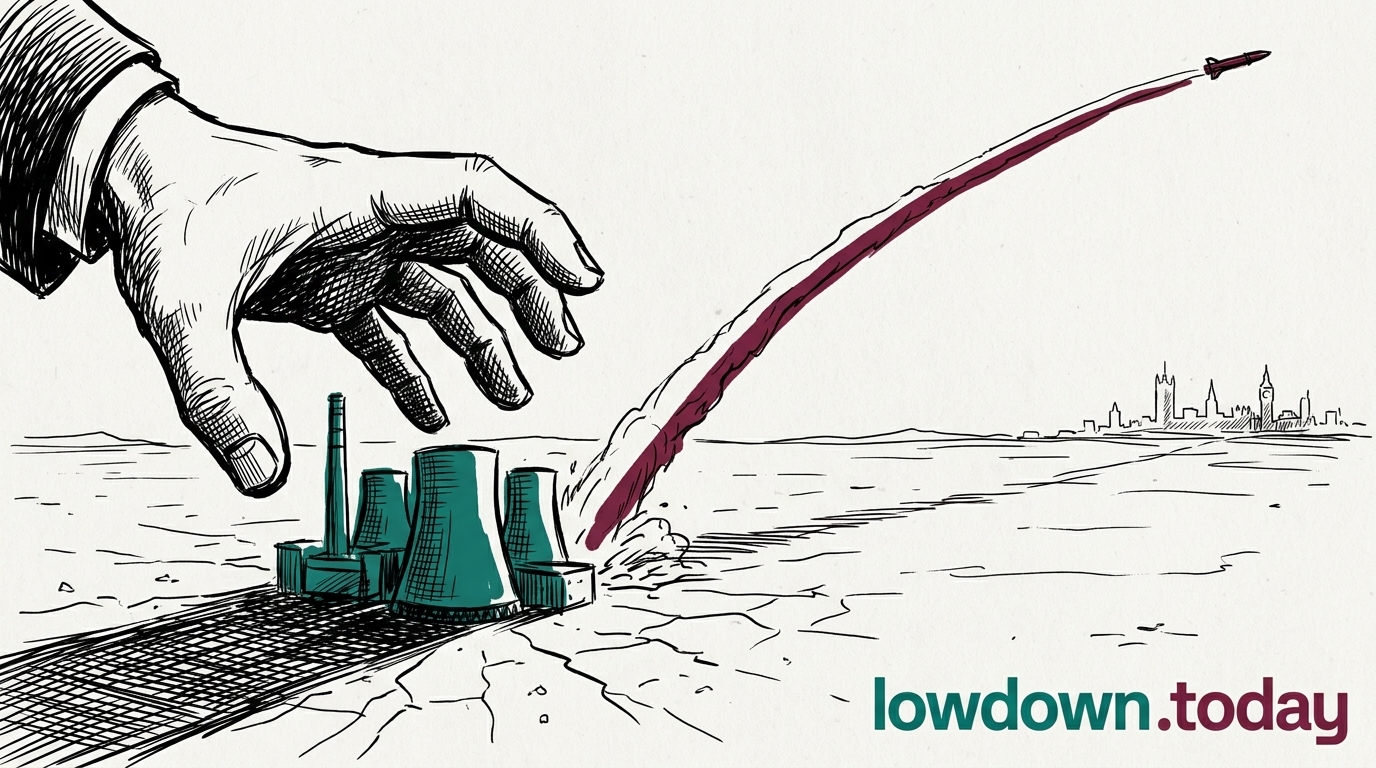
The US struck Natanz for the second time since the war began on 28 February. Iran confirmed the hit. The IAEA reported no radiation leak 1. The IDF denied involvement — making this a unilateral American operation, not an Israeli strike.

The return to Natanz contradicts two competing narratives. Netanyahu claimed on 18 March that "Iran no longer has the capacity to enrich uranium" . If that were true, there would be no reason to hit the facility again. IAEA Director General Rafael Grossi stated days earlier that "most probably, at the end of this, the material will still be there and the enrichment capacities will be there" . The second strike suggests Washington's own intelligence aligns with Grossi, not with Netanyahu.

Iran holds approximately 440 kg of uranium enriched to 60% — enough, if further enriched to weapons-grade, for roughly ten nuclear devices. Airstrikes can destroy centrifuge cascades. They cannot destroy enriched uranium without causing the radiological contamination both sides claim to want to avoid. The IAEA confirmed no abnormal radiation from Friday's strike, which means the bombs hit hardware, not stockpiles. The core proliferation risk is intact.

Iran's enrichment geography compounds the problem. The IAEA disclosed a previously unknown underground facility at IsfahanIran's fourth known enrichment site — where inspectors have been denied access. Natanz itself has both surface buildings and deeply buried halls; Iran moved critical centrifuge operations underground after the Stuxnet cyberattack destroyed approximately 1,000 centrifuges in 2010. Fordow, another enrichment site, sits under a mountain near Qom. The pattern from two decades of constraint efforts — Stuxnet, the 2021 Mossad sabotage of Natanz, the JCPOA's negotiated limits — is that damage to enrichment hardware is temporary. Iran has rebuilt after every disruption. The 440 kg stockpile, accumulated since Iran began enriching to 60% in April 2021, is the one thing airstrikes cannot safely reach.

Deep Analysis

In plain English

Natanz is where Iran spins uranium into increasingly concentrated form using centrifuges. The US has now struck it twice. But the enriched uranium already produced and stored elsewhere cannot be destroyed from the air. Think of it as bombing a factory: you can wreck the production line, but you cannot destroy the finished goods already in the warehouse. Iran has enough material for roughly ten nuclear weapons if it chose to enrich further — and that stockpile is sitting somewhere the bombs are not falling. The strikes are disrupting future production, not the existing inventory.

Deep Analysis
Synthesis

The persistence of the 440 kg stockpile despite two Natanz strikes exposes a structural gap between the stated objective — preventing Iranian nuclear capability — and the available military instrument. Conventional strikes can degrade production capacity but cannot eliminate accumulated fissile material. This gap will define post-war non-proliferation negotiations more than any battlefield outcome, as the material itself becomes the central unresolved variable in any settlement.

Root Causes

Iran's nuclear programme was structurally redesigned after 2003 to be strike-resistant: dispersed across sites, hardened against conventional munitions, and functionally redundant. The Fordow enrichment facility is bored into a mountain and cannot be penetrated by conventional bombs. Conventional airstrikes against enrichment infrastructure were always a partial instrument against this architecture — a limitation Western planners knew before the first strike.

Escalation

The IDF's explicit denial of Natanz involvement signals deliberate US-Israel compartmentalisation of nuclear targeting decisions. This division could create strategic incoherence: Israel may independently strike targets the US has reserved as negotiating leverage for a diplomatic track. The divergence increases operational unpredictability and reduces the coherence of any coercive signalling Iran receives.

What could happen next?
  • Risk

    Iran's intact 440 kg HEU stockpile becomes the central unresolved obstacle to any post-conflict non-proliferation settlement.

    Medium term · Assessed
  • Precedent

    US unilateral nuclear targeting without IDF involvement establishes a distinct American escalation lane operating outside the bilateral targeting framework.

    Immediate · Assessed
  • Risk

    Repeated strikes on enrichment infrastructure without securing the existing stockpile may compress Iran's weaponisation timeline by creating strategic urgency in Tehran.

    Short term · Suggested
  • Consequence

    IAEA inspection access is effectively suspended during active hostilities, creating a verification black hole that will complicate post-war fissile material accounting.

    Short term · Assessed
First Reported In

Update #44 · Trump: 48 hours to destroy Iran power grid

Times of Israel· 22 Mar 2026
Read original
Causes and effects
This Event
US hits Natanz again; no radiation leak
The second strike on Natanz exposes the gap between political claims that Iran's enrichment is destroyed and the IAEA's assessment that the material and capacity will survive. Airstrikes can damage centrifuges but cannot safely destroy 440 kg of 60%-enriched uranium — the actual proliferation risk.
Different Perspectives
IAEA
IAEA
Director General Rafael Grossi appeared in person at the UNSC on 19 May and warned that a direct hit on an operating reactor 'could result in very high release of radioactivity'. The session produced a condemnation record but no resolution, and the Barakah perimeter was already struck on 17 May.
Hengaw (Kurdish rights monitor)
Hengaw documented three judicial executions and the detention of Kurdish writer Majid Karimi in Tehran on 19 May, establishing Khorasan Razavi province as the newest geography in Iran's wartime judicial record. The organisation's Norway-based operation continues to surface a domestic repression track running in parallel with every diplomatic and military development.
India
India
Six India-flagged vessels conducted a coordinated cluster transit under PGSA bilateral assurances during the 17 May window, paying no yuan tolls. New Delhi's inclusion in Iran's state-to-state passage track insulates Indian energy supply without requiring endorsement of the PGSA's yuan-toll architecture or alignment with the US coalition.
Pakistan
Pakistan
Pakistan is the only functioning diplomatic bridge between Tehran and Washington. Its role is relay, not mediation in the settlement sense: it conveyed Iran's 10-point counter-MOU in early May, relayed the US rejection, and is now passing 'corrective points' in the third documented exchange of this sub-cycle without either side working from a shared text.
UK and France (Northwood coalition)
Twenty-six coalition members have published no rules of engagement eight days after the Bahrain joint statement; Lloyd's underwriters have conditioned war-risk reopening on written ROE from either Iran or the coalition. Italian and French mine-countermeasures deployments are operating on the in-water clearance task CENTCOM Admiral Brad Cooper's 90% mine-stockpile claim does not address.
Saudi Arabia
Saudi Arabia
Riyadh has not publicly commented on the Barakah strike or the 50-47 discharge vote. Saudi output feeds the IEA's $106 base case; the $5 Brent premium above that model reflects institutional uncertainty no Gulf producer can compress through supply adjustment alone.