Skip to content
Briefings are running a touch slower this week while we rebuild the foundations.See roadmap
Iran Conflict 2026
22MAR

IDF: Berlin and Paris in Iran's range

3 min read
05:50UTC

Lt. Gen. Zamir stated that Berlin, Paris, and Rome fall within direct threat range of the weapon Iran fired at Diego Garcia. NATO's response to the war remains declarations without warships.

ConflictDeveloping
Key takeaway

Zamir named European capitals to trigger NATO consultation obligations, not merely to characterise a missile's technical range.

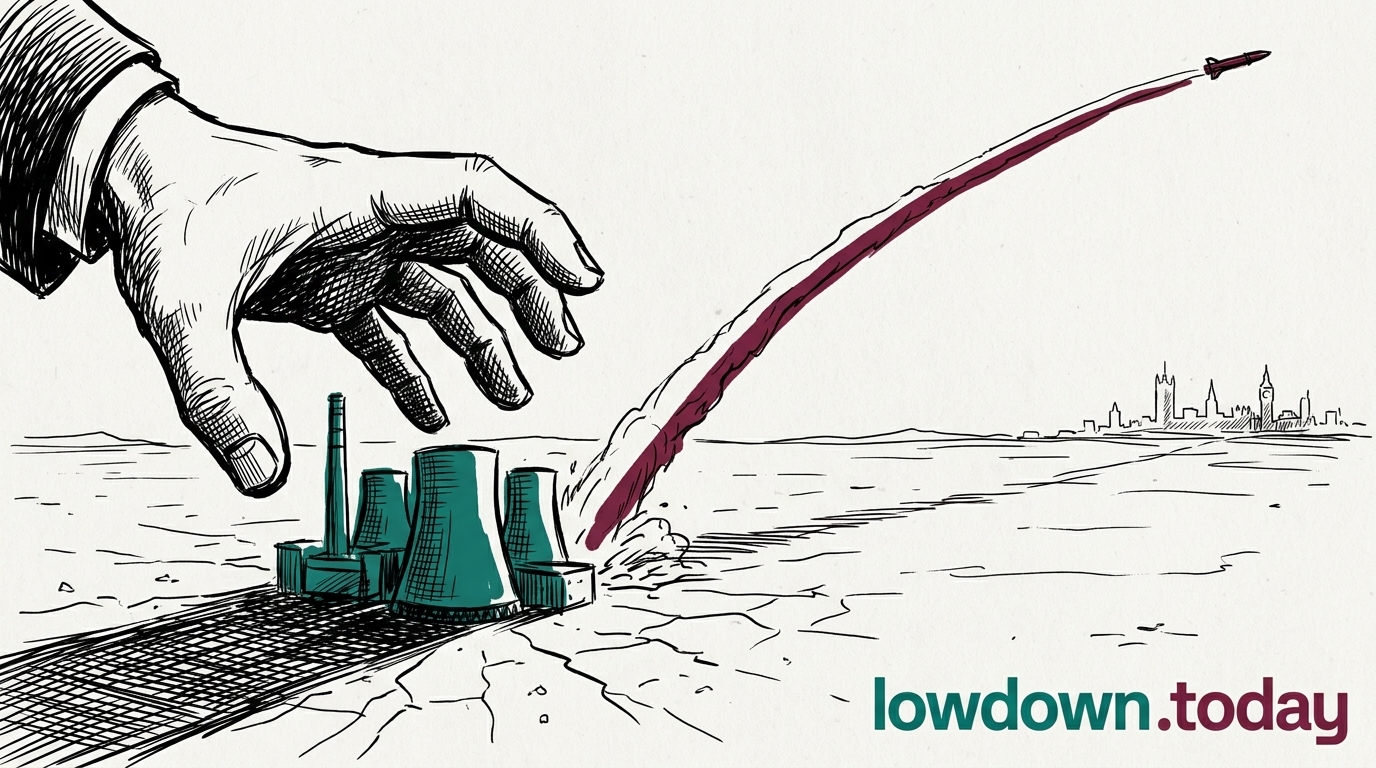
IDF Chief of Staff Lt. Gen. Eyal Zamir characterised the weapon Iran fired at Diego Garcia as a 'two-stage intercontinental Ballistic missile' and stated that 'Berlin, Paris, and Rome are all within direct threat range' 1. The claim about European capitals is geometrically sound: Berlin lies roughly 4,100 km from western Iran, Rome approximately 3,400 km, Paris around 4,400 km — all within or near the range envelope Friday's launch demonstrated.

Zamir's 'intercontinental' classification warrants scrutiny. The standard threshold — codified in the 1987 INF Treaty — is 5,500 km. A 4,000 km weapon is an intermediate-range Ballistic missile, not an ICBM. The distinction matters: it determines which arms control frameworks apply, which defence architectures respond, and how NATO categorises the threat. Zamir's language may reflect Israeli intelligence about the weapon's maximum range exceeding what the Diego Garcia shot showed, or it may be calibrated to press European governments into treating this war as their security problem. Both can be true simultaneously.

The political context amplifies the statement. Trump called NATO allies 'COWARDS' and the alliance a 'PAPER TIGER' after every country he named for a Hormuz escort coalition formally declined to participate . Twenty-two nations issued a joint statement this week demanding Iran reopen the strait — the third such declaration of the war — without pledging a single vessel. Zamir's naming of Berlin, Paris, and Rome functions as a pointed addition: the capitals that have declined to act are the same ones now inside the striking distance of a capability they have refused to confront.

Europe's missile defence architecture was not built for this scenario. NATO's Aegis Ashore installations in Romania and Poland were designed around a shorter-range Iranian threat — the pre-Friday planning assumption. France and the UK hold independent nuclear deterrents, but those exist for existential scenarios, not for the question now on the table: whether a conventional Iranian IRBM could strike European soil during a war Europe has refused to join. No European government has publicly responded to Zamir's assessment. The 4,000 km range is a fact. What Europe does with that fact remains, three weeks into the war, entirely undecided.

Deep Analysis

In plain English

Israel's most senior military officer said the missile Iran fired at Diego Garcia — an island 4,000 kilometres from Iran — can also reach Berlin, Paris, and Rome. Whether that precise characterisation is technically accurate (the missile's range classification is disputed), the political purpose is clear: Zamir is telling European governments they are not spectators in a Middle Eastern war. If Iran has missiles that can reach across the Indian Ocean, the argument runs, they can reach European capitals. This is a deliberate internationalisation move. European NATO members have been cautious about active involvement, framing the conflict as a Middle East regional dispute. By naming their capitals, Zamir is invoking the core question of collective defence — creating pressure for European governments to formally assess Iran's capability as a direct territorial threat rather than a distant regional problem.

Deep Analysis
Synthesis

Events 2 and 3 form a deliberate two-stage informational sequence. Event 2 establishes the capability fact — 4,000km operational range confirmed by launch. Event 3 translates that fact into a European security narrative targeting parliamentary and public opinion in Germany, France, and Italy. The speed of Zamir's statement — within hours of the Diego Garcia launch — suggests coordination with Israeli political leadership rather than spontaneous military commentary. The pairing constitutes a sophisticated public affairs operation embedded within a military development, designed to shift European governments from observer to co-belligerent status.

Root Causes

Israel's continued military campaign depends on sustained US political and material support. European NATO members critical of the operation create diplomatic space for US domestic opinion to question the costs of that support. By internationalising the Iranian missile threat to European capitals, Zamir simultaneously defends the legitimacy of the current campaign and attempts to shift European governments from critical observation toward allied alignment — addressing Israel's structural dependency on Western coalition cohesion as a strategic vulnerability.

Escalation

Zamir's statement is diplomatically escalatory independent of its technical accuracy. By framing Iran's demonstrated capability as a direct European threat, it creates political conditions for a formal NATO Article 4 consultation — which requires members to collectively assess threats to any party's security. A formal Article 4 invocation by even one NATO member would transform the conflict's alliance architecture and generate pressure for collective responses that have so far been avoided. The statement is therefore a diplomatic instrument with potential treaty-mechanism consequences.

What could happen next?
  • Consequence

    If a NATO member formally invokes Article 4 citing Iran's demonstrated missile range, it requires a North Atlantic Council consultation — the first in the context of an Iran conflict.

    Short term · Suggested
  • Risk

    European governments that accept Zamir's ICBM characterisation without independent verification may commit to threat-response measures built on a technically overstated intelligence assessment.

    Short term · Assessed
  • Consequence

    Named-capitals framing will accelerate domestic political pressure in Germany, France, and Italy for increased missile defence spending and revised Iran policy postures.

    Short term · Assessed
  • Precedent

    Iran's demonstrated 4,000km operational range — whatever the weapon's formal classification — requires permanent revision of European defence planning assumptions regardless of how this conflict resolves.

    Long term · Assessed
First Reported In

Update #44 · Trump: 48 hours to destroy Iran power grid

Bloomberg· 22 Mar 2026
Read original
Different Perspectives
IAEA
IAEA
Director General Rafael Grossi appeared in person at the UNSC on 19 May and warned that a direct hit on an operating reactor 'could result in very high release of radioactivity'. The session produced a condemnation record but no resolution, and the Barakah perimeter was already struck on 17 May.
Hengaw (Kurdish rights monitor)
Hengaw documented three judicial executions and the detention of Kurdish writer Majid Karimi in Tehran on 19 May, establishing Khorasan Razavi province as the newest geography in Iran's wartime judicial record. The organisation's Norway-based operation continues to surface a domestic repression track running in parallel with every diplomatic and military development.
India
India
Six India-flagged vessels conducted a coordinated cluster transit under PGSA bilateral assurances during the 17 May window, paying no yuan tolls. New Delhi's inclusion in Iran's state-to-state passage track insulates Indian energy supply without requiring endorsement of the PGSA's yuan-toll architecture or alignment with the US coalition.
Pakistan
Pakistan
Pakistan is the only functioning diplomatic bridge between Tehran and Washington. Its role is relay, not mediation in the settlement sense: it conveyed Iran's 10-point counter-MOU in early May, relayed the US rejection, and is now passing 'corrective points' in the third documented exchange of this sub-cycle without either side working from a shared text.
UK and France (Northwood coalition)
Twenty-six coalition members have published no rules of engagement eight days after the Bahrain joint statement; Lloyd's underwriters have conditioned war-risk reopening on written ROE from either Iran or the coalition. Italian and French mine-countermeasures deployments are operating on the in-water clearance task CENTCOM Admiral Brad Cooper's 90% mine-stockpile claim does not address.
Saudi Arabia
Saudi Arabia
Riyadh has not publicly commented on the Barakah strike or the 50-47 discharge vote. Saudi output feeds the IEA's $106 base case; the $5 Brent premium above that model reflects institutional uncertainty no Gulf producer can compress through supply adjustment alone.