Skip to content
Briefings are running a touch slower this week while we rebuild the foundations.See roadmap
Iran Conflict 2026
13MAR

Dozens killed across Lebanon on Friday

3 min read
17:56UTC

Israeli forces struck targets from Beirut to the Bekaa Valley on Friday, killing more than two dozen people as Lebanon's war dead since 2 March reached 687.

ConflictDeveloping
Key takeaway

Simultaneous strikes across three Lebanese zones signal societal coercion doctrine, not tactical interdiction.

More than two dozen people were killed on Friday as Israeli forces struck targets across Beirut, southern Lebanon, and the Bekaa Valley — three geographically distinct zones spanning the length of the country. The strikes ran parallel to the ground advance deeper into the south.

Lebanon's cumulative toll since 2 March now stands at 687 killed, including 98 children, 62 women, and 18 paramedics, with 1,774 wounded. The count rose from 634 two days earlier — 53 additional deaths in 48 hours. The child death rate continues to exceed what UNICEF documented during the 2006 war . Over 800,000 people are displaced, matching the entire displacement of that 34-day conflict in less than a fortnight.

Friday's geographic spread fits a pattern that has been tightening since the war's second week. Israeli air operations in Lebanon began with Hezbollah positions in Dahiyeh and the south, expanded into central Beirut with the Ramada hotel strike that killed five IRGC Quds Force commanders , then hit the residential Aisha Bakkar neighbourhood and the Ramlet al-Baida seafront where displaced families had gathered believing it safer . The Bekaa ValleyHezbollah's logistical corridor from Syria — is now under concurrent attack. There are no geographic gaps left in the campaign inside Lebanon.

Lebanon's President Joseph Aoun called for immediate talks with Israel earlier this week . No diplomatic movement has followed. Hezbollah continues firing over 100 rockets per day into northern Israel — a tempo the IDF itself acknowledged now exceeds Iran's own daily output . The civilian population of southern Lebanon is caught between an advancing ground force from the south, sustained air strikes from above, and an armed organisation whose command structure has shown no interest in stopping.

Deep Analysis

In plain English

On Friday, Israeli forces struck three completely separate parts of Lebanon at once — the capital Beirut, the southern border zone, and the Bekaa Valley inland. This is not hitting a single military target; it is applying simultaneous pressure across an entire country. The logic, documented after the 2006 war, is that making the whole of Lebanon feel the cost of the conflict will turn Lebanese public opinion against Hezbollah. For ordinary Lebanese civilians, the immediate consequence is simpler: there is no safe part of the country to move to.

Deep Analysis
Synthesis

Events 12 and 13 together reveal two concurrent but structurally distinct operations: a ground advance in the south to seize terrain, and an air campaign across all zones to prevent civilian stabilisation anywhere. These tracks serve different strategic logics — territorial control versus societal coercion — and may be in tension. Ground occupation requires a degree of local acquiescence that an air-coercion campaign against the same population tends to destroy.

Escalation

Simultaneous three-zone strikes on a single day remove the concept of an internal Lebanese safe corridor. If this pattern becomes the operational baseline, displacement will accelerate well beyond the current 800,000 figure because no uncontested interior destination exists within the country.

What could happen next?
1 consequence2 risk1 meaning1 precedent
  • Consequence

    Three-zone simultaneous strikes eliminate any internal Lebanese safe corridor, meaning the 800,000 currently displaced have no uncontested destination within the country.

    Immediate · Assessed
  • Risk

    Strikes on Beirut risk disabling the Rafic Hariri Airport — Lebanon's only functioning international evacuation route for foreign nationals and diaspora seeking to leave.

    Short term · Suggested
  • Risk

    Bekaa Valley strikes during the March planting window could eliminate Lebanon's 2026 harvest, converting acute humanitarian crisis into multi-year food insecurity for a country already importing most of its calories.

    Medium term · Suggested
  • Meaning

    The three-zone pattern is consistent with Dahiyeh doctrine: the strategic objective is coercion of Lebanese public opinion, not purely military attrition of Hezbollah's armed capacity.

    Immediate · Assessed
  • Precedent

    If sustained three-zone operations become the operational baseline, the 2006 war's 33-day intensity will be exceeded in both duration and geographic scope within weeks.

    Short term · Assessed
First Reported In

Update #34 · Tehran march bombed; first deaths in Oman

Al Jazeera· 13 Mar 2026
Read original
Different Perspectives
Gulf shipping and insurance markets
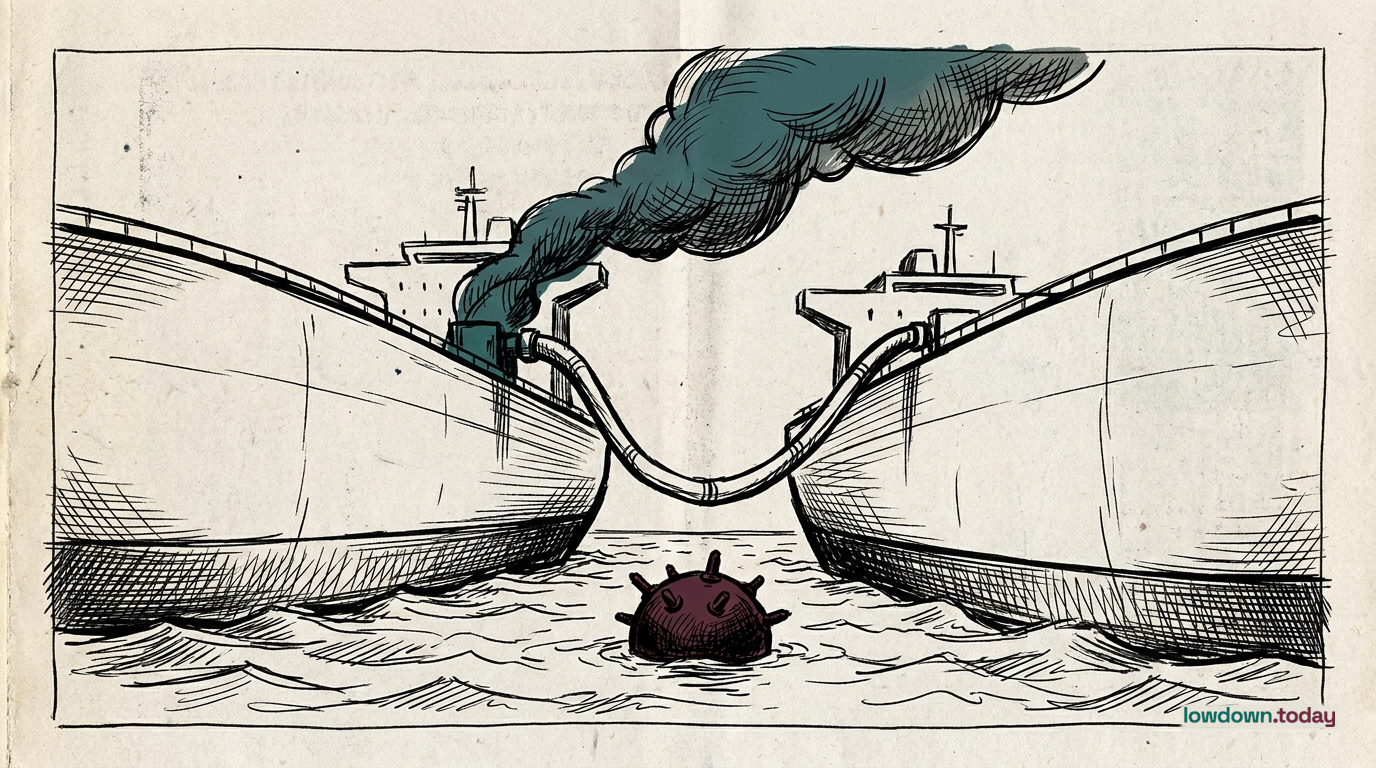
With Hormuz and Bab el-Mandeb both hostile at once, war-risk underwriters face their first dual-chokepoint pricing problem; the rerouting hedge that absorbed one closure is gone for Israeli-linked hulls. Any deal that reopens Hormuz without a Houthi stand-down clause delivers only partial shipping relief.
Russia and China
Russia and China
Russia and China met IAEA chief Grossi jointly in Geneva on 5 June to coordinate an advance blocking position against Washington's censure resolution, the first documented instance of proactive pre-session obstruction rather than reactive post-vote dissent. Beijing's move came four days after OFAC designated Shanghai Qianye Energy under Iran energy sanctions.
Saudi Arabia
Saudi Arabia
Saudi Arabia was left out of the emergency $4.01 billion Patriot waiver Qatar received on 2 May as its own PAC-3 stocks ran near-empty from intercepting Iranian salvoes over Aramco facilities. Riyadh is on a standard 18-month FMS queue behind a production line booked through 2030, with no equivalent priority to Qatar's Al Udeid basing role.
Houthis (Ansar Allah)
The Houthis declared a complete ban on Israeli Red Sea navigation on 8 June and struck Jaffa, their first attack on Israeli territory since April, seven days after the Tasnim authorisation to activate other fronts including Bab el-Mandeb. The declaration put both chokepoints under hostile authority simultaneously.
Iran
Iran
Iran agreed the 9 June mutual halt after the Mahshahr exchange and coordinated with Russia and China to block Washington's IAEA censure resolution, using the Board as a second front while the bilateral pause held on the military one. Tehran's acceptance of the Lebanon carve-out contradicts the linkage position it stated on 1 June.
Benjamin Netanyahu and the IDF
Israel struck the Karun Petrochemical plant at Mahshahr on 8 June over Trump's explicit objection, then agreed a halt with Iran the following day scoped on Israeli terms with Lebanon carved out. Netanyahu's posture is that the IDF will not accept Iranian missile factories as off-limits regardless of US diplomatic timelines.